
When a server gets decommissioned or an employee turns in a five-year-old laptop, most organizations treat it as a simple logistics task. Swap the device, move on. But that assumption carries serious consequences. Corporate e-waste sits at the intersection of data security, regulatory exposure, and environmental responsibility, and organizations that treat it as an afterthought are leaving themselves open to breaches, fines, and reputational damage. This guide breaks down what corporate e-waste actually covers, where the real risks live, and what your team needs to do to stay compliant and protected.
Table of Contents
- What counts as corporate e-waste?
- Why data security and compliance matter most
- Enterprise e-waste governance: Controls and due diligence
- Best practices for secure and sustainable e-waste disposition
- Corporate e-waste: Why smart diligence beats ‘high recycling rates’
- Get secure, compliant solutions for your corporate e-waste
- Frequently asked questions
Key Takeaways
| Point | Details |
|---|---|
| Corporate e-waste defined | E-waste includes IT and office electronics that are discarded, requiring specialized handling. |
| Compliance first | Data security standards like NIST 800-88 and audit-ready records are essential for compliance. |
| Governance matters | Organizations must vet recyclers and track downstream handling to maintain control and accountability. |
| Sustainable practices | Eco-friendly, certified asset recovery and destruction support both compliance and business sustainability. |
What counts as corporate e-waste?
Corporate e-waste is not just broken printers and old CRT monitors collecting dust. The scope is broader than most IT managers initially expect, and getting the definition right is the first step toward managing it properly.
According to Gartner’s e-waste glossary, “corporate e-waste includes office information/communications equipment, IT devices, peripherals, and consumer electronics at end of life.” That covers a wide range of equipment your organization likely touches every day.
Common categories of corporate e-waste include:
- Laptops, desktops, and workstations
- Servers and network infrastructure (routers, switches, firewalls)
- Smartphones and tablets issued to employees
- Printers, scanners, and multifunction devices
- Monitors and display units
- Storage media (hard drives, SSDs, USB drives, backup tapes)
- Point-of-sale terminals and kiosks
- Telecommunications equipment
- Uninterruptible power supplies (UPS) and related hardware
What makes these devices especially complicated is their dual nature. They contain recoverable materials like copper, gold, and rare earth metals, but they also contain hazardous substances like lead, mercury, and cadmium. Improper disposal creates environmental harm and potential liability under federal and state environmental regulations.
| Device type | Hazardous materials | Recoverable value |
|---|---|---|
| Laptops and desktops | Lead, cadmium, beryllium | Gold, copper, aluminum |
| Servers | Mercury, lead | Rare earth metals, copper |
| Smartphones | Cadmium, arsenic | Gold, silver, palladium |
| Monitors | Lead (CRT), mercury | Aluminum, glass |
| Storage media | Lead, chromium | Aluminum, cobalt |
“Electronic waste is the fastest-growing solid waste stream globally, and corporate devices contribute significantly because of rapid technology refresh cycles in enterprise environments.” This is not a niche problem. It is a mainstream compliance obligation.
The volume matters too. Large organizations might retire thousands of devices per year. Without a formal process for secure equipment disposal, those devices become both a security liability and a regulatory exposure point the moment they leave your building.
Why data security and compliance matter most
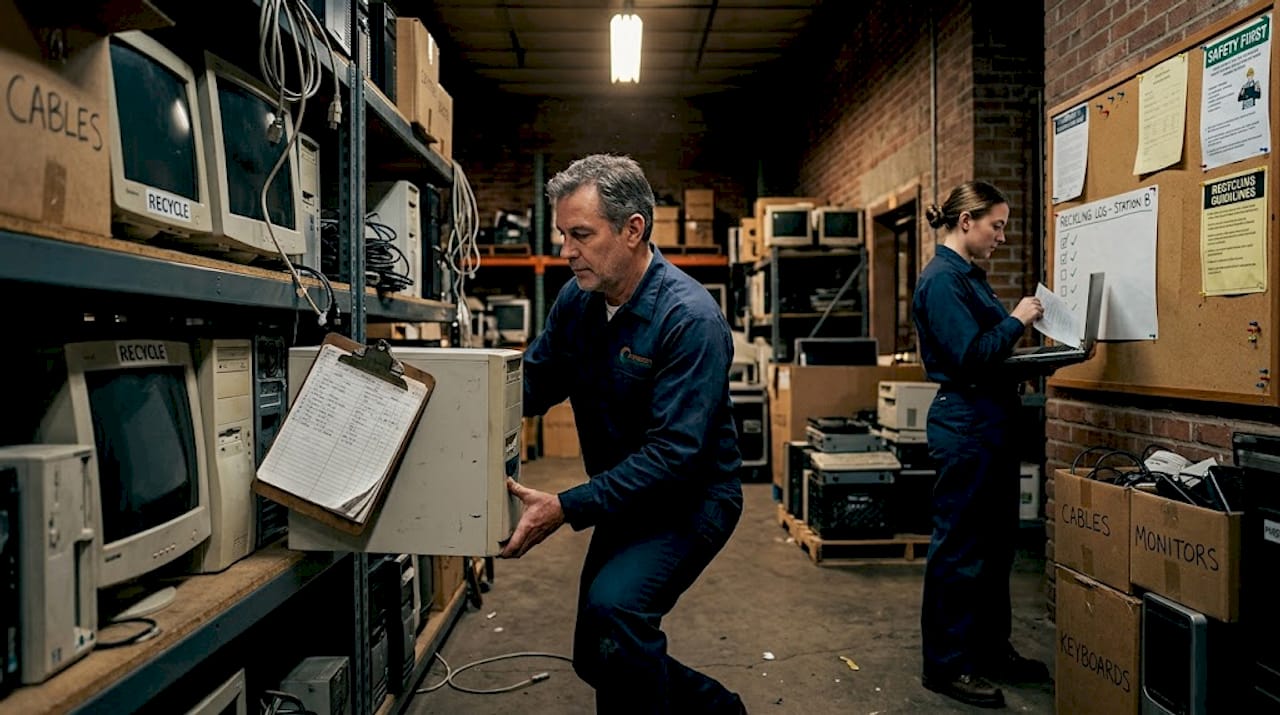
Every device on that list above has one thing in common: it probably stored sensitive data at some point. Customer records, financial information, employee data, intellectual property, access credentials. When you retire a device without destroying that data properly, you are not just creating an environmental problem. You are creating a data breach waiting to happen.
Data sanitization aligned with NIST 800-88 standards is the recognized benchmark for corporate e-waste compliance, along with maintaining audit-ready documentation throughout the process. NIST 800-88 (officially titled “Guidelines for Media Sanitization”) provides a tiered framework: Clear, Purge, and Destroy. Each tier applies to different risk levels and device types, and selecting the wrong tier for a given situation can leave recoverable data on a retired device.
Here is what a compliant data destruction process looks like in practice:
- Inventory and tag every device before it leaves the active IT environment. Assign a unique identifier so you can track it through the entire disposition process.
- Classify the data sensitivity on each device. A laptop used by an executive handling M&A discussions requires a different destruction standard than a shared conference room display screen.
- Select the appropriate NIST 800-88 method. Clear (overwriting) works for lower-risk media. Purge (degaussing or cryptographic erase) handles most enterprise storage. Destroy (physical shredding or disintegration) is appropriate for the highest-sensitivity environments.
- Obtain a certificate of destruction from the vendor performing the work. This document should include serial numbers, the destruction method used, the date, and the technician or facility responsible.
- Retain chain-of-custody documentation that traces the device from your facility to the point of final destruction or recycling. Gaps in this chain are what regulators and auditors look for.
- Archive records for the appropriate retention period based on your industry’s regulations. HIPAA, SOX, GDPR (for data involving EU residents), PCI DSS, and state-level privacy laws all have specific record-keeping requirements.
Pro Tip: Do not rely on a vendor’s assurance that data “was destroyed.” Require serialized certificates tied to individual device serial numbers. Generic certificates covering a batch of devices are nearly impossible to defend during a regulatory audit.
For organizations managing secure IT disposal at scale, the documentation burden can be significant. But the alternative is worse. Regulatory penalties for inadequate e-waste data handling can run into millions of dollars, and the reputational damage from a disclosed breach traced back to a retired device is nearly impossible to quantify.
If you are still working through the compliance landscape, our electronics recycling compliance guide walks through the specific frameworks that apply to different industries.
Enterprise e-waste governance: Controls and due diligence
Security and compliance do not end when the device leaves your building. One of the most misunderstood aspects of corporate e-waste management is that your organization retains legal and ethical responsibility for downstream handling, even after you hand equipment off to a recycler. If your vendor takes shortcuts, the liability can flow back to you.
Enterprise programs treat e-waste as a governance and audit function, and rigorous due diligence on recyclers is a key control in that framework. That means you cannot simply choose the cheapest vendor or the one with the most marketing polish. You need to verify their credentials.
What to look for when vetting an IT asset disposition (ITAD) partner:
- R2v3 or e-Stewards certification: These are the two leading third-party certifications for responsible electronics recycling. Both require annual audits of facilities and processes.
- SOC 2 Type II compliance: For data destruction services, this certification demonstrates that the vendor’s internal controls around data security have been independently verified over time.
- Insurance coverage: Your vendor should carry both general liability and errors-and-omissions insurance that extends to data destruction activities.
- Facility transparency: Can you visit the facility, review their process documentation, or request third-party audit reports? Vendors with nothing to hide make this easy.
- Downstream vendor disclosure: Ask where materials go after initial processing. A responsible ITAD partner can trace and document the full downstream chain, not just what happens at their facility.
Enterprise stakeholders should focus on audit-ready outputs: serialized certificates, chain-of-custody records, and verified destruction methods, not on headline recycling rate percentages that look good in sustainability reports but cannot be verified.
Here is a practical due diligence checklist for evaluating ITAD vendors:
| Due diligence item | Why it matters |
|---|---|
| R2v3 or e-Stewards certification | Third-party verification of responsible practices |
| Serialized destruction certificates | Device-level proof for audits and legal defense |
| Chain-of-custody documentation | Proves your data did not leave a gap in the process |
| Downstream vendor list | Confirms responsible handling beyond the first facility |
| Data destruction method details | Confirms NIST 800-88 alignment |
| Insurance certificates | Protects your organization if something goes wrong |
Pro Tip: Ask any potential ITAD partner for a sample certificate of destruction and a sample chain-of-custody report before you sign a contract. If they cannot produce clean, detailed examples immediately, consider that a red flag. The documentation quality you see in the sales process is usually the best you will ever get.
For organizations looking at secure IT asset recovery as part of a broader disposition strategy, the governance framework matters as much as the physical process. Value recovery from retired assets is possible, but not at the expense of defensible compliance records.
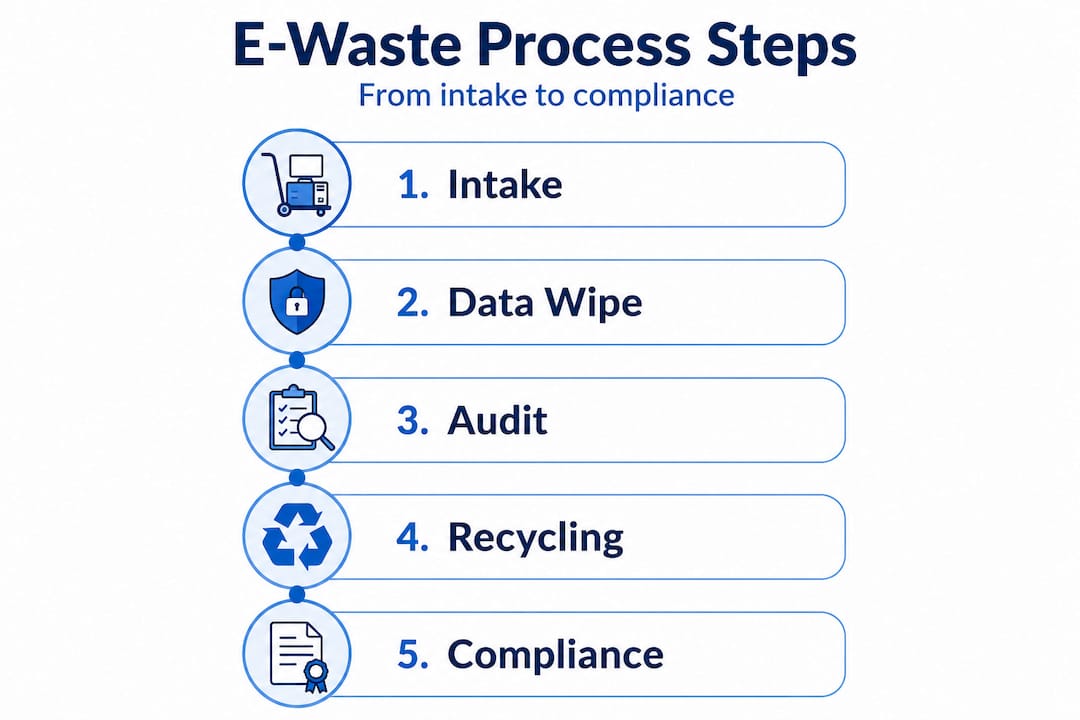
Understanding the secure recycling process from intake to final disposition helps IT managers set realistic expectations and ask the right questions when evaluating vendors.
Best practices for secure and sustainable e-waste disposition
Governance frameworks and vendor due diligence are necessary, but they only work if your organization has built repeatable, documented internal processes. Here is a step-by-step approach that balances security, sustainability, and operational efficiency.
-
Establish a formal e-waste policy. Put it in writing. Define which devices fall under the policy, which destruction standards apply to each device category, and who owns the process internally. Policies that exist only as informal habits cannot be audited or defended.
-
Implement an asset tracking system. Every device should be tagged and logged at acquisition and tracked through its entire lifecycle. When disposition time comes, you need to know exactly what data was on each device and who was responsible for it.
-
Apply NIST 800-88 standards consistently. Do not make ad-hoc decisions about destruction methods. Build the appropriate method into your policy for each device category, and do not allow exceptions without documented authorization.
-
Require device-level documentation from your ITAD vendor. Batch-level certificates are not sufficient for most regulatory frameworks. You need serial-number-specific records that tie each device to a specific destruction event.
-
Pursue certified recycling for all remaining materials. After data destruction, components and materials should go through a certified recycling stream. This is where environmental compliance comes in, and where working with a certified partner protects you from downstream liability.
-
Train your staff. IT teams and business unit managers need to understand why proper e-waste handling matters. Devices that disappear into desk drawers, get donated without data wiping, or get carried home by departing employees are a policy failure, not just an IT problem.
“Sustainable corporate e-waste practice means treating every retired device as a security artifact first and a recyclable material second. The order of operations is not negotiable.”
Check audit-ready e-waste outputs as your benchmark for what “done right” looks like. If your current process cannot produce those outputs, that is your gap to close.
For organizations looking to align e-waste practices with broader sustainability goals without sacrificing compliance, eco-friendly asset recovery tips can help you find the balance. The electronics recycling compliance framework referenced throughout this guide is also a practical starting point for building internal policy language.
Corporate e-waste: Why smart diligence beats ‘high recycling rates’
Here is an uncomfortable truth the industry does not talk about enough: many organizations spend more time promoting their recycling rate in sustainability reports than they spend verifying whether their ITAD vendor’s documentation would hold up in a regulatory audit. Those two things are not the same, and conflating them creates real risk.
We have seen it play out repeatedly. An organization commits to a vendor because of impressive-sounding metrics like “99% diversion from landfill.” That number makes it into the annual ESG report. But when an auditor asks for serialized destruction certificates or chain-of-custody records for a specific decommissioned server, the documentation is either incomplete, batch-level, or missing entirely. The recycling rate becomes irrelevant when a data breach investigation traces back to that device.
Audit-ready outputs are more important than public recycling rates for enterprise e-waste governance. This is not an opinion; it is the practical reality of how regulators and plaintiff attorneys evaluate organizational accountability.
The organizations that get this right treat e-waste disposition the same way they treat financial controls. They do not just report the outcome; they document the process, verify the steps, and retain the evidence. That approach protects them from regulatory penalties and provides a defensible record if a breach ever occurs.
For IT managers, this means pushing back when procurement focuses purely on cost or sustainability claims. For business leaders, it means asking your IT and compliance teams whether your current sustainable asset recovery program produces audit-ready records, not just recycling receipts. The distinction is where real enterprise-grade e-waste management begins.
Get secure, compliant solutions for your corporate e-waste
Your organization’s e-waste program is only as strong as the vendor and processes behind it. Whether you are managing a one-time server decommission or building an ongoing IT refresh cycle, having the right support structure in place makes the difference between a defensible program and a liability.

UsedCartridge.com provides end-to-end corporate e-waste logistics designed specifically for business needs, from secure data destruction with serialized certificates to compliant recycling and IT asset recovery. Our services align with NIST 800-88 and produce the audit-ready documentation your compliance team and auditors need. Explore tailored workflows through our business e-waste recycling service, or get a customized asset recovery quote to find out what value your retiring IT assets could return to your organization while keeping your data and compliance fully protected.
Frequently asked questions
What devices are considered corporate e-waste?
Devices like laptops, servers, phones, peripherals, and office IT equipment are considered corporate e-waste when retired or discarded. Per Gartner’s definition, corporate e-waste covers office information and communications equipment, IT devices, peripherals, and consumer electronics at end of life.
What are the key compliance standards for corporate e-waste disposal?
NIST 800-88 is the widely recognized standard for secure data destruction and compliance documentation in corporate e-waste disposal. Corporate e-waste compliance requires aligning data sanitization with NIST 800-88 and maintaining audit-ready documentation for regulatory and legal defensibility.
Is recycling rate the most important metric in e-waste management?
Audit-ready documentation and chain-of-custody records are more vital than public recycling rates for enterprise e-waste management. Stakeholders should prioritize serialized certificates, verified destruction methods, and chain of custody over headline sustainability metrics.
What happens if e-waste is not disposed of securely?
Improper disposal can lead to data breaches, regulatory fines, and environmental harm. Regulatory penalties and data security risks arise directly from inadequate corporate e-waste handling, and organizations retain liability even when a third-party vendor makes the mistake.