
Asset tracking in recycling is the practice of monitoring physical assets and materials throughout their lifecycle to reduce losses, prove compliance, and verify that materials reach the right end destination. The industry term for this practice is IT asset management (ITAM) when applied to electronics, and returnable transport item (RTI) tracking when applied to packaging and containers. Both disciplines share the same core function: replacing guesswork with verifiable data. For businesses managing e-waste, recyclable packaging, or IT equipment retirement, the role of asset tracking in recycling determines whether your sustainability claims hold up under regulatory scrutiny or collapse under audit pressure.
How does asset tracking improve recycling efficiency and reduce asset loss?
Asset loss is the silent budget killer in recycling operations. Annual loss rates for returnable transport items range between 5% and 15% across asset fleets. That means for every 100 pallets, bins, or containers you deploy, up to 15 disappear from your books each year through theft, misplacement, or unreported disposal.
Active tracking systems cut those losses by providing real-time location data and movement history for every tagged asset. When a container sits at a partner facility for 60 days without moving, your system flags it. Without tracking, that container becomes dead inventory, tying up capital and inflating your fleet size unnecessarily.

The financial impact is direct. Organizations that implement fixed asset tracking reduce asset-related costs by 40%–60% by eliminating ghost assets and improving utilization rates. Ghost assets are items that appear on your books but are no longer in service, either lost, broken, or retired without documentation.
The operational benefits extend beyond cost savings:
- Real-time location visibility eliminates redundant purchases caused by “lost” assets that are simply sitting at the wrong site.
- Dwell time monitoring identifies containers stuck in the supply chain, freeing them for active reuse cycles.
- Automated alerts flag assets that leave designated zones, reducing theft before it becomes a write-off.
- Fleet right-sizing uses utilization data to determine the minimum number of assets needed, cutting procurement and maintenance costs.
Pro Tip: Track dwell time, not just location. An asset sitting idle at a partner warehouse for 45 days costs you more in lost reuse cycles than one that is physically missing. Dwell time data reveals the hidden inefficiency that location data alone cannot show.
What compliance and reporting advantages does asset tracking bring to recycling?
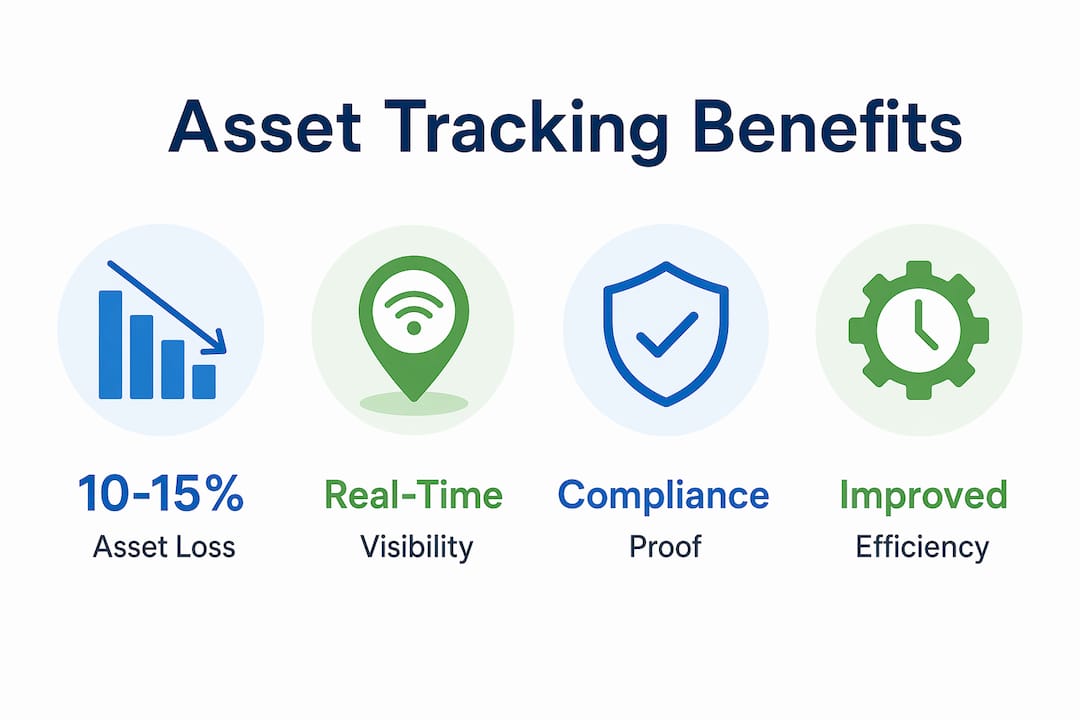
Regulatory pressure on recycling compliance is accelerating in 2026. Extended Producer Responsibility (EPR) schemes and regulations like the EU’s Packaging and Packaging Waste Regulation (PPWR) now require businesses to prove material recovery with evidence, not estimates. Digital traceability enables real-time compliance monitoring for EPR schemes, replacing aggregated annual reports with continuous, verifiable data streams.
The gap between manual tracking and automated systems is significant here. Manual scanning methods lack the continuous audit trails required by regulations like EU PPWR. A barcode scan at pickup proves nothing about what happened to the material afterward. Automated systems log every movement, every handoff, and every final disposition.
“To substantiate true circularity claims, tracking must include confirmation of final disposition through integration with material recovery facilities, haulers, and exception handling data.” This means your tracking system needs to connect to your downstream partners, not just your internal operations.
Effective compliance tracking covers three layers:
- Chain of Custody documentation: Every transfer of material or asset is logged with timestamps, locations, and responsible parties.
- MRF and hauler integration: Disposition data connecting packaging to MRF acceptance and hauler documentation validates landfill diversion claims.
- Automated audit reports: Systems generate compliance reports on demand rather than requiring manual data assembly before an audit.
Research also shows that landfill taxes paired with tracking technology produce higher recycling rates than either policy or technology alone. The synergy matters: economic incentives push behavior, and tracking systems provide the proof that the behavior actually occurred. For businesses operating across electronics recycling compliance requirements, this combination is the difference between passing an audit and failing one.
Which asset tracking technologies work best for recycling operations?
No single technology fits every recycling operation. The right choice depends on your asset type, volume, budget, and the level of automation your compliance requirements demand.
| Technology | Automation level | Best use case | Key limitation |
|---|---|---|---|
| RFID (passive) | Medium | High-volume container tracking at fixed read points | Requires reader infrastructure at each checkpoint |
| GPS (active) | High | Mobile assets, vehicles, large containers across wide areas | Higher hardware cost and battery maintenance |
| QR/barcode scanning | Low | Low-volume or budget-constrained operations | Manual process with no continuous visibility |
| IoT sensors | High | Real-time condition and location monitoring for sensitive materials | Most expensive to deploy at scale |
RFID works well for material recovery facilities (MRFs) where assets pass through fixed checkpoints. You install readers at dock doors and conveyor entry points, and every tagged bin or pallet is logged automatically. The limitation is coverage gaps between checkpoints.
GPS tracking, such as the systems offered by Moto Watchdog, suits mobile assets like collection vehicles or large containers that travel between sites. GPS provides continuous location data without requiring fixed infrastructure, but active GPS devices need power and periodic maintenance.
Barcode and QR scanning remain common in smaller operations, but they create compliance risk. No single recycling technology solves all circularity goals; asset tracking ensures materials route correctly to the appropriate recycling process, whether mechanical or advanced chemical recycling. Manual scanning cannot guarantee that routing happened correctly after the scan was recorded.
The practical recommendation for most businesses is a hybrid approach: RFID at fixed processing points, GPS on mobile assets, and software integration that consolidates data from both into a single dashboard. This gives you automated compliance data without the cost of deploying GPS on every small container.
How can businesses implement asset tracking to maximize recycling outcomes?
Implementation succeeds or fails at the planning stage. Businesses that deploy tracking technology without first mapping their asset flows end up with data they cannot act on.
Follow these steps to build a tracking program that delivers measurable results:
-
Audit your current asset inventory. Count every container, bin, pallet, and piece of equipment in your recycling program. Identify which assets are active, which are idle, and which are unaccounted for. This baseline reveals your actual loss rate before you spend anything on technology.
-
Define your compliance requirements first. Your regulatory obligations determine the minimum tracking capability you need. EPR reporting requires chain-of-custody data. IT lifecycle management requires serialized asset records tied to certified disposal. Know your requirements before selecting technology.
-
Select technology matched to asset type. Use the comparison table above as a starting framework. High-value or mobile assets justify GPS. High-volume fixed-route assets suit RFID. Low-volume or pilot programs can start with QR codes and upgrade later.
-
Integrate with downstream partners. Your tracking system only proves compliance if it connects to your haulers, MRFs, and certified recyclers. Establish data-sharing agreements and API connections before go-live.
-
Set KPIs before launch. Measure asset rotation rate (how many times an asset completes a full reuse cycle per year), loss rate (percentage of assets unaccounted for per quarter), and dwell time (average days an asset sits idle). These three metrics tell you whether your program is working.
-
Train your team and your partners. Technology adoption fails when the people handling assets do not understand why scanning or tagging matters. A 30-minute onboarding session for warehouse staff and hauler drivers prevents months of bad data.
Pro Tip: Start your KPI tracking 90 days before deploying new technology. That pre-deployment baseline makes your ROI calculation credible to finance teams and auditors alike. Without it, you are comparing against an assumption, not a fact.
The digital device recycling benefits for businesses go beyond environmental impact. Tracking data directly informs fleet right-sizing decisions, which reduces capital tied up in excess containers and cuts storage costs at partner facilities.
Key takeaways
Asset tracking in recycling reduces losses, proves compliance, and generates the verifiable data that regulators and sustainability auditors now require from businesses.
| Point | Details |
|---|---|
| Loss rates are measurable and preventable | RTI fleets lose 5%–15% of assets annually; active tracking cuts that loss with real-time visibility. |
| Cost savings are significant | Fixed asset tracking reduces asset-related expenses by 40%–60% by eliminating ghost assets. |
| Compliance requires automated tracking | Manual scanning cannot satisfy EPR or PPWR audit requirements; automated systems log every movement. |
| Technology choice depends on asset type | RFID suits fixed checkpoints; GPS suits mobile assets; hybrid systems cover both at lower total cost. |
| Implementation starts with a baseline audit | Measuring your current loss rate before deployment makes ROI calculations credible and actionable. |
What I have learned tracking assets through real recycling programs
The most common mistake I see businesses make is treating asset tracking as a technology purchase rather than a data strategy. They buy RFID tags, install readers at two dock doors, and declare the program live. Six months later, they have location data for 40% of their assets and no idea what happened to the rest.
The uncomfortable truth is that tracking systems reveal problems you did not know you had. The first time a client ran dwell time reports, they discovered that 23% of their returnable containers had not moved in over 90 days. Those containers were sitting at three partner facilities, completely off the radar. The containers were not lost. They were just invisible. That invisibility was costing the client real money in unnecessary procurement and inflated fleet maintenance budgets.
The second lesson is that compliance reporting is not a feature you add later. Businesses that deploy tracking for operational efficiency and then try to retrofit compliance reporting find that their data architecture does not support chain-of-custody documentation. You need to design for compliance from day one, even if your immediate goal is just reducing asset loss.
The future of this space points toward digital twins of entire asset lifecycles, where every container, device, or piece of equipment has a continuous data record from manufacture through final disposition. AI-driven anomaly detection will flag routing errors before materials reach the wrong facility. That future is closer than most businesses realize, and the organizations building clean tracking data today will have a significant head start when those tools become standard.
— Keith
Usedcartridge’s approach to e-waste tracking and compliance
Responsible e-waste disposal requires the same chain-of-custody discipline that asset tracking brings to returnable packaging. Usedcartridge provides e-waste logistics solutions that document every step of the disposal and recovery process, from pickup through certified recycling or data destruction.

For businesses managing end-of-life IT equipment, Usedcartridge’s IT asset recovery services include serialized tracking, certified destruction documentation, and compliance reporting that satisfies both environmental regulations and data privacy requirements. If your organization needs verifiable proof that retired devices were handled responsibly, Usedcartridge delivers the documentation that auditors and regulators accept. Request a free quote to see how asset-level tracking integrates with your existing disposal workflow.
FAQ
What is asset tracking in recycling?
Asset tracking in recycling is the use of technologies like RFID, GPS, or barcode scanning to monitor physical assets and materials throughout their lifecycle. The goal is to reduce losses, verify material routing, and generate compliance documentation.
Why does asset tracking matter for e-waste compliance?
Regulations like EPR schemes require businesses to prove material recovery with verifiable data, not estimates. Automated tracking systems create the continuous audit trails that manual scanning cannot provide.
What is the typical asset loss rate without tracking?
Returnable transport item fleets lose between 5% and 15% of assets annually without active tracking. Real-time visibility and dwell time monitoring are the most effective tools for reducing that rate.
Which tracking technology is best for recycling operations?
RFID works best at fixed processing points like MRF dock doors. GPS suits mobile assets and collection vehicles. Most operations benefit from a hybrid system that consolidates both data streams into one platform.
How does asset tracking support sustainability reporting?
Tracking disposition data through MRFs and haulers provides the chain-of-custody evidence needed to validate landfill diversion and circularity claims in sustainability reports.