
Mercury is one of the most hazardous substances workers encounter in electronics recycling, and its management demands more than basic precautions. It appears in fluorescent lamps, cold cathode fluorescent lamp (CCFL) backlights in LCD screens, mercury switches, relays, and certain batteries. When these components are crushed or shredded, mercury vapor releases instantly, contaminating entire facilities within minutes. The CDC’s NIOSH documented exactly this scenario at an Ohio facility in 2023, where vapor spread well beyond the lamp recycling area into conference rooms and storage spaces.
Key facts every recycling professional needs to know:
- Mercury concentrations in lamps average 578 μg/g, compared to an overall product average of 0.65 μg/g across all electronics categories.
- Up to 80% of inhaled mercury vapor absorbs directly into the bloodstream, crossing the blood-brain barrier.
- The EPA’s Universal Waste Rule governs storage, transport, and disposal of mercury-containing equipment and lamps.
- The Minamata Convention on Mercury, in force since August 2017, sets the international framework for reducing mercury in products and waste streams.
- Improper treatment, such as processing mercury-containing lamps as generic scrap metal, releases mercury into the environment and creates serious legal liability.
Where does mercury actually come from in electronic equipment?
The distribution of mercury across electronics is uneven, and knowing which components carry the highest concentrations shapes every decision about sorting and dismantling.
Lamps and lighting components carry by far the greatest mercury loads. Fluorescent tubes, high-intensity discharge (HID) lamps, neon lamps, mercury vapor lamps, and CCFL backlights used in older LCD monitors and televisions all contain elemental mercury. Fluorescent lamps average 578 μg/g, with upper boundary values reaching far higher in spent tubes. Nearly 80% of the total mercury in fluorescent lights sits in the phosphor powder coating, and most of it vaporizes during dismantling.
Switches and relays in older appliances, thermostats, and industrial control equipment contain small pools of liquid elemental mercury that tilt to make or break electrical contact. These are compact but concentrated sources. Under the EPA’s Universal Waste Rule, mercury-containing equipment such as thermostats falls under 40 CFR part 273, which defines it as any device containing elemental mercury integral to its function.
Batteries in certain older devices contain mercury compounds, though modern alkaline batteries have largely been reformulated. Nickel-cadmium and button cell batteries from legacy electronics remain a concern during sorting.
Common mercury-containing components to flag during incoming inspection:
- Fluorescent and HID lamps (including CCFL backlights in LCD panels)
- Mercury tilt switches and float switches
- Mercury relays and reed switches
- Older thermostat assemblies
- Button cell and certain rechargeable batteries from pre-2000 devices
- Barometers and manometers in industrial electronics
The chemical form matters for exposure risk. New fluorescent tubes contain elemental mercury (Hg⁰), which vaporizes readily at room temperature. Spent tubes shift toward ionic forms (Hg⁺ and Hg²⁺) in the phosphor powder. Both forms are hazardous, but elemental mercury vapor poses the most immediate inhalation risk during processing.
Health and environmental hazards from mercury exposure during recycling
Mercury vapor is the primary threat in recycling operations, and its absorption rate is what makes it so dangerous. Up to 80% of inhaled mercury vapor enters the bloodstream directly through the lungs, crosses the blood-brain barrier, and accumulates in the central nervous system. Chronic exposure, even at concentrations below established occupational limits, produces cumulative neurological damage over time.
Workers report symptoms including metallic or bitter taste in the mouth, difficulty concentrating, memory problems, tremors, and personality changes. Kidney damage is a documented systemic effect. In the 2023 Ohio investigation, five of six lamp recycling workers reported symptoms consistent with mercury toxicity, and four of those workers did not speak English, which compounded the difficulty of communicating exposure risks.
Exposure alert: Mercury vapor was detected in all 171 air samples collected at the Ohio facility, including non-production areas. The median mercury vapor concentration in the material storage area reached 60.5 μg/m³, exceeding both the ACGIH Threshold Limit Value (TLV) of 25 μg/m³ and the NIOSH Recommended Exposure Limit (REL) of 50 μg/m³.
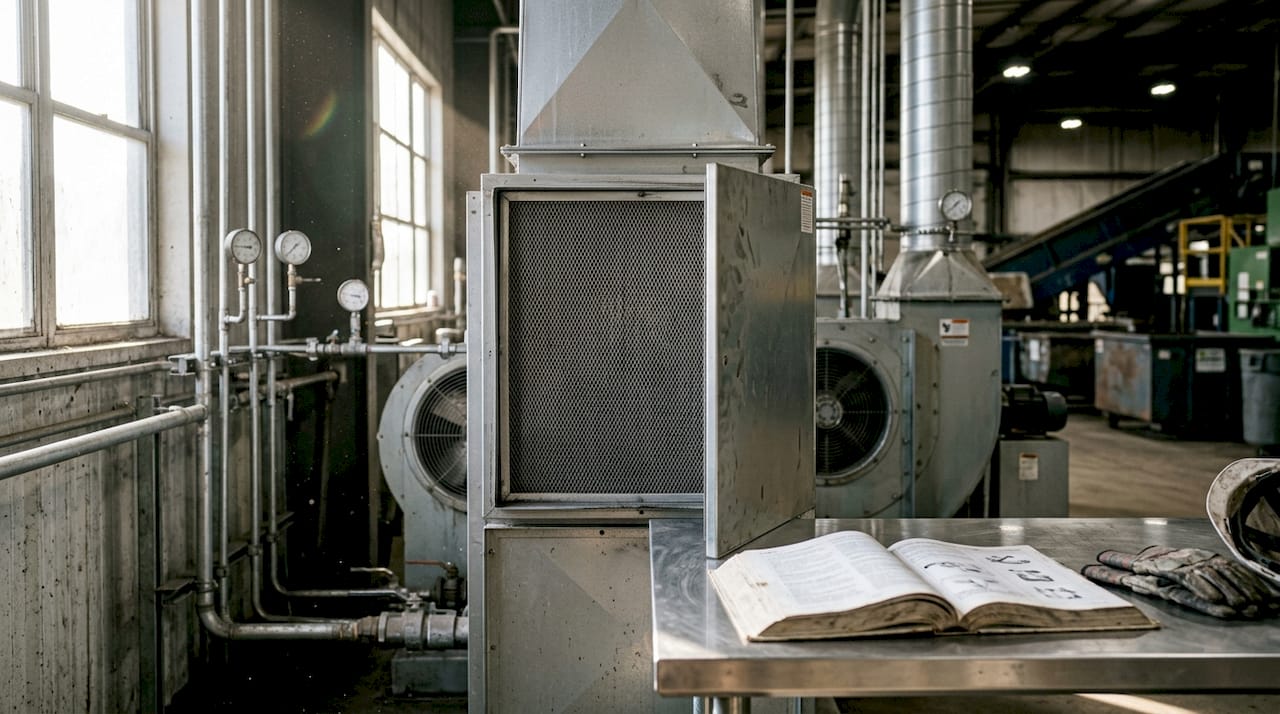
The environmental effects of mercury extend well beyond the facility walls. Vapor and dust released during shredding or inadequate ventilation migrate through HVAC systems, settle on surfaces, and contaminate soil and water near disposal sites. A systematic review found that average soil and sediment mercury levels at active e-waste sites were at least eight times higher than at control sites. Workers at those sites showed urinary mercury levels approximately two times higher than control groups.
Mercury contamination does not stay where it starts. Dust and vapor disperse through shared air handling systems, meaning workers in administrative areas and break rooms face real exposure even without direct contact with lamp processing equipment.
How U.S. regulations govern mercury in electronics recycling
The regulatory framework for mercury-containing e-waste in the United States runs through several overlapping systems, and compliance requires understanding how they interact.
The Universal Waste Rule is the primary mechanism for managing mercury-containing lamps and equipment outside of full hazardous waste regulation. Under this rule, handlers may store mercury-containing wastes for up to one year without triggering hazardous waste manifest requirements. However, the rule mandates that all such waste ultimately goes to a permitted hazardous waste treatment, storage, or disposal facility. The exemption simplifies logistics; it does not eliminate the obligation to treat the waste properly. For a detailed breakdown of storage timelines and exemptions, Usedcartridge’s disposal regulations guide covers the specific requirements businesses face.
Key regulatory requirements under the Universal Waste Rule and related EPA standards:
- Mercury-containing equipment and lamps are federally designated universal wastes under 40 CFR part 273.
- Storage limit: up to one year from the date of generation.
- Transport: exempt from full hazardous waste manifest requirements, but must go to permitted facilities.
- Circuit boards containing mercury switches or relays must have those components removed before shredding to qualify for the scrap metal exclusion under 40 CFR section 261.4(a)(14).
- Generators must label containers and keep records of accumulation start dates.
The EPA’s RCRA Subtitle C framework governs hazardous waste recycling more broadly. Mercury-containing waste that does not qualify for universal waste treatment falls under full Subtitle C requirements, including manifest tracking, permitted transporter use, and land disposal restrictions.
The Minamata Convention shapes U.S. policy at the international level. Ratified by the United States, the Convention requires parties to phase out mercury-added products, control emissions from manufacturing processes, and manage mercury-containing wastes in ways that protect human health and the environment. Article 16 specifically calls for educational and preventive programs to reduce occupational exposure.
Safe mercury handling and removal practices in electronics recycling
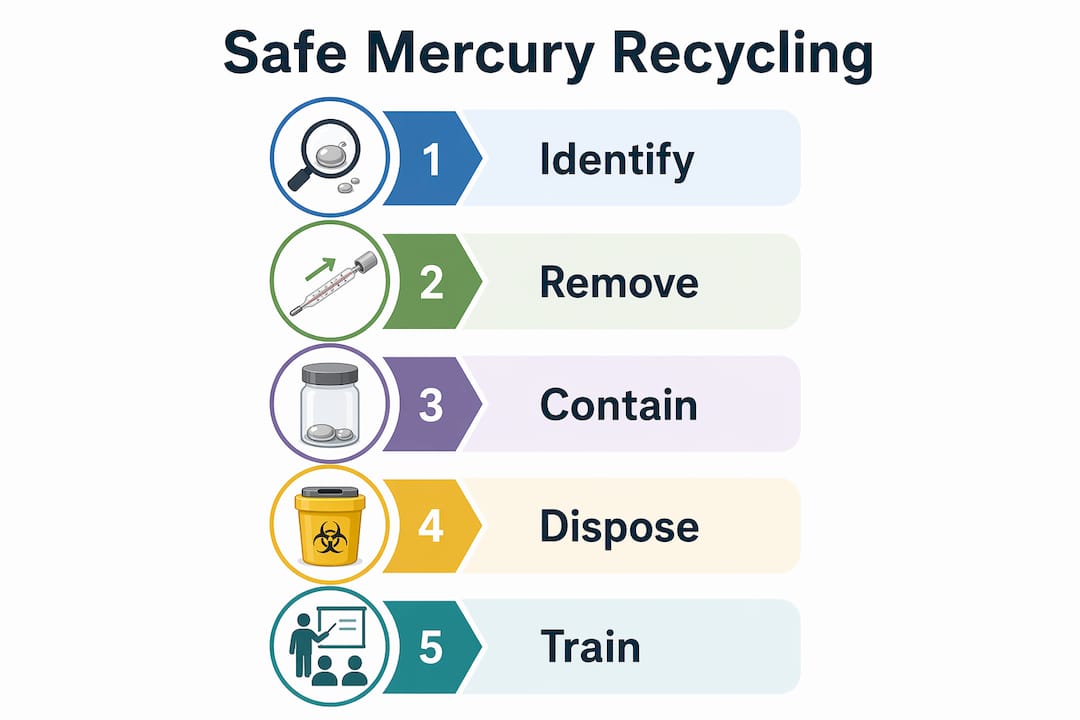
Early removal at the source is the single most effective way to prevent mercury contamination from spreading through a recycling facility. The EPA recommends manual dismantling to isolate mercury-containing components before any mechanical processing begins. Once a lamp or switch enters a shredder intact, the contamination problem multiplies across the entire material stream.
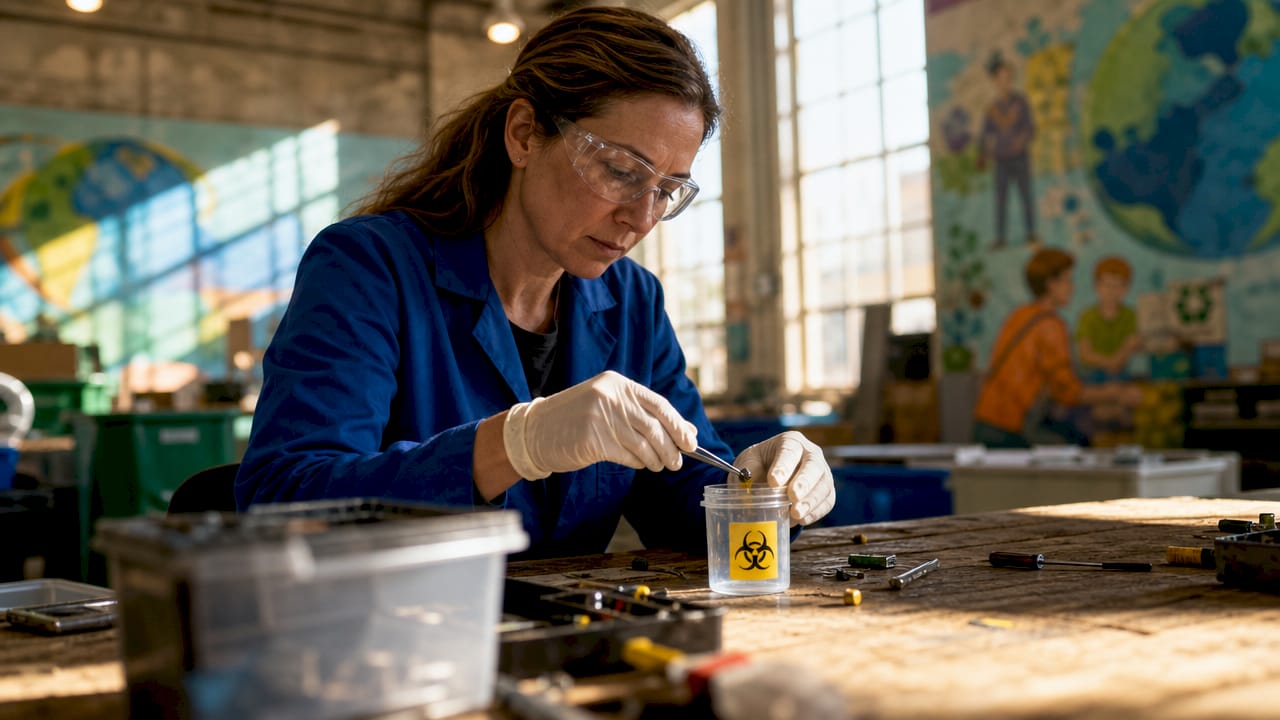
Engineering controls take priority over personal protective equipment in the hierarchy of controls. CDC and NIOSH guidance is explicit: enclosed ventilation systems with high-efficiency filtration reduce airborne mercury concentrations at the source, while PPE alone cannot compensate for inadequate ventilation. Facilities processing mercury-containing lamps should use dedicated enclosed crushing systems with activated carbon or HEPA filtration, not open-air breaking.
Pro Tip: Monitor airborne mercury concentrations facility-wide, not just at lamp-breaking stations. The 2023 Ohio case confirmed that conference rooms and storage areas can exceed the ACGIH TLV of 25 μg/m³ even when workers there have no direct contact with lamp processing.
Recommended safety measures for mercury management in recycling operations:
- Conduct incoming material audits to identify and segregate mercury-containing components before processing.
- Use enclosed, ventilated lamp-crushing systems with activated carbon filtration.
- Establish a dedicated mercury component removal station with local exhaust ventilation.
- Require supplied-air respirators or half-face respirators with combination organic vapor and HEPA cartridges for lamp processing workers.
- Implement baseline and periodic urine mercury biomonitoring for all workers in or near mercury processing areas.
- Store broken lamp debris in sealed, labeled containers to prevent secondary vapor release.
- Provide training materials in workers’ primary languages, not English only.
For a step-by-step approach to safe electronics removal, including how to isolate mercury components during manual dismantling, Usedcartridge’s guide covers the process in detail.
What a 2023 Ohio facility investigation reveals about real exposure risks
The NIOSH health hazard evaluation at an Ohio electronics waste and lamp recycling facility in April 2023 is the most detailed recent documentation of mercury exposure in a U.S. recycling operation, and its findings are worth examining closely.
NIOSH investigators collected 171 direct area air samples and found mercury vapor in every single one. In production areas, the lamp room showed a median concentration of 35.8 μg/m³, the glass roll-off area reached a median of 29.1 μg/m³, and one sample from that area hit 106.3 μg/m³, exceeding both the NIOSH REL and the OSHA Permissible Exposure Limit (PEL). The retort furnace area median was 26.1 μg/m³.
Biomonitoring result: Six of 14 workers had spot urine mercury levels above the ACGIH Biological Exposure Index (BEI). Among the six workers in the lamp recycling area, the median urine mercury-to-creatinine ratio was 41.3 μg/g. Five of those six workers had personal air exposures above the ACGIH TLV, with a median personal exposure of 64.8 μg/m³.
Three findings from this investigation stand out for facility managers. First, contamination reached non-production areas: the conference room median was 26.0 μg/m³, above the ACGIH TLV, and one worker with no direct lamp recycling duties still showed elevated urine mercury. Second, inconsistent PPE use contributed to overexposure even when respiratory protection was available. Third, four of the six workers with elevated biomarkers did not speak English, pointing directly to the failure of English-only training programs.
The employer’s post-investigation improvements included ventilation system upgrades, revised work practices to reduce mercury contact, and training programs adapted for non-English-speaking workers. Health departments in jurisdictions with recycling facilities should treat this case as a template for proactive monitoring programs.
Disposing of mercury-containing waste and by-products from electronics recycling
Once mercury-containing components are removed from electronics, the disposal pathway is tightly regulated and non-negotiable. Broken lamp debris, removed switches, and mercury-contaminated materials cannot go to municipal solid waste streams or standard recycling bins.
Under the Universal Waste Rule, these materials must travel to a permitted hazardous waste treatment facility. Retort processing, the thermal distillation of mercury from contaminated materials, is the standard recovery method for elemental mercury. The recovered mercury can then be reused in industrial applications or permanently sequestered. Facilities that process mercury-containing lamps as generic scrap metal, bypassing these requirements, release mercury into the environment and undermine the circular economy goals that recycling is supposed to serve.
Sham recycling is a real legal risk. Generators who send mercury waste to facilities that claim to recycle it but do not actually process it to permitted standards face liability under RCRA. Verifying that a downstream vendor holds the appropriate permits and conducts legitimate recycling is not optional. Usedcartridge’s monitor disposal guide outlines how to confirm that mercury parts reach compliant facilities. For businesses needing electronics waste removal that accounts for hazardous material streams, working with a vetted service provider reduces that liability significantly.
How mercury contamination affects recycling facility operations and product quality
Mercury contamination does not stay confined to the lamp-processing line. Once vapor or dust spreads through shared air handling systems, it deposits on surfaces, equipment, and recovered materials throughout the facility. Metals, plastics, and circuit boards processed in contaminated areas can carry mercury residue, which creates downstream problems for buyers of recovered materials and potential regulatory issues for the facility.
Facilities that discover widespread contamination often face costly remediation: surface decontamination, HVAC cleaning, and in severe cases, temporary shutdown of affected areas. The Ohio facility investigation found elevated vapor levels in the conference room and material storage area, both spaces where contamination was not expected and where standard protective protocols were not in place.
Product quality suffers when recovered materials carry mercury contamination. Smelters and secondary processors that receive contaminated scrap face their own regulatory obligations, and some will reject or surcharge loads that test positive. The practical consequence is that poor mercury management at the front end of the recycling process creates financial and legal exposure at every downstream step.
International standards shaping mercury management in e-waste recycling
The Minamata Convention on Mercury, which entered into force in August 2017, is the anchor of the global framework. It requires signatory nations to phase out mercury-added products, control releases from manufacturing and waste management, and establish safe disposal pathways for mercury-containing wastes. For electronics recycling specifically, the Convention addresses mercury in lamps, switches, and batteries, and calls for parties to develop occupational exposure prevention programs under Article 16.
The Basel Convention on the Control of Transboundary Movements of Hazardous Wastes intersects with mercury management when facilities consider exporting mercury-containing waste. Export is permitted only when safe domestic management is not feasible, and it requires strict documentation and receiving-country consent. The Minamata Convention reinforces these controls, requiring that exported mercury-containing waste go only to facilities capable of managing it safely.
The European Union’s Restriction of Hazardous Substances (RoHS) Directive limits mercury content in new electrical and electronic equipment, which gradually reduces the mercury load entering the waste stream. A systematic review found that most analyzed e-waste product samples complied with RoHS guidelines, though fluorescent lamps exceeded thresholds significantly. As legacy equipment containing higher mercury concentrations continues to cycle through the waste stream, these international standards provide the policy framework that U.S. regulations implement domestically.
Worker training and community awareness for mercury risk reduction
Training is where regulatory compliance and actual worker protection either converge or diverge. The Ohio facility case made this concrete: workers who could not read English-language safety materials were among those with the highest mercury biomarker levels. Effective training programs must be delivered in workers’ primary languages, use visual aids and hands-on demonstrations, and cover not just procedures but the reasons behind them.
Health surveillance should extend beyond workers who directly handle mercury components. The NIOSH investigation confirmed that workers in administrative and general work areas can accumulate mercury body burden from facility-wide contamination. Baseline urine mercury testing at hire, followed by periodic monitoring, gives facilities early warning before symptoms appear.
Community awareness matters when recycling facilities operate near residential areas. Mercury vapor and contaminated dust can migrate off-site through HVAC exhaust, vehicle traffic, and stormwater runoff. Facilities should communicate with local health departments, maintain air monitoring records, and participate in any regional occupational health surveillance programs. For organizations building out their e-waste recycling compliance programs, integrating mercury-specific training into broader environmental health and safety protocols is the most efficient path to sustained protection.
Key Takeaways
Mercury in electronics recycling poses serious, well-documented occupational and environmental risks that require engineering controls, regulatory compliance, and multilingual worker training to manage effectively.
| Point | Details |
|---|---|
| Lamps carry the highest mercury load | Lamps carry an average mercury concentration of 578 μg/g, far higher than the overall electronics product average of 0.65 μg/g. |
| Vapor absorption is rapid and severe | Up to 80% of inhaled mercury vapor enters the bloodstream, crossing the blood-brain barrier and causing neurological damage. |
| Contamination spreads facility-wide | The 2023 Ohio investigation found mercury vapor exceeding the ACGIH TLV of 25 μg/m³ in conference rooms and storage areas, not just production zones. |
| Universal Waste Rule sets disposal rules | Mercury-containing wastes may be stored up to one year but must ultimately go to a permitted hazardous waste treatment facility. |
| Engineering controls outperform PPE alone | Enclosed ventilation with high-efficiency filtration reduces mercury vapor at the source; PPE cannot substitute for inadequate ventilation. |
Handle mercury-containing e-waste with a certified partner

Managing mercury in electronics recycling is not a task to improvise. The regulatory requirements, occupational health obligations, and environmental liabilities are real and well-documented. Usedcartridge provides certified e-waste recycling and disposal services designed to handle hazardous materials, including mercury-containing components, in full compliance with EPA standards and the Universal Waste Rule. From secure pickup to verified downstream processing, every step is documented. For businesses that need a compliant, auditable solution for mercury-containing electronics, contact Usedcartridge to get started.