
If your organization ships electronics containing hazardous components, you likely need a manifest, and the manifest is now almost always electronic. Check your generator status and EPA ID number first, then confirm whether your state adds requirements federal law doesn’t cover. If either applies, you’ll register with e-Manifest or confirm your receiving facility already handles submissions on your behalf.
TL;DR:
- Most hazardous e-waste, such as CRT monitors and batteries containing lead, cadmium, or mercury, requires an electronic manifest when shipped.
- Generators must obtain an EPA ID by registering through myRCRAid before creating or submitting electronic manifests for shipments.
- Electronic and hybrid manifests are processed instantly, with signed copies available within hours, unlike paper versions that take up to 30 days to be officially submitted.
- If a signed manifest is not received within 45 days, generators should actively follow up and file an exception report if necessary.
- Keeping organized records of final signed manifests and certificates in chronological order is essential for audit readiness and legal compliance.
Table of Contents
- What Is E-Manifest, and When Does It Apply to Electronic Waste?
- Who Must Register, and How Do You Get an EPA ID?
- How Do You Create and Submit a Manifest?
- What Are the Exception and Discrepancy Reporting Rules?
- Where Does State Law Add to Federal Manifest Rules?
- What Should Be on Your Compliance Checklist?
- Usedcartridge’s Take on Manifest-Ready Compliance
- Get Manifest-Ready Support From Usedcartridge
- Sources
- FAQ
What Is E-Manifest, and When Does It Apply to Electronic Waste?
E-Manifest is the EPA’s national system for tracking hazardous waste shipments from the point of generation to final disposal, built on the Hazardous Waste Electronic Manifest Establishment Act. It runs on the Uniform Hazardous Waste Manifest, EPA Form 8700-22, and it accepts electronic signatures as legally valid alternatives to wet-ink paper copies.
Not every retired laptop or monitor needs one. Manifests get triggered by hazardous characteristics or specific regulated components, not by the fact that something plugged into a wall once. Items that commonly trigger e-waste manifest requirements include:
- CRT monitors and televisions, which contain leaded glass regulated as hazardous waste in most states
- Circuit boards and other components with lead, cadmium, or mercury above regulatory thresholds
- Certain battery chemistries, including nickel-cadmium and some lithium formulations (see Hinweise zur Entsorgung von Batterien – EVOQEN)
- PCB-containing capacitors and ballasts found in older equipment
Federal thresholds set the floor, not the ceiling. Some states extend manifest or reporting obligations to devices that RCRA wouldn’t classify as hazardous on its own, which is why checking your specific state program before you ship matters as much as checking federal rules.
Who Must Register, and How Do You Get an EPA ID?
Large Quantity Generators and Small Quantity Generators are required to register for e-Manifest, and both need an EPA identification number before they can do it. Very Small Quantity Generators aren’t legally required to register in most cases, but the EPA still recommends it as a defensible best practice for building a clean audit trail.
Getting set up follows a predictable sequence:
- File EPA Form 8700-12 (or update an existing one) through myRCRAid to establish or confirm your EPA ID number.
- Use that EPA ID to create your organization’s account in RCRAInfo, the backend database that powers e-Manifest.
- Register at least two site managers per EPA ID, since a single point of contact creates an obvious continuity risk.
- Assign user permissions deliberately. Not everyone on your facilities team needs authority to sign manifests.
- Review your account details quarterly. Outdated contact information is one of the most common reasons compliance paperwork stalls during an actual audit.
How Do You Create and Submit a Manifest?
You have three paths: fully electronic, hybrid, or paper. Electronic is the default expectation now, and the e-Manifest system lets generators build the manifest directly in the web interface, sign it electronically, and route it to the transporter and receiving facility in one workflow. Larger operations with high shipment volume sometimes use the EPA’s API to push manifest data from their own systems instead of typing it in manually.
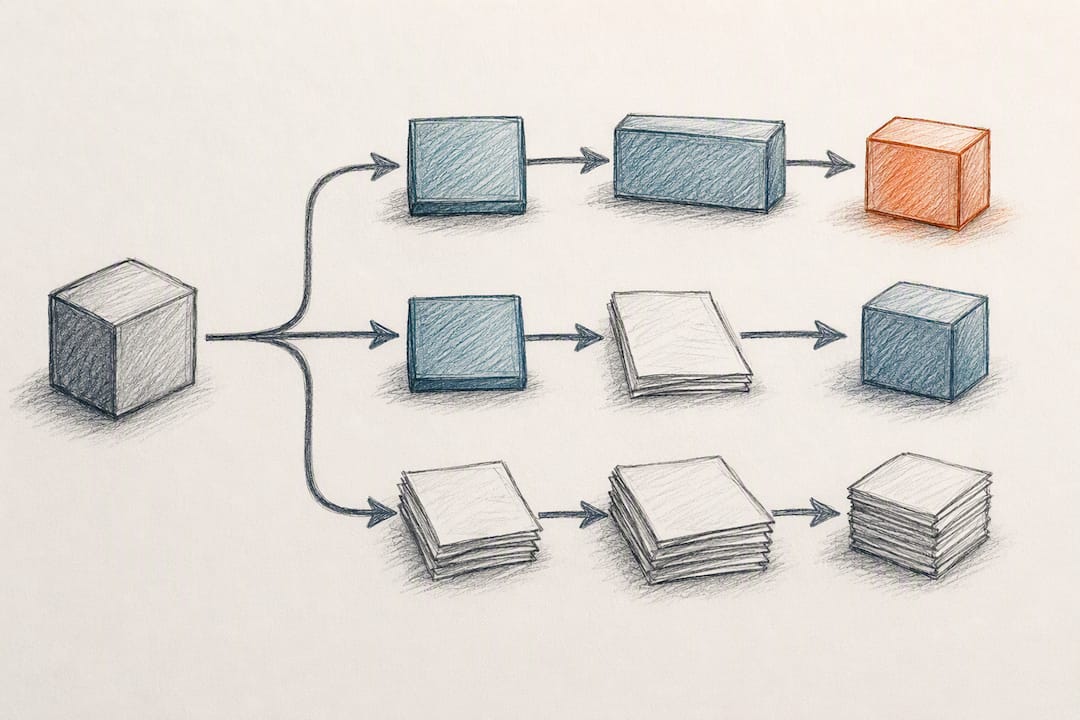
Electronic manifests carry the same legal weight as paper ones. 40 CFR § 263.20 treats a properly signed electronic manifest as fully equivalent to a wet-ink signature, provided it meets the certification requirements. That said, if separate hazardous materials transport rules require a printed document to travel with the shipment, the transporter still has to carry a printed copy of that electronic manifest in the vehicle.
Submission speed depends entirely on the format you choose:
- Electronic and hybrid manifests submit instantly once all parties sign off, giving generators real-time visibility into where a shipment stands.
- Paper manifests lag behind. The receiving facility is responsible for submitting the paper manifest to e-Manifest within 30 days of accepting the waste.
That 30-day gap is exactly why the EPA has pushed hard toward electronic submission. A shipment tracked electronically shows up in your account within hours. A shipment tracked on paper can leave you guessing for a month about whether it ever arrived.
What Are the Exception and Discrepancy Reporting Rules?
Generators don’t get to hand off a shipment and forget about it. You’re responsible for monitoring manifest status until you have a final, signed copy back, and the EPA has built specific windows into the rules to force that follow-up.
- If you haven’t received a signed copy within a regulatory timeframe after shipment, start an active search: contact the transporter and the receiving facility directly. If you still don’t have it after additional regulatory time, file an Exception Report with your regional or state EPA office.
- If a shipment arrives with a significant discrepancy in quantity or waste description, the receiving facility must attempt to resolve it within 15 days and file a Discrepancy Report if it can’t.
- Escalate to state or regional officials any time a facility stops responding to outreach. Silence is not resolution.
Export shipments carry their own layer of scrutiny, with manifest and movement-document rules that changed alongside the broader electronic reporting expansion that took effect December 1, 2025.
Pro Tip: Keep final signed manifests and any certificates of destruction in a dedicated compliance folder, digital or physical, organized by shipment date rather than by vendor. Auditors ask for chronological records far more often than they ask for vendor summaries.
Where Does State Law Add to Federal Manifest Rules?
Federal RCRA rules are the baseline, but 25 states plus Washington, D.C. have their own electronics recycling laws, and several of those go further than federal thresholds require. Some states apply extended producer responsibility frameworks that shift disposal obligations onto manufacturers, while others impose recycling fees or manifest-style tracking on device categories RCRA wouldn’t touch.
Businesses run into trouble in a few predictable ways:
- Assuming “non-hazardous” federally means no documentation is required anywhere, when a state program says otherwise
- Never confirming that a receiving facility is actually authorized and active in e-Manifest before shipping to it
- Misclassifying mixed-use devices that combine regulated and unregulated components under one waste code
Check your state’s specific electronics program before finalizing any disposal contract, and get written confirmation that your receiving facility can process and submit manifests electronically. A facility that’s still paper-only adds a full 30-day submission lag you don’t need.
What Should Be on Your Compliance Checklist?
Treat manifest compliance as three phases: setup, shipment, and retention. Skipping the setup phase is where most businesses get caught flat-footed during their first audit.
- Determine your generator status (LQG, SQG, or VSQG) based on monthly waste volume.
- Confirm your EPA ID number is active and your account details are current.
- Register for e-Manifest, or get written confirmation your receiving facility handles submission for you.
- Assign at least two site managers with appropriate account permissions.
- Classify each waste stream correctly before scheduling pickup.
- Choose your manifest format and confirm your transporter can sign electronically, or arrange for a printed copy to travel with the shipment.
- Monitor manifest status after pickup and file exception reports on schedule if a signed copy doesn’t come back.
- Retain final manifests, certificates of destruction, and recycling certificates for every shipment, not just the hazardous ones.
| Checklist phase | Key action | Typical timeline |
|---|---|---|
| Setup | Confirm EPA ID and generator status | Before first shipment |
| Shipment | Sign and submit manifest | Instant (electronic) or 30 days (paper, by receiving facility) |
| Monitoring | Search for missing signed copy | Within 45 days |
| Retention | Store final manifests and certificates | Ongoing, audit-ready |
Retention matters more than most compliance teams treat it. Even for waste streams that don’t legally require a manifest, keeping an internal certificate of recycling creates a documented chain of custody that protects you if a customer or regulator ever asks where a device ended up.
Usedcartridge’s Take on Manifest-Ready Compliance
Compliance paperwork is only as good as the process behind it. Manifest support is built directly into onsite data destruction, recycling, and IT asset disposition work to ensure businesses receive signed documentation and certificates of destruction as a part of the service.
A compliant disposal process should hand you a clean chain of custody automatically: who picked up the equipment, when it was destroyed or recycled, and proof you can hand to an auditor without digging through email threads. That’s the gap most businesses discover only after an audit request catches them without records.
— Keith
Get Manifest-Ready Support From Usedcartridge
The service removes the paperwork burden that trips up most in-house teams by handling data destruction, recycling, and IT asset recovery as one coordinated process, with certificates and records issued as a standard part of the job rather than a separate request. That means fewer gaps between what happened to your equipment and what you can prove happened to it.

If your organization needs onsite data destruction with a certificate of destruction attached, or you’re evaluating IT asset recovery for a fleet of retired laptops and servers, request a quote and get a pickup scheduled before your next audit cycle starts. Facilities managing large hard drive volumes can also look at certified hard drive destruction as a standalone service if that’s the immediate need.
Sources
- Frequent Questions about e-Manifest | US EPA
- 40 CFR § 263.20 – Manifest system, acceptance of hazardous waste, and operating record
- Electronic waste recycling | NCSL
FAQ
Do I Need a Manifest for Regular Office Electronics?
Only if the items contain regulated hazardous components, like CRT glass or certain batteries, or if your state’s electronics law requires tracking regardless of federal hazardous status.
How Long Does a Paper Manifest Take to Process?
The receiving facility must submit a paper manifest to e-Manifest within 30 days of accepting the waste, compared to instant processing for electronic and hybrid manifests.
What Happens if I Never Get a Signed Manifest Back?
You must actively search for the signed copy starting at 45 days and file an Exception Report with your regional EPA office if it still hasn’t turned up.
Does Usedcartridge Provide Documentation for Compliance Records?
Usedcartridge issues certificates of destruction and chain-of-custody documentation as part of its data destruction and recycling services, giving businesses audit-ready records without a separate request.
Are Very Small Quantity Generators Required to Register for E-Manifest?
VSQGs generally aren’t required to register, but the EPA recommends it as a best practice for maintaining a clear compliance record.