
Most people assume the more often you schedule a recycling pickup, the more you recycle. It’s a logical assumption. It’s also wrong. The role of pickup options in recycling is far more nuanced than frequency alone. Research shows that how a pickup system is designed, what materials it accommodates, and how convenient it feels to users determines actual recycling behavior far more than how often the truck shows up. Whether you’re managing household waste or overseeing an organization’s e-waste disposal, understanding pickup design can meaningfully change your recycling outcomes.
Table of Contents
- Key Takeaways
- Types of recycling pickup options explained
- How pickup design shapes recycling behavior
- E-waste pickup: compliance is not optional
- Scheduling and cost management best practices
- How pickup programs reduce landfill waste
- My take on what most recycling guides get wrong
- Ready to simplify your e-waste pickup?
- FAQ
Key Takeaways
| Point | Details |
|---|---|
| Pickup design beats frequency | System design and convenience drive higher recycling rates more than how often pickups occur. |
| E-waste needs specialized handling | Electronic devices require compliant pickup protocols, including data destruction certificates and regulated transport. |
| Container fill triggers save money | Scheduling pickups based on container fullness rather than fixed calendars reduces wasted trips significantly. |
| Equity accommodations matter | Programs that serve residents with physical limitations maintain broader community participation and recycling volume. |
| Compliance boosts business adoption | Documented data destruction and legal certification increase business confidence in e-waste pickup programs. |
Types of recycling pickup options explained
Recycling pickup is not a single system. Municipalities and private providers offer several distinct models, each with its own rules, scheduling requirements, and material limitations. Knowing which model applies to you is the starting point for actually using it well.
Scheduled curbside collection is the most common format for households. Many localities operate on biweekly cycles. For example, Commerce City collects recycling every other week in 95-gallon carts and allows one free bulk pickup per quarter, with additional pickups available for a fee. This structure keeps operational costs manageable while giving residents a predictable cadence.
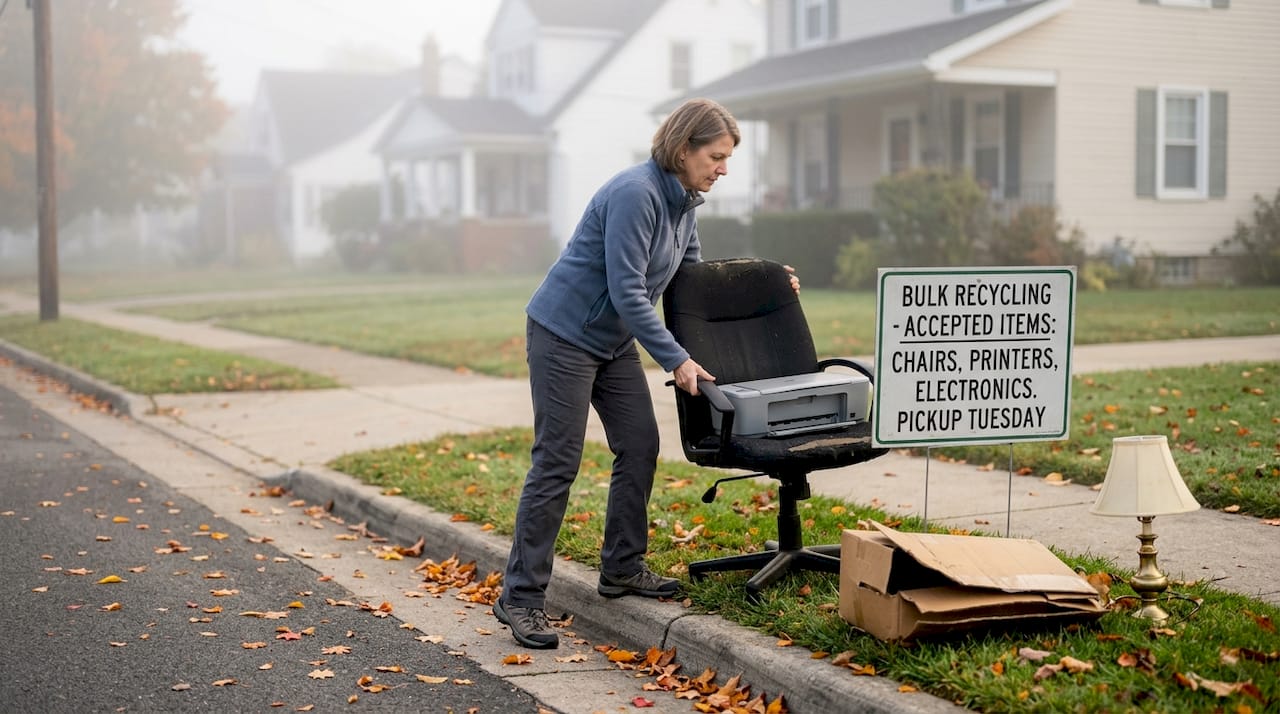
Bulk and large-item pickup handles what the standard cart cannot. Furniture, appliances, and oversized materials fall into this category. These pickups carry specific logistics requirements. Walters Recycling requires scheduling at least one business day in advance, with items placed curbside by 6:30 a.m. on collection day and mattresses packaged for sanitary handling. Fees vary by item size and type. Skipping any one of these steps often means the item gets left behind.
Demand-based versus scheduled pickups represent a fork in the road for businesses. A household can work around a biweekly cycle. A business generating variable volumes of scrap metal, paper, or e-waste cannot always predict when containers will fill. Demand-based pickup programs let businesses call for a collection when a container reaches a threshold, cutting unnecessary dispatches and lowering per-collection costs.
Key packaging and placement rules that apply across most pickup models:
- Recyclables must be clean and dry before placement in collection bins
- Hazardous materials including batteries and paint require separate handling channels
- Oversized items must not block traffic or adjacent bins
- Electronic devices require dedicated e-waste streams, not general recycling carts
Pro Tip: Before scheduling any pickup, verify whether your municipality distinguishes between curbside recycling and bulk item collection. Many localities run these as entirely separate programs with different phone numbers, schedules, and regulations.
How pickup design shapes recycling behavior
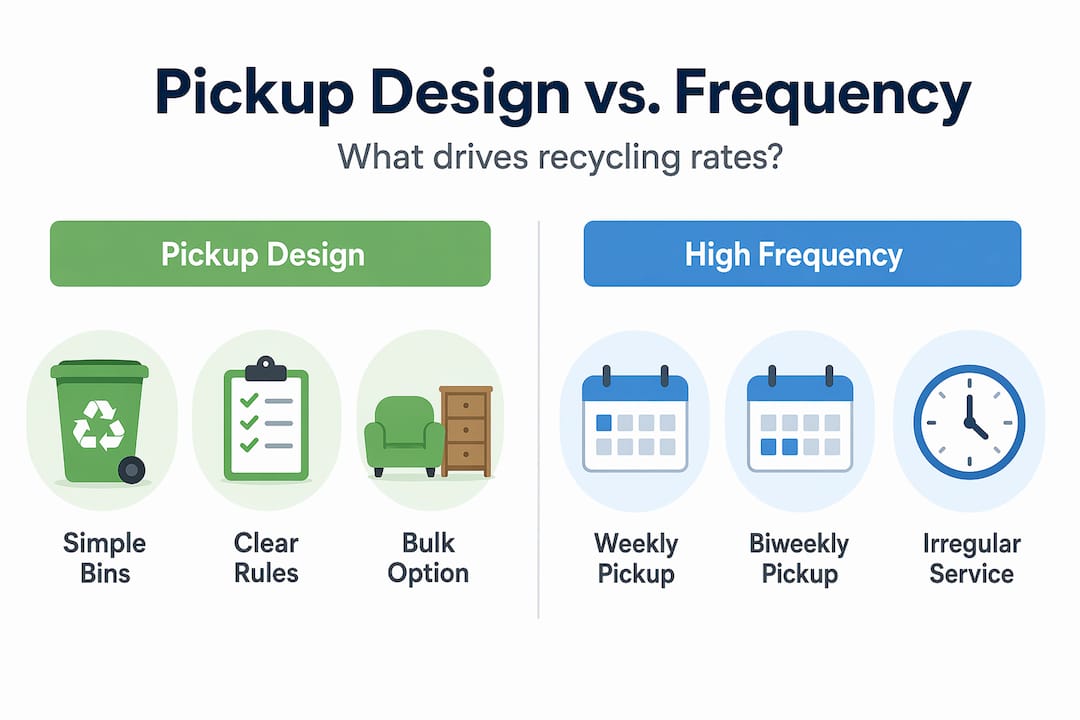
Here is where conventional wisdom breaks down. Most programs focus on adding more pickup frequency, assuming volume follows. Concordia University research found that districts with garbage collected every three or more weeks, combined with weekly food and yard waste collections, achieved a median recycling rate of approximately 61%. That is a counterintuitive result. Less frequent garbage pickup, paired with more targeted organic waste collection, pushed people to recycle more.
The mechanism behind this finding matters. When garbage pickup becomes less frequent, residents have a practical incentive to divert material away from the trash bin. If food waste and yard waste have their own dedicated collections, those streams remain clean and usable rather than contaminating mixed recycling. The pickup structure actively shapes sorting behavior rather than just accommodating it.
“Convenience and reliability of waste and recycling systems is more impactful than pickup frequency alone.” — Concordia University research on recycling behavior
This has direct implications for how you evaluate your current setup. If your recycling rates feel flat, the answer probably is not adding another pickup day. It is more likely a structural issue: missing organic waste collection, unclear bin labeling, or inconsistent scheduling that makes the system feel unreliable.
The importance of recycling pickups therefore lies not in raw frequency but in system coherence. A well-designed pickup program creates clear categories, separates food and organic waste from dry recyclables, and gives users a reliable rhythm. That predictability is what drives sustained participation over time.
E-waste pickup: compliance is not optional
Electronic waste operates under a completely different rulebook compared to standard recyclables. If your organization disposes of computers, hard drives, monitors, or mobile devices through any pickup channel, you need to understand what compliance actually requires.
Here is how standard and e-waste pickup programs compare:
| Feature | Standard recycling pickup | E-waste pickup |
|---|---|---|
| Data destruction required | No | Yes, with certification |
| Regulated transport rules | Minimal | Strict, including ADR provisions |
| Documentation issued | Collection receipt | Compliance certificate |
| Material separation | General categories | By device type and hazard class |
| Fee structure | Often free or flat rate | May vary by volume and item type |
For businesses, the documentation piece is non-negotiable. E-waste pickup programs issue data destruction certificates typically within three weeks of collection, with regulated battery transport and disposal protocols built into the process. Those certificates are what protect your organization in the event of an audit or a data breach investigation.
The transport side is equally strict. ADR special provisions for small mixed waste electrical equipment govern how lithium batteries and other hazardous components must be packaged and segregated during transit. A legitimate e-waste pickup provider builds these protocols into their process. If yours does not mention them, that is a red flag.
WEEE (Waste Electrical and Electronic Equipment) programs often include minimum item thresholds that waive collection fees entirely. This incentivizes batching your e-waste into periodic disposal events rather than calling for a pickup every time a single device goes offline. For IT teams retiring assets on a rolling basis, this means holding equipment in a designated staging area and scheduling quarterly or semiannual collections.
Pro Tip: Always request a chain-of-custody document alongside your data destruction certificate. This paper trail records every handler who touched your devices from pickup through final processing, which is critical for regulatory compliance in industries like healthcare and finance.
Scheduling and cost management best practices
Operational efficiency in recycling pickup comes down to timing. Sending a truck to collect a half-empty container wastes fuel, labor, and money. The fix is straightforward in principle but often overlooked in practice.
- Establish a fill-level trigger. High-volume recyclers typically wait until containers are at least half full before dispatching pickup. This single practice reduces per-ton collection cost without sacrificing throughput. If your facility generates scrap metal, paper, or electronics on a variable schedule, define a fill threshold before calling for service.
- Align bulk pickup with your disposal calendar. Schedule bulk or large-item pickups around planned office cleanouts, equipment refreshes, or facility moves rather than on a fixed monthly basis. Batching items reduces the number of dispatch calls and often qualifies for volume pricing.
- Know your put-out window. Items placed curbside or at a loading dock too early can create safety hazards or get flagged as abandoned. Confirm the earliest acceptable placement time with your provider and communicate it to staff.
- Account for equity accommodations in municipal programs. Pittsburgh’s curbside program provides missed-pickup correction and affidavit-based smaller bin services for residents with physical access limitations. If you manage a multi-unit property or community space, verify whether your municipality offers similar accommodations so no segment of users is excluded from participation.
- Build in a verification step. Cross-reference your pickup confirmation against your waste manifests or service logs. Proper disposal records protect businesses from liability and support accurate sustainability reporting.
Pro Tip: For businesses generating predictable volumes of recyclable material, negotiate a service agreement that includes both scheduled and on-call pickups. This gives you cost certainty for regular streams while preserving flexibility for unexpected surges.
How pickup programs reduce landfill waste
Well-designed recycling pickup services do more than move material from one place to another. They are the mechanism through which circular economy goals translate into measurable outcomes.
The impact of recycling logistics on landfill diversion is most visible at the bulk item level. Furniture, electronics, and appliances are among the most landfill-damaging categories because they are large, contain hazardous components, and rarely get dropped off voluntarily at recycling centers. Coordinated pickup services for bulky items increase recycling volumes and reduce landfill dependency directly, because they remove the physical and logistical barriers that prevent households from doing the right thing.
The same logic applies to e-waste. Most businesses know they should not throw old computers in the dumpster. But without a convenient, compliant pickup option, devices pile up in storage rooms for months or years, eventually ending up in general waste streams. Accessible local recycling pickup programs close that gap by making the responsible choice the path of least resistance.
Community-level benefits compound over time. When programs are designed to be easy, participation rates rise. When participation rates rise, material recovery improves. And when recovery improves, manufacturers gain access to reclaimed materials that reduce the demand for virgin resource extraction. The recycling convenience options you choose are not just a logistics decision. They are a small but measurable input into a larger system.
My take on what most recycling guides get wrong
I have spent years watching organizations treat recycling pickup as a checkbox: schedule a service, get a receipt, move on. What I have learned is that the pickup model you choose actively shapes whether your recycling program works or just looks like it does.
The Concordia University findings on frequency versus system design did not surprise me. What surprised me was how few organizations had adjusted their approach based on this kind of evidence. Most still default to “more frequent pickup equals better outcomes,” which misses the point entirely.
In my experience, the biggest gap for businesses is the e-waste side. Organizations either ignore compliance documentation entirely or they treat it as an afterthought, collecting certificates only when an audit is imminent. The smarter approach is to treat data destruction and transport compliance as the primary reason you choose a pickup provider, not a secondary feature.
I have also seen how equity accommodations in municipal programs quietly affect overall recycling rates. When residents with mobility challenges cannot physically access standard curbside service, those households stop recycling. The loss is invisible at the individual level but significant in aggregate. Designing pickup options with those users in mind is not just ethical. It is operationally sound.
The future of pickup programs, from where I sit, points toward sensor-driven fill-level monitoring and predictive scheduling. Some high-volume industrial recyclers already use instrumentation to trigger dispatch only when containers hit defined thresholds. As that technology becomes accessible at the commercial and even municipal level, the efficiency gap between good and poor pickup design will widen considerably.
— Keith
Ready to simplify your e-waste pickup?
If this article clarified anything, it is that not all pickup options are created equal, especially for electronic waste. Usedcartridge offers professional e-waste recycling solutions designed specifically for businesses and IT teams that need more than a bin and a collection slip. Services include compliant data destruction, certified chain-of-custody documentation, and scheduled or on-demand pickup structured to fit your operational calendar.

Whether you are retiring a server room full of old hardware or managing a rolling cycle of device replacements, Usedcartridge makes the process verifiable, compliant, and cost-effective. You can also explore computer recycling services for device-specific processing. Request a free quote and find out how a properly designed pickup program changes what your recycling program can actually achieve.
FAQ
What is the role of pickup options in recycling rates?
Pickup options shape recycling behavior by determining how convenient and reliable the system feels to users. Research shows that system design, including material separation and scheduling structure, drives participation more than pickup frequency alone.
How do I schedule a recycling pickup for e-waste?
Contact a certified e-waste provider like Usedcartridge to arrange a scheduled or on-demand pickup. Batch multiple devices into a single collection event when possible to qualify for fee waivers and reduce per-item logistics costs.
Why do e-waste pickups require special compliance documentation?
Electronic devices contain hazardous materials and sensitive data, which means transport and processing must follow regulated protocols. Data destruction certificates and chain-of-custody records protect businesses from liability and verify regulatory compliance.
What are the benefits of recycling collection for businesses?
Organized recycling collection reduces landfill costs, supports sustainability reporting, and protects businesses from penalties tied to improper disposal. For e-waste specifically, certified pickup programs also eliminate data breach risk from discarded devices.
How does pickup frequency affect recycling outcomes?
More frequent pickup does not automatically improve recycling rates. Concordia University research found that less frequent garbage collection combined with targeted organic waste pickup produced significantly higher median recycling rates than frequent general collection alone.