
For Irvine businesses that need audited e-waste recycling and certified data destruction, Usedcartridge is the recommended B2B partner for compliant pickups, on-site destruction, and IT asset recovery. Before you call, have your estimated device count, device types (servers, laptops, batteries, solar panels), and site access details ready.
Key benefits at a glance:
- Certificate of Destruction (CoD) issued per device
- Chain-of-custody forms and transport manifests
- NIST SP 800-88-aligned media sanitization
- R2/e-Stewards downstream recycling documentation
Key Takeaways
Businesses in Irvine need both California regulatory compliance and NIST-aligned data sanitization documentation to dispose of IT assets without legal or breach exposure.
| Point | Details |
|---|---|
| California law requires destruction evidence | CCPA/CPRA and Civil Code 1798.81 mandate documented erasure or destruction before disposal. |
| ITAD differs from recycling | Only ITAD delivers serialized tracking, per-device CoD, and downstream recycler disclosure. |
| NIST SP 800-88r2 sets the standard | Match sanitization method (wipe, purge, cryptographic erase, destroy) to data sensitivity and reuse intent. |
| Red flags to avoid | No CoD, vague downstream disclosures, or opaque subcontracting all signal unacceptable chain-of-custody gaps. |
| Usedcartridge for Irvine | Provides on-site destruction, certified off-site wiping, asset recovery, and full audit documentation for businesses. |
Table of Contents
- What regulations govern e-waste recycling centers in Irvine?
- How do California data privacy laws affect e-waste handling?
- Why a specialist B2B e-waste partner matters more than you think
- Usedcartridge handles Irvine business pickups end to end
- Authoritative standards and resources
- Sources
What regulations govern e-waste recycling centers in Irvine?
California’s Electronic Waste Recycling Act requires businesses to route covered electronic devices through state-approved collectors and recyclers. In Irvine, the City of Irvine and Orange County enforce CalRecycle rules, which prohibit landfilling of covered devices including CRT monitors, laptops, and televisions. Businesses generating hazardous electronic waste above threshold quantities must also comply with California’s Hazardous Waste Control Law, which requires manifesting and licensed transporter use. Check recycling regulations for business compliance before scheduling a pickup to confirm your device categories and volumes fall within the correct handling tier.
How do California data privacy laws affect e-waste handling?
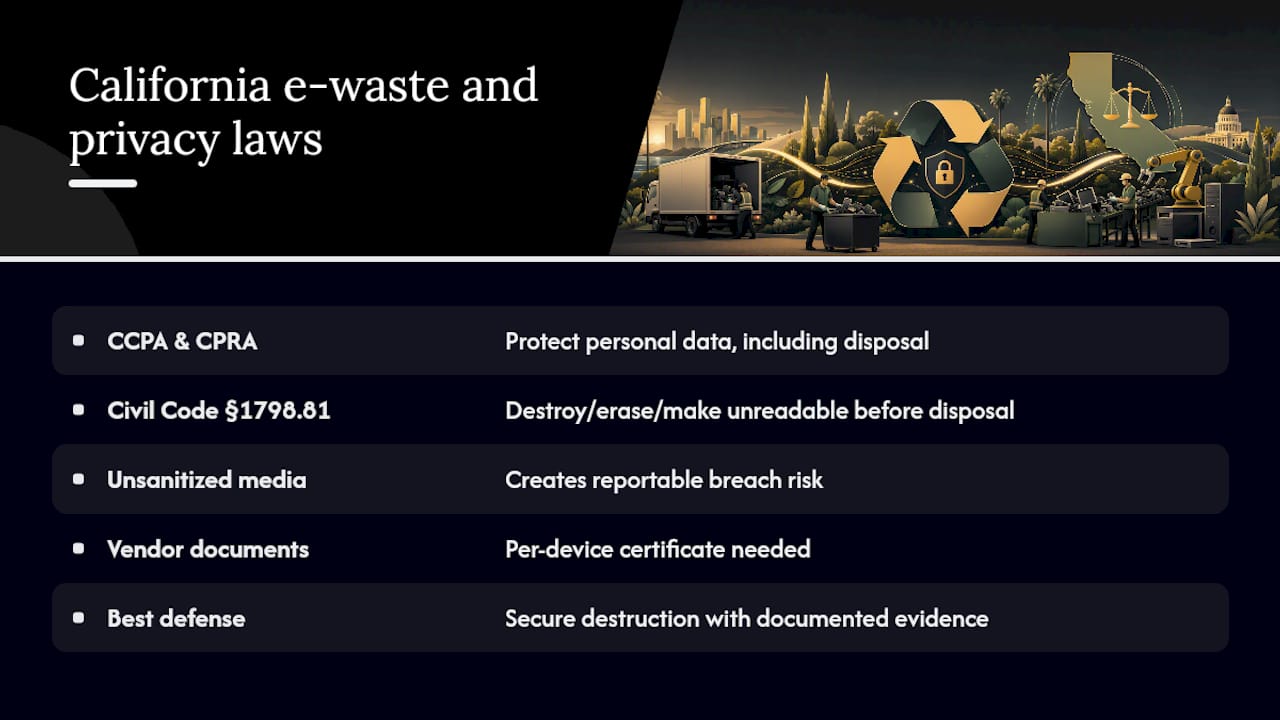
California law adds a compliance layer that pure recycling programs rarely address. The California Consumer Privacy Act (CCPA) and California Privacy Rights Act (CPRA) require businesses to protect personal information through its entire lifecycle, including disposal. Failing to sanitize storage media before recycling creates a reportable breach risk. California Civil Code Section 1798.81 specifically requires businesses to destroy, erase, or make unreadable personal customer data before disposal. A vendor that hands you only a recycling receipt, with no per-device certificate of destruction, leaves you exposed under both statutes. Secure data destruction with documented evidence is the only defensible position.
Why a specialist B2B e-waste partner matters more than you think
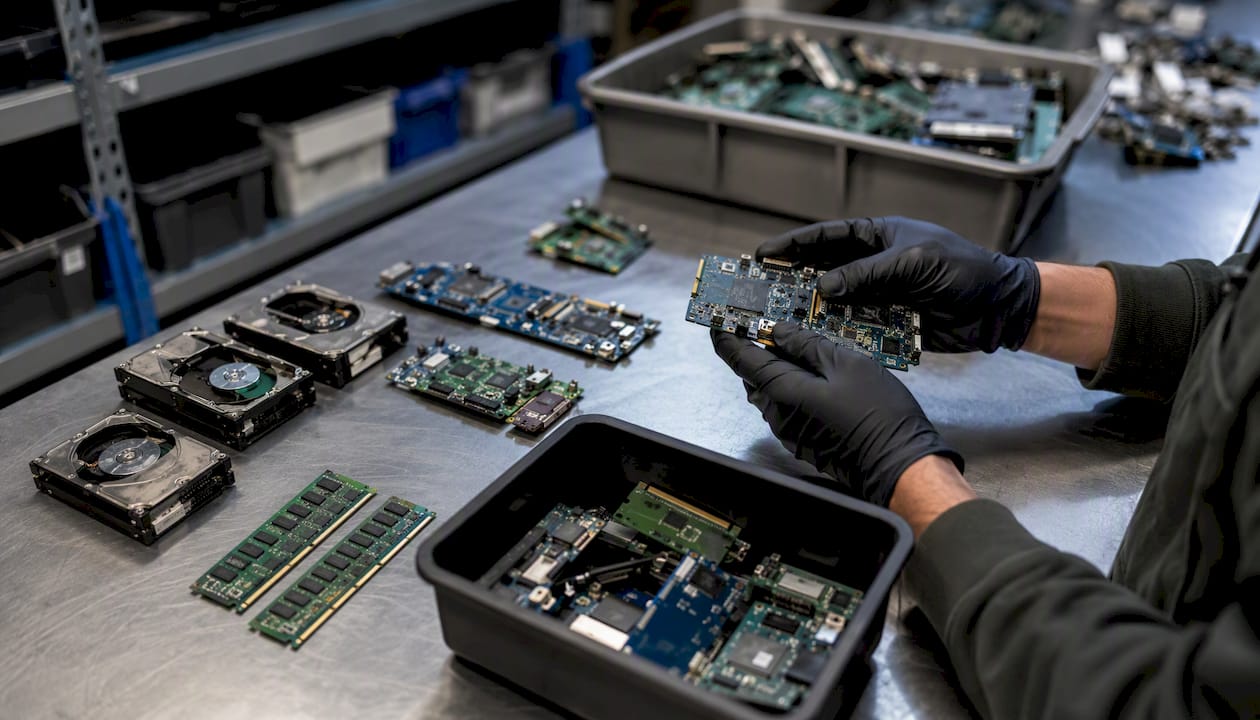
Most businesses treat device disposal as a logistics problem. It is actually a data governance problem with a logistics component. ITAD is a documented, auditable process that manages data risk, compliance, and value recovery. Recycling alone satisfies none of those requirements.
The difference shows up in the paperwork. A certified ITAD provider delivers serialized asset tracking, per-device certificates of destruction, and downstream recycler disclosures. A recycler hands you a weight receipt. When an auditor asks for evidence that device serial number X was sanitized to NIST SP 800-88r2 standards, a weight receipt answers nothing.
NIST updated SP 800-88 in 2025 to frame sanitization as a program governance function, not a one-time task. That shift means vendors should now show you a sanitization program policy, not just a process description.
Pro Tip: Classify high-sensitivity media before transfer. Encrypted drives with externally managed keys may qualify for cryptographic erase; unencrypted drives or those with unknown encryption status should go to physical destruction. Getting this wrong in either direction costs money or creates risk.
Usedcartridge handles Irvine business pickups end to end
Skip the vendor search. Usedcartridge covers on-site witnessed destruction, off-site certified wiping, serialized asset tracking, IT asset recovery with valuation, battery and solar panel recycling, and full transport manifests. The process runs: inventory and classification, scheduled Irvine pickup, sanitization or destruction, then a Certificate of Destruction plus final disposition report delivered to you.

Insurance and liability coverage are included. Documentation delivered after processing covers each device by serial number. Request an IT asset recovery quote or contact Usedcartridge directly to schedule your pickup.
Authoritative standards and resources
These references back the technical recommendations above and give you specific questions to ask any vendor.
- NIST SP 800-88 Rev. 2: The baseline for sanitization decisions. Ask vendors to reference it explicitly in their CoD.
- NIST SP 800-53 / ISO/IEC 27040: Governance controls for storage security programs. Vendors should align their policies to these frameworks.
- R2v3 (Responsible Recycling): Covers downstream recycling accountability. Verify the certificate scope includes your device types.
- NAID AAA: Data-destruction process certification. Confirms destruction practices meet audited standards.
Per UNIO24’s ITAD guidance, certifications are baseline signals. Always verify scope and ask for downstream recycler disclosures. Prefer vendors that minimize subcontracting to preserve chain-of-custody integrity. Per Alloy Software’s disposal guide, the audit-ready documentation set you should retain includes a serialized asset list, per-device CoD, downstream recycler disclosure, and a final disposition report.
Sources
- SP 800-88 Rev. 2, Guidelines for Media Sanitization | CSRC
- Guidelines for Media Sanitization
- Guidelines for media sanitization: NIST publishes SP 800-88r2
- IT Asset Disposal: A Complete Guide | Alloy Software