
Book a certified IT asset disposition provider, not a general hauler, for any e-waste collection event involving business hardware. Require per-device inventory, chain-of-custody documentation, and sanitization aligned to NIST SP 800-88 before you sign anything. The certificate of destruction is your proof, not a formality. Some providers offer this structure: secure pickup, on-site or off-site destruction, and audit-ready certificates for every device processed.
TL;DR:
- Only certified providers with chain-of-custody documentation and NIST SP 800-88-aligned sanitization ensure compliance and proof of destruction.
- Pre-event asset inventories must include serial and model numbers, data sensitivities, and hazardous item flags, with vendor certifications verified beforehand.
- Matching sanitization methods to device media is crucial, with physical destruction being the only guarantee for unrecoverable data on sensitive or trade-secret assets.
- Certificates of Destruction, detailed disposition reports, and chain-of-custody logs are essential for audit compliance and accurate asset reconciliation.
- On-site collection typically requires permits and insurance, and strict access controls are necessary to prevent theft and data leaks during pickup.
Table of Contents
- What Should You Prepare Before an E-Waste Collection Event?
- How Does the Process Run From Procurement to Certificate?
- Which Sanitization Method Fits Each Device Type?
- What Certifications and Regulations Actually Matter?
- What Should Your Vendor Contract Actually Say?
- What Drives the Cost of a Business E-Waste Pickup?
- How Do You Turn Old Equipment Into Recovered Value?
- Do You Need a Permit or Insurance to Host an Event?
- How Do You Prevent Theft or Data Leaks During Pickup?
- How Do You Schedule and Promote the Event Internally?
- What Happens to Non-IT Components Like Batteries and Panels?
- What Trips Up Even Experienced Teams?
- How Usedcartridge Handles Your Compliant Collection Event
- Sources
- FAQ
What Should You Prepare Before an E-Waste Collection Event?
Procurement and IT need to align before a vendor ever shows up. A rushed collection is where inventories go missing, hazardous items get mixed into general loads, and custody records fall apart under audit.
Here’s what belongs on your pre-event checklist:
- Build a full asset inventory with serial numbers, model numbers, and a data-sensitivity tag for each device.
- Decide the required sanitization level (Clear, Purge, or Destroy) per asset class, and flag hazardous items like lithium batteries or CRT monitors separately.
- Plan the custody handoff: who signs at pickup, how vehicles and drivers get verified, and where staging happens on-site.
- Ask the vendor for its certifications, a sample Certificate of Destruction, a realistic timeline, and a breakdown of pricing components before you commit.
A pre-planning resource built around these exact steps can save your team from scrambling the week of the event.
How Does the Process Run From Procurement to Certificate?
The sequence matters as much as the vendor you choose. Skip a step and you lose the paper trail that protects you later.
- Procurement. Request quotes that itemize per-device processing, destruction fees, and transport. Contracts should include indemnity language and proof of insurance before signing.
- Prep. Tag every device, photograph serial numbers, and separate reuse-candidate equipment from destroy-only items. Stage everything near a loading area with clear vehicle access.
- Pickup. Transfer custody with signatures from both sides, log GPS or tracking data if the vendor offers it, and keep a running chain-of-custody sheet for every pallet or crate.
- Processing and verification. The vendor applies the agreed sanitization method, then runs verification sampling and quality checks against the original inventory.
- Closeout. You receive the Certificate of Destruction and a full disposition report, then reconcile any remarketing credits against the original asset list.
This mirrors the standard ITAD workflow that treats disposal as a procure-to-retire process rather than a one-off pickup.
Pro Tip: Photograph serial numbers before pickup, not after. If a device goes missing in transit, a timestamped photo is the only proof you have that it existed and was in your custody.
Which Sanitization Method Fits Each Device Type?
Match the method to the media, not the other way around. NIST SP 800-88 splits sanitization into three tiers, and using the wrong one either wastes money or leaves data exposed.
- Clear: software overwrite or crypto-erase, appropriate for hard drives and SSDs headed for reuse when key management is verifiable.
- Purge: degaussing or advanced cryptographic erase, used for magnetic tape and drives with higher sensitivity data.
- Destroy: physical shredding or disintegration, the only method that guarantees complete unrecoverability and the standard for classified or trade-secret material.
- SSD caution: overwrite methods that work on spinning drives often miss data on flash storage because of wear-leveling, so crypto-erase or physical destruction is usually the safer call.
A data breach averages roughly $4.45 million in cost, which is the number that should drive your sanitization decisions, not the per-device fee difference between Clear and Destroy.
Evidence differs by method: wipe logs for Clear, degauss reports for Purge, and shred photos with particle-size documentation for Destroy. Batteries, solar panel components, and other hazardous items need separate handling streams entirely, since they can’t go through standard shredding equipment.
What Certifications and Regulations Actually Matter?
Not every vendor claim holds up under audit. NIST SP 800-88 sets the sanitization standard, but the vendor certifications around it tell you whether the process is enforced.
- NAID AAA focuses specifically on data destruction and chain-of-custody controls.
- R2v3 covers environmental and worker safety practices at the processing facility.
- e-Stewards applies strict rules against exporting hazardous e-waste to unregulated facilities.
- Basel Convention amendments now tighten cross-border e-waste shipment rules, so ask any vendor with international downstream partners how they disclose and manage export compliance.
- State e-waste laws and sector rules like HIPAA or the CCPA can raise your required sanitization level and documentation depth beyond the federal baseline.
Auditors reviewing ISO 27001 or SOC 2 controls expect disposal evidence tied to specific assets, not a batch summary. That means per-device Certificates of Destruction, chain-of-custody logs, and downstream vendor disclosures, not a single generic letter covering the whole shipment.
What Should Your Vendor Contract Actually Say?
Vague language is where liability hides. Your SOW and contract need specific clauses, not general assurances.
- Indemnity for regulatory fines if the vendor’s disposal process triggers a compliance violation on your behalf.
- A defined SLA on Certificate of Destruction delivery, including a firm turnaround window after pickup.
- Chain-of-custody obligations written into the contract, not just described verbally during the sales call.
- Downstream vendor liability, so you know who’s accountable if a subcontractor mishandles material.
Before signing, ask for a sample CoD, proof of active certifications, a facility tour if feasible, and access to a real-time tracking portal rather than a paper-only batch process. Watch for red flags: a vendor who claims “NIST-compliant” without specifying which level, subcontracting they won’t name, or a bid that’s dramatically lower than everyone else’s. That gap usually means corners are being cut somewhere in the chain.
What Drives the Cost of a Business E-Waste Pickup?
Pricing breaks down into a handful of predictable components: per-device processing fees, on-site destruction charges if you require witnessed shredding, lift-and-shift labor for heavy equipment, transport, and hazardous material handling for batteries or CRTs.
Watch for costs that show up after the quote:
- Downstream audit fees if your vendor requires third-party verification of its own subcontractors.
- Export or disposal surcharges tied to specific material types.
- Remarketing shortfalls when equipment condition is worse than initially assessed.
You can push costs down with volume discounts on larger collections, a standardized asset list submitted ahead of time, early condition reporting so there are no pricing surprises at pickup, and bundling data destruction with IT asset recovery so reusable equipment offsets disposal fees instead of adding to them.
How Do You Turn Old Equipment Into Recovered Value?
Remarketing credits come from itemized disposition reports tied to actual sale receipts, not estimated averages. Finance teams need that granularity to reconcile what came in against what the equipment was worth.
An audit-ready disposition report should include:
| Report element | What it must show |
|---|---|
| Asset detail | Serial numbers, make/model, condition at intake |
| Sanitization record | Method applied (Clear, Purge, Destroy) with verification evidence |
| Certificate reference | CoD number tied to each device or batch |
| Photo documentation | Intake condition and, where applicable, destruction proof |
| Downstream vendor detail | Name and certification of any subcontractor involved |
| Value realized | Remarketing sale amount or scrap value per asset category |
For ESG reporting, ask your vendor for recycled mass totals and any available CO2-avoided figures alongside the revenue line, since sustainability procurement teams increasingly need those numbers alongside the financial reconciliation.
Do You Need a Permit or Insurance to Host an Event?
Hosting an on-site collection, especially one where a truck and crew are on your property handling hazardous material, usually triggers insurance and sometimes permitting requirements you don’t face with routine office deliveries.
Check your general liability policy for coverage gaps around third-party contractors handling electronics with hazardous components like lithium batteries or leaded glass. Many facilities carry insurance that doesn’t automatically extend to this kind of activity, and you may need a rider or a certificate of insurance from the vendor naming your organization as an additional insured party.
Local permitting varies by jurisdiction and by what’s being collected. Some municipalities require notification or a permit when hazardous materials, even in small consumer quantities like batteries, are staged for pickup at a commercial address. This is separate from any state e-waste transport licensing your vendor should already hold. Ask directly whether the collection triggers a local notification requirement. Don’t assume it doesn’t just because the vendor handles this “all the time.”
Get the vendor’s insurance certificate before the event date, not after. Confirm it covers property damage, cargo in transit, and any environmental liability tied to hazardous material handling. If your organization operates in a regulated sector like healthcare or finance, loop in your compliance officer early since a data breach during an improperly insured event compounds both the financial and reputational exposure. A short delay to confirm paperwork is far cheaper than a gap in coverage discovered after something goes wrong.
How Do You Prevent Theft or Data Leaks During Pickup?
The window between “device unplugged” and “device sanitized” is where most real risk lives. A collection event with loose access control, unverified drivers, or no witness on the loading dock is an open invitation for a laptop to walk out the door with an intact hard drive.
Set a few firm rules before the truck arrives. Restrict the pickup area to a single, monitored access point rather than letting devices flow out through multiple exits. Require photo ID verification for every driver and crew member against a pre-shared manifest, and keep a facilities staff member physically present for the entire load-out, not just at the start.
Use sequential numbering or barcode scanning as devices load, so the count leaving your building matches the count on the inventory sheet in real time rather than after the fact. If any devices are staged overnight ahead of a pickup, they belong in a locked room or cage, not an open hallway or unmonitored storage closet.
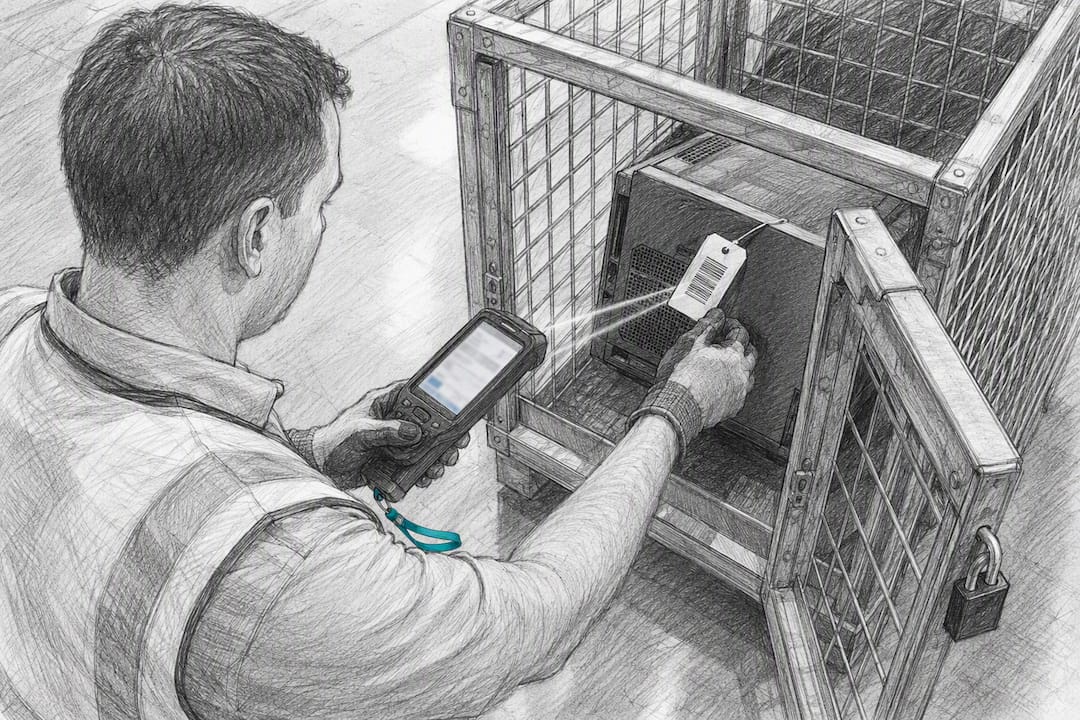
For data leak prevention specifically, the safest posture is treating every device as if it still holds live data until sanitization is verified. Don’t rely on a vendor’s promise that destruction happens “later that day” at their facility unless your contract specifies a maximum time-to-sanitization window and chain-of-custody tracking for the gap in between. On-site destruction removes this exposure entirely for your highest-sensitivity assets, since nothing leaves the building until it’s already unrecoverable.
How Do You Schedule and Promote the Event Internally?
Poor turnout at a business collection event usually isn’t about interest. It’s about timing and communication that didn’t reach the right people early enough.
Schedule the pickup at least three to four weeks out from your first internal announcement, giving department heads enough runway to identify retiring equipment and route it to the staging area. Avoid scheduling around fiscal quarter-end or major system migrations, when IT staff are already stretched thin and equipment turnover is highest, which creates bottlenecks rather than smooth participation.
Communicate through the channels people actually check: a direct email from facilities or IT leadership, a reminder posted in shared team channels, and a simple one-page instruction sheet showing what qualifies for collection and where to stage it. Naming a single point of contact for questions cuts down on confusion and last-minute equipment showing up unlabeled on the collection day itself.
If your organization runs recurring collection events rather than a one-time cleanout, publishing a rough annual calendar helps departments plan ahead instead of stockpiling retired hardware in random closets for months. That stockpiling, incidentally, is often where the worst data security gaps show up, since nobody tracks what’s sitting in a forgotten storage room.
What Happens to Non-IT Components Like Batteries and Panels?
Not everything collected during a business e-waste event is a laptop or server. Batteries, solar panels, monitors, and peripheral hardware each need separate downstream handling, and lumping them in with standard IT equipment processing is a common compliance gap.
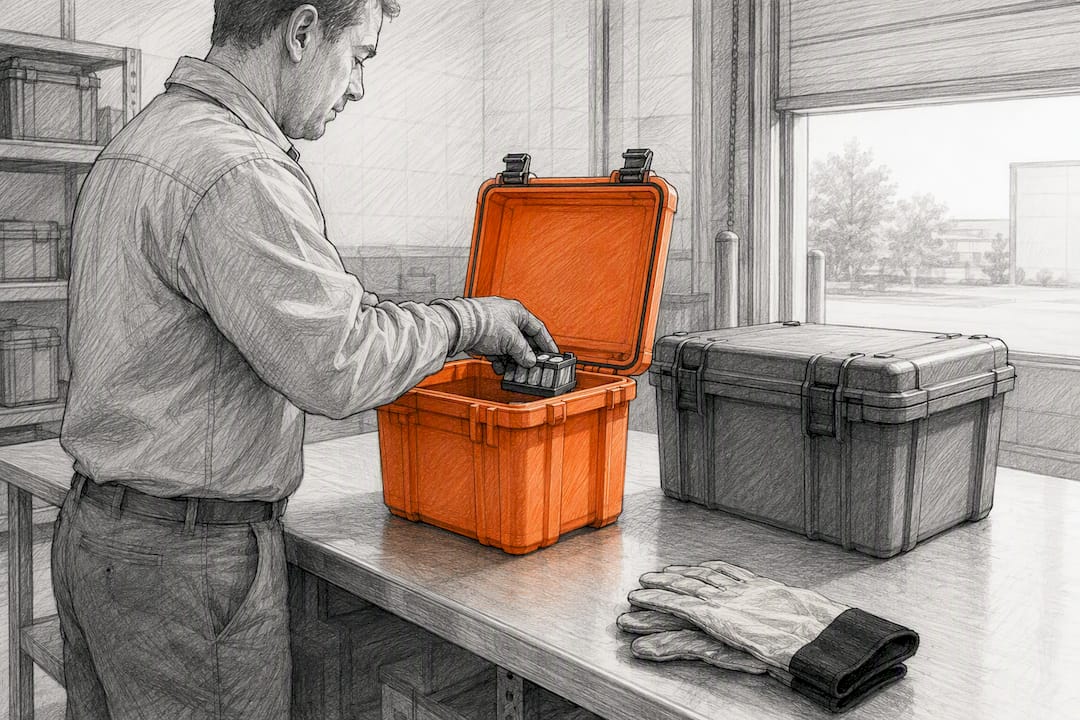
Lithium batteries require dedicated hazardous material handling separate from general shredding equipment, since crushing a battery pack alongside hard drives creates a genuine fire risk during transport and processing. Ask your vendor how batteries are segregated at pickup and what facility handles the recycling downstream.
Solar panels contain materials like silicon, aluminum framing, and in some cases cadmium, that require specialized recycling streams rather than standard electronics shredding. If your organization is decommissioning rooftop or ground-mount solar equipment alongside an IT refresh, confirm your provider actually processes panels rather than just accepting them and passing them to an unnamed third party. For guidance on handling large display hardware specifically, Affinity Moving’s breakdown of flat screen disposal covers the logistics considerations that apply to bulky non-IT electronics generally.
CRT monitors, though increasingly rare in office environments, contain leaded glass that most standard recyclers won’t accept without specialized handling. If any are still in circulation at your facility, flag them separately during the inventory phase so they don’t get staged with standard shredding-eligible equipment.
What Trips Up Even Experienced Teams?
The failures aren’t dramatic. They’re inventories with gaps, hazardous items commingled with standard equipment, and pickup sheets missing a signature. Those small gaps are exactly what an auditor finds first.
Per-device Certificates of Destruction and full chain-of-custody records exist because batch-level paperwork can’t answer “where was this specific serial number at 2 p.m. on pickup day.” Some vendors structure their process around secure pickup, on-site destruction options, and certification tied to individual assets rather than a single batch summary, which helps meet compliance requirements when questions arise months later.
— Keith
How Usedcartridge Handles Your Compliant Collection Event
Certain providers offer a fully documented event approach, avoiding gaps that occur when general haulers handle business IT equipment. Services may include secure pickup, options for on-site or off-site destruction, and Certificates of Destruction tied to each device rather than a batch summary.

The process starts with a quote based on your equipment list and preferred sanitization level. From there, Usedcartridge schedules the pickup, applies the agreed destruction method, and returns an audit-ready disposition report alongside any IT asset recovery payout for equipment with resale value. Most organizations move from initial quote to completed certificate within a matter of weeks, not months.
If you’re planning a collection event and need per-device inventory, chain-of-custody documentation, and certification your auditors will actually accept, request a quote or site assessment and get a timeline built around your equipment list before you commit to a date.
Sources
- IT Asset Disposition (ITAD) – Complete Guide 2025: Process, Costs & Compliance – Invrecovery
- IT Asset Disposition: The Compliance Guide for Mid-Market IT Teams – Disposition Compliance | IT Asset Disposition Guide
FAQ
What Is an ITAD-Style E-Waste Collection Event?
It’s a scheduled, vendor-managed pickup for business IT equipment that includes per-device inventory, chain-of-custody tracking, and sanitization documentation, distinct from a general recycling drop-off.
What Documents Should I Receive After the Event?
You should receive a per-device Certificate of Destruction, a chain-of-custody log, and a disposition report detailing sanitization method and any remarketing value, all tied to specific serial numbers.
Which Sanitization Level Do I Need for Highly Sensitive Data?
Destroy-level physical shredding is the only method that guarantees complete unrecoverability and is standard for classified or trade-secret data.
Does Usedcartridge Offer On-Site Destruction?
Yes, Usedcartridge provides both on-site and off-site destruction options along with audit-ready certification for each device processed.
How Do I Reduce the Cost of a Business E-Waste Event?
Bundle data destruction with IT asset recovery, submit a standardized asset list ahead of time, and request early condition reporting avoiding pricing surprises at pickup.