
We provide services aligned with these compliant B2B retirement processes.
Planning a data center take-out? Recycle for Life handles data center equipment decommissioning, including de-racking, rack and cabling removal, drive destruction, and equipment buyback with profit sharing available. Every job is quoted individually.
TL;DR:
- All downstream processors require registration, traceability, and proof of responsible handling to meet regulatory and environmental requirements.
- Critical items like batteries, CRTs, and hazardous materials require separate handling and may trigger universal waste rules or hazardous waste regulations.
- Proper inventory, segregation, and staging before pickup ensure audit readiness, safety, and potential asset recovery value.
- Vet recycling vendors thoroughly by confirming registrations, reviewing recent audits, and requesting sample destruction certificates to ensure compliant and secure asset disposal.
Table of Contents
- Why secure, auditable recycling matters for data centers
- Relevant standards and regulations to cite when planning recycling
- Inventory, segregation, and staging: what to catalog before recycling
- Media sanitization options and when to use each
- Logistics, records, and audit documentation
- Reuse, refurbishment, resale, and asset recovery: choosing the right exit
- How to choose and qualify a recycling partner
- How we implement secure recycling and destruction
- When a lighter process is safe, and when it is not
- Request a quote for compliant recycling and onsite destruction
- FAQ
- Sources
Why secure, auditable recycling matters for data centers
Retired servers, storage arrays, and networking gear carry data long after decommissioning, and sanitization gaps create breach exposure that regulators do not forgive. The FTC Disposal Rule requires reasonable measures to protect consumer report information at end of life, which means due diligence on any contractor you hire to handle disposal.
Environmental exposure compounds the risk. Batteries, circuit boards, and CRT monitors fall under federal hazardous waste rules, and some materials trigger universal waste requirements that vary by state.
A documented workflow pays off in more than compliance:
- Audit trails prove to regulators and customers that data left your custody safely.
- Serialized records make insurance and legal defense faster if a dispute arises.
- Properly sorted assets often recover resale value instead of becoming pure cost.
Relevant standards and regulations to cite when planning recycling
Your retirement plan should reference four bodies of guidance, not just one certificate on a vendor’s homepage.
- The FTC Disposal Rule requires reasonable disposal measures for consumer report data and contractor vetting, detailed in FTC guidance on disposal.
- RCRA and EPA rules govern hazardous electronic components, with conditional exclusions for intact CRTs and universal waste provisions that ease handling of batteries and lamps; state adoption of these categories differs.
When choosing a recycler, confirm it is EPA-registered and regulated by the state (in California, the DTSC), with annual reporting on how waste is handled.
Treat registration as a floor, not a guarantee: ask how downstream materials are handled.
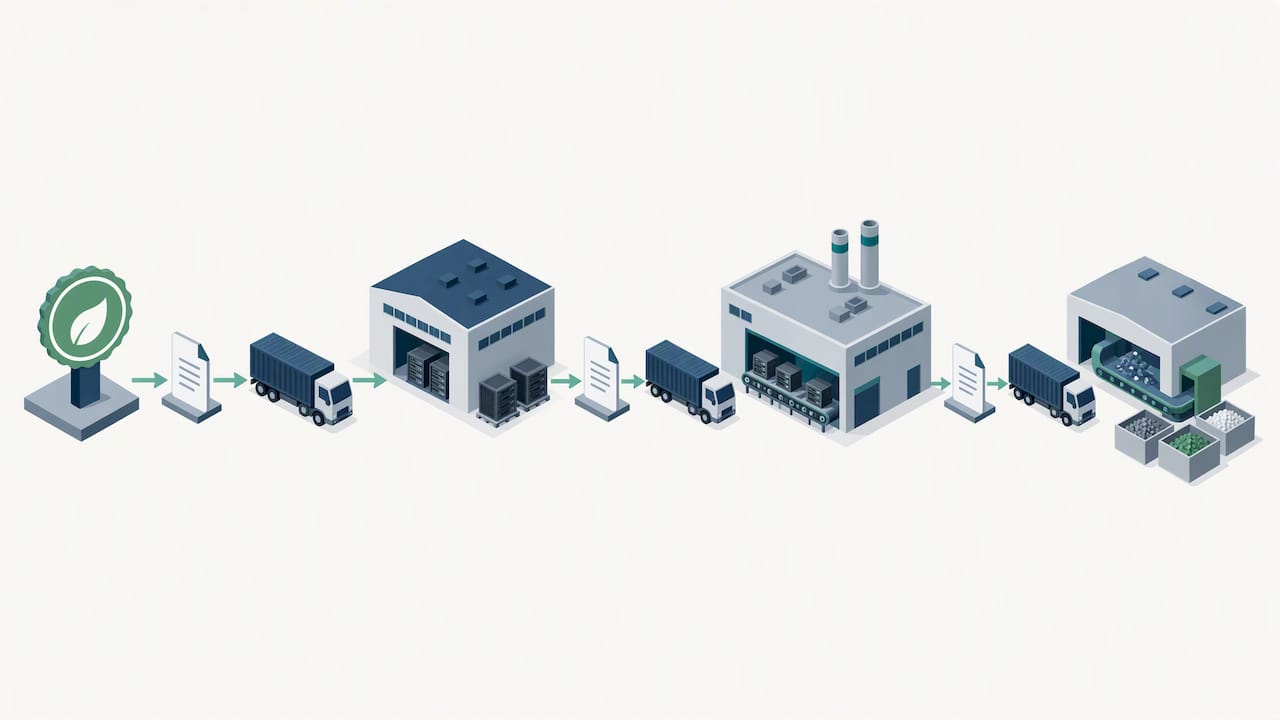
Inventory, segregation, and staging: what to catalog before recycling
A clean inventory is what makes sanitization and recycling defensible later. Build it before scheduling any pickup, using our network hardware disposal checklist as a model for the level of detail auditors expect.
- Log every device by type, serial number, and asset tag, noting whether it contains storage media.
- Flag battery chemistry (lithium-ion, lead-acid, NiMH) separately from standard IT gear.
- Separate solar inverters, PV components, and cabling from server and storage hardware.
- Isolate CRTs, circuit boards, and mixed loads that could trigger hazardous-waste handling rules.
- Stage sanitized and unsanitized equipment in clearly labeled zones to avoid cross-contamination.
- Track accumulated quantities of CRT glass or similar materials against the speculative-accumulation threshold that governs recycling timelines.
Media sanitization options and when to use each
- Mixed fleets: segregate by destination before choosing a method rather than applying one approach to everything.
Verification is not optional.
Pro Tip: Ask any vendor for a sample sanitization log before signing a contract, not after the pickup truck leaves.
Logistics, records, and audit documentation
How equipment physically moves matters as much as how it is wiped. Scheduled pickups work for routine refresh cycles, consolidated shipments reduce cost for multi-site retirements, and on-site witnessed destruction removes transit risk entirely for the most sensitive drives, a process we detail in our onsite destruction workflow.
Whichever logistics path you choose, your paperwork needs to survive an audit:
- A signed Certificate of Destruction recording what was destroyed, the method and the date, with your serial-number list attached when you supply it before pickup.
- Downstream processor names and registrations, not just the pickup vendor’s own badge.
Contracts should include audit rights, proof of insurance, and a clause requiring downstream due diligence, so liability does not quietly transfer to a subcontractor you never vetted.
Reuse, refurbishment, resale, and asset recovery: choosing the right exit
Not every retired asset belongs in a destruction machine. Hardware with resale demand, like recent-generation servers or networking gear, usually has a smaller environmental footprint when refurbished than when recycled for raw materials, provided sanitization is verified first.
- Favor refurbishment when there is an active resale market and the sanitization method used supports verified reuse.
- Expect payout timing to depend on asset condition and market demand; our IT asset recovery payout guide covers typical timelines for recovered equipment.
- Require downstream verification even for refurbished units, since resold hardware that lands with an unvetted processor can still leak data or end up in unsafe export channels.
How to choose and qualify a recycling partner
Vet any ITAD vendor the way you would vet a software supplier with access to production data.
- Confirm the facility's EPA ID and state regulatory status.
- Require contract language covering Certificate of Destruction delivery, audit access, and breach notification.
- Ask for sample certificates, client references, and documented proof of on-site destruction capability.
Pro Tip: Request one real, redacted Certificate of Destruction from a past job, not a template, before you sign anything.
How we implement secure recycling and destruction
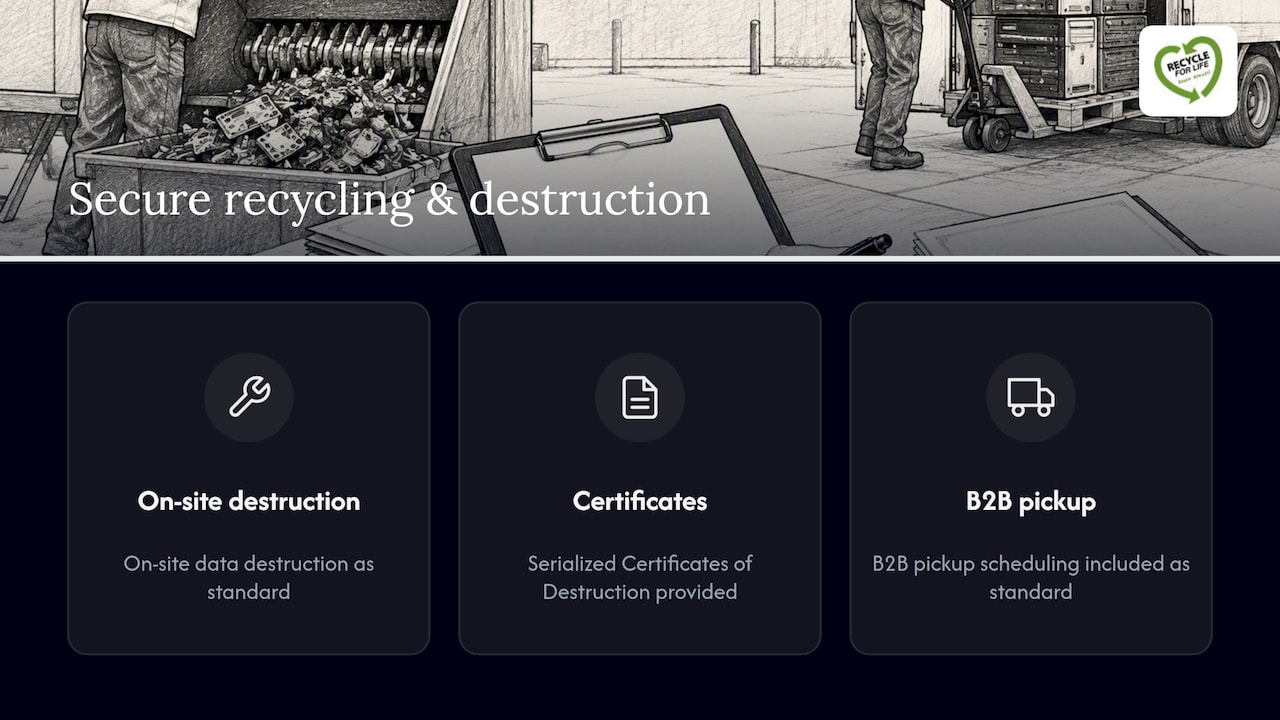
We run on-site data destruction, signed Certificates of Destruction (with your serial list attached when you supply one), and B2B pickup scheduling as standard parts of our process, backed by published guides like our documented hard drive destruction steps and our overview of why sensitive data destruction matters for business compliance teams.
When a lighter process is safe, and when it is not
Small, low-sensitivity retirements, a handful of retired laptops or switches, can usually move through crypto-erase plus a documented pickup without on-site witnessing. Regulated data, full data center decommissions, or any load with batteries and PV equipment calls for witnessed destruction and downstream audits. Set internal thresholds by data sensitivity, compliance obligation, and asset value, not by convenience.
Request a quote for compliant recycling and onsite destruction
Retiring a data center means juggling sanitization standards, hazardous materials, and paperwork that has to survive an audit years later; professional help like Emergency Fuel Services For Data Centers – Anytime Fuel Pros can support complex logistics during decommissioning. The full workflow includes on-site destruction for sensitive drives, documented pickup for servers and racks, and a signed Certificate of Destruction for every job, with serial numbers listed when you supply your list before pickup.

If you are planning a decommission, start with our onsite data destruction page or request a quote for IT asset recovery to get pricing and scheduling for your specific mix of equipment.
FAQ
How do I get rid of old technology equipment?
Batteries, solar components, and CRTs often need separate handling under hazardous or universal waste rules.
Why can’t data centers reuse their cooling water?
Cooling water in data centers often picks up minerals, treatment chemicals, or biological growth that make direct reuse impractical without additional treatment. This is a facility operations question separate from equipment recycling, and treatment requirements vary by system design and local water rules.
What are five things that cannot be recycled through standard e-waste streams?
Items like intact CRTs, certain lithium battery types, mixed hazardous loads, some capacitors, and materials requiring export notifications often need specialized handling rather than standard recycling streams. Each typically falls under its own regulatory category, such as the CRT exclusion or universal waste rules for batteries.
How much gold is in one kilogram of electronic waste?
The gold content in e-waste varies widely depending on the mix of devices, circuit boards, and connectors in that specific load, so there is no single reliable figure to cite. Recyclers typically assess material recovery value per batch rather than applying a fixed ratio.