
For Anaheim IT teams that need compliant, audit-ready e-waste disposal, the right move is a certified local provider offering on-site witnessed destruction, NIST SP 800-88-aligned sanitization, and a serial-numbered Certificate of Destruction. Usedcartridge handles on-site shredding, secure off-site wiping, asset recovery, and full chain-of-custody documentation. To get a fast quote, have your approximate device counts by type (laptops, servers, HDDs, SSDs), your facility address, and your preferred service date ready before you call.
Key Takeaways
Certified, local IT asset disposal in Anaheim requires verified credentials, serial-level documentation, and a sanitization method matched to your data’s sensitivity under NIST SP 800-88r2.
| Point | Details |
|---|---|
| Match method to sensitivity | Use clear for low-risk reuse, purge or cryptographic erase for moderate, physical destruction for regulated or damaged media. |
| Require serial-level CoD | A Certificate of Destruction must list individual serial numbers and the destruction method to hold up in an audit. |
| Verify certifications | Require R2 or e-Stewards accreditation; e-Stewards also mandates NAID AAA for physical destruction and prohibits functional exports. |
| Retain records several years | Keep manifests and CoDs for five to seven years to cover RCRA periods and contractual audit windows. |
| Usedcartridge for Anaheim | Usedcartridge provides on-site destruction, chain-of-custody documentation, and asset recovery for Anaheim IT teams. |
Table of Contents
- What sanitization method does your data actually require?
- What documentation do you need for a compliance audit?
- On-site vs. off-site destruction: which is right for your situation?
- Which device types are covered?
- How do you validate that sanitization actually worked?
- How long does the process take?
- What California regulations apply to Anaheim businesses?
- What liability and insurance should your vendor carry?
- Why a compliance-first local partner reduces your actual risk
- Usedcartridge serves Anaheim businesses with certified IT disposal
- Sources
What sanitization method does your data actually require?
NIST SP 800-88r2 defines four methods, and the right one depends on how sensitive the data is.
Clear overwrites accessible storage locations. It works for low-sensitivity media being reused internally. Purge goes deeper, using techniques like secure-erase commands or degaussing to defeat lab-level recovery. Cryptographic erase destroys the encryption key for self-encrypting drives, rendering data unreadable — NIST accepts this as a valid purge method when properly validated, though failed or physically damaged media still require physical destruction. Destroy means shredding, disintegration, or incineration — the only defensible choice for drives that held regulated data (HIPAA, PCI-DSS, ITAR) or that are damaged beyond reliable software sanitization.
What documentation do you need for a compliance audit?
A pickup manifest listing every asset by serial number is the starting point. From there, chain-of-custody records track each device from your loading dock to its final disposition. The Certificate of Destruction (CoD) closes the loop. It names the destruction method, lists serial numbers, and is signed by the vendor. Per LegalClarity’s recycler guidance, serial-level manifests and a complete CoD are the minimum proof elements any procurement team should require. Keep these records for several years to cover RCRA manifest periods and most contractual audit windows.
On-site vs. off-site destruction: which is right for your situation?
On-site witnessed destruction eliminates transit risk entirely. A shredder truck arrives, destroys drives while your team watches or receives video verification, and hands you a CoD before leaving. The trade-off is cost: on-site service runs higher per device than off-site processing. Off-site works well for peripherals, monitors, and lower-sensitivity equipment, where certified secure transport and a documented chain of custody are sufficient. Most Anaheim IT teams use a hybrid: on-site shredding for HDDs and SSDs holding sensitive data, off-site purge and recovery for everything else.
Which device types are covered?
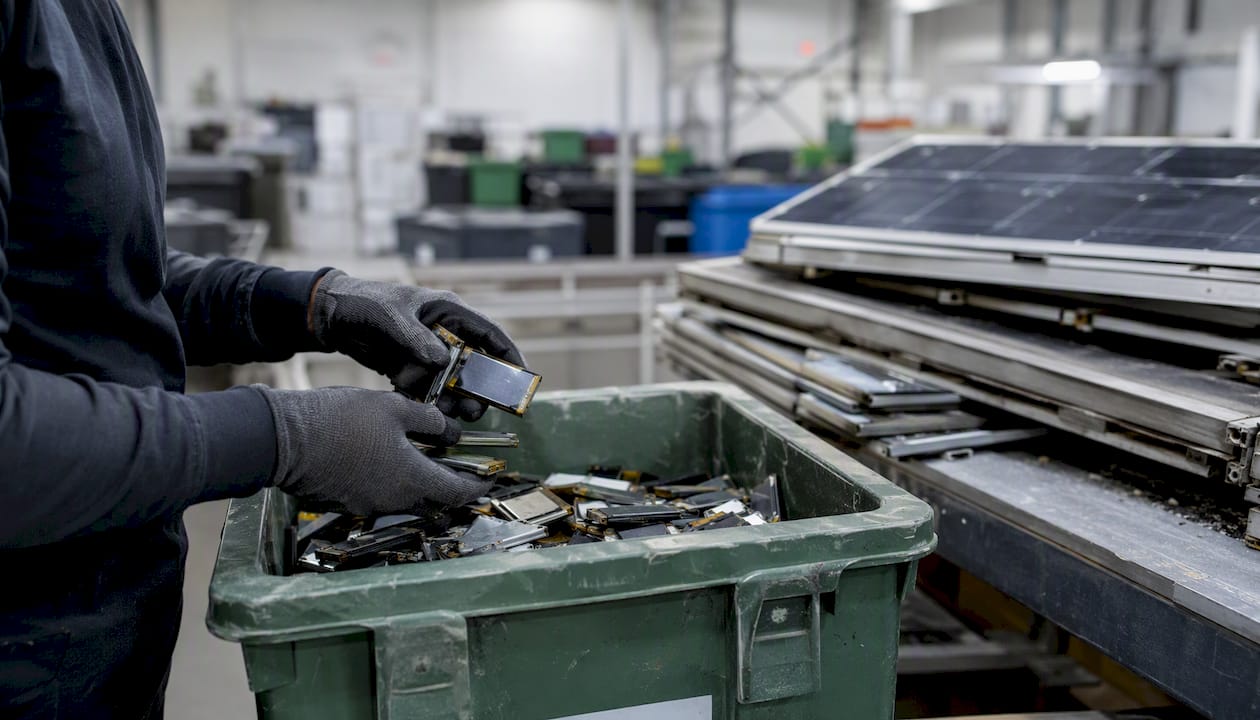
Hard drives, SSDs, servers, workstations, laptops, mobile devices, tablets, networking gear, printers, batteries, and solar panels all fall within scope for a full-service provider. Battery and solar panel recycling carries specific California regulatory requirements (see below), so confirm your vendor handles those streams separately and compliantly.
How do you validate that sanitization actually worked?
Validation means testing a sample of wiped media to confirm data is unrecoverable, then documenting the result. NIST SP 800-88r2 explicitly calls for organizations to determine the adequacy of sanitization before media leaves their control. Ask vendors for their written sanitization validation procedure and whether they provide per-device pass/fail logs alongside the CoD.
How long does the process take?
Scheduling to pickup typically runs two to five business days for standard jobs. The CoD and manifest usually arrive within one to three business days after destruction is complete. Large server room cleanouts or jobs requiring on-site shredding may need a week of lead time for equipment scheduling.
What California regulations apply to Anaheim businesses?
California’s Electronic Waste Recycling Act (SB 20/SB 50) bans covered electronic devices from landfills and requires recycling through authorized collectors. The California Department of Toxic Substances Control (DTSC) classifies many electronics as hazardous waste. Batteries fall under separate Universal Waste rules. The EPA recommends certified recyclers holding R2 or e-Stewards accreditation, both of which include environmental management controls that align with California’s requirements.
What liability and insurance should your vendor carry?
Require general liability insurance, cargo/transport insurance covering devices in transit, and errors-and-omissions (E&O) coverage for data breaches arising from improper sanitization. Ask for certificates of insurance naming your organization as an additional insured. A vendor without E&O coverage shifts breach liability back to you if a drive resurfaces.
Why a compliance-first local partner reduces your actual risk
The conventional wisdom is that certification logos on a vendor’s website are enough. They are not. The real question is whether the vendor’s process matches what those certifications require.
e-Stewards V4.1 mandates NAID AAA certification for physical destruction and prohibits export of functional equipment, which closes the most common downstream leakage path. R2v3 allows more operational flexibility and different cost profiles. For Anaheim teams handling regulated data, e-Stewards’ stricter export and destruction requirements are worth the premium. For mixed inventories with significant recoverable asset value, R2v3 may offer better economics.
Pro Tip: Insist on serial-numbered manifests at pickup, not just a count. A CoD that says “50 hard drives destroyed” with no serial numbers is not defensible in an audit.
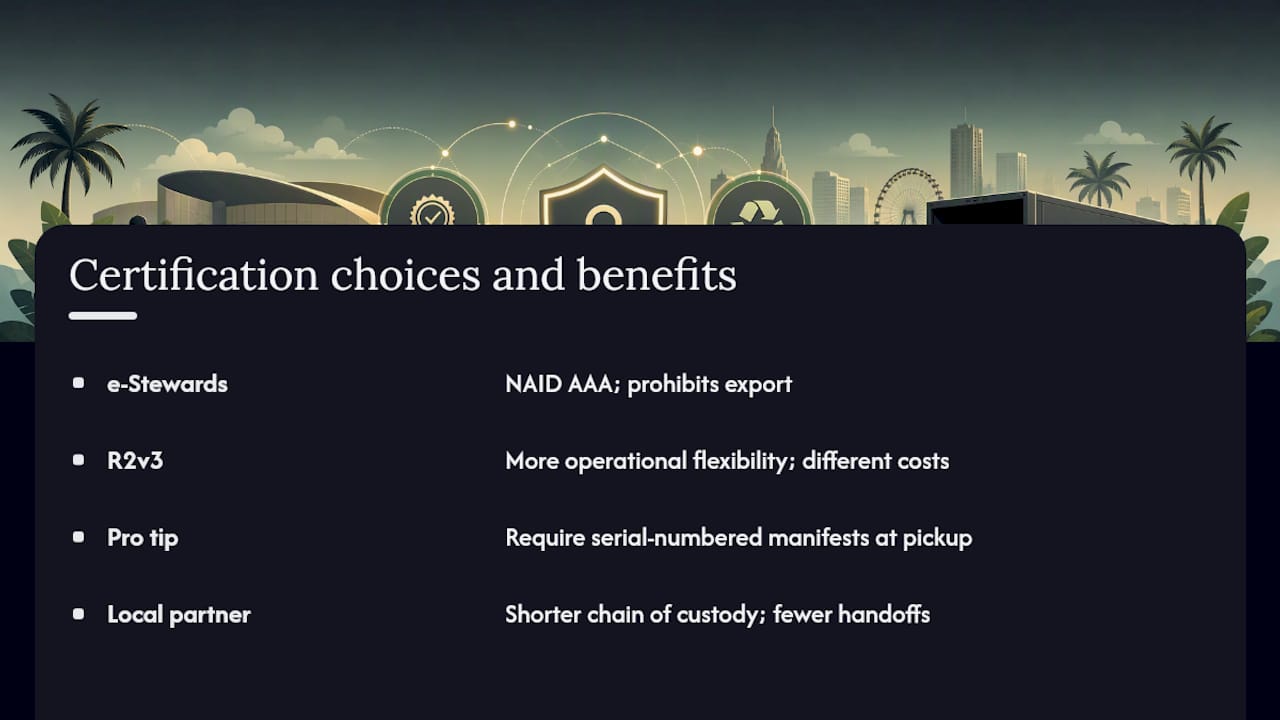
A local provider also shortens the chain of custody. Fewer miles between your facility and the destruction site means fewer handoffs, fewer opportunities for a device to go missing, and faster turnaround on your CoD.
Usedcartridge serves Anaheim businesses with certified IT disposal

Usedcartridge provides Anaheim businesses with on-site and off-site data destruction, secure recycling, and IT asset recovery with full chain-of-custody documentation. Every job produces a serial-numbered pickup manifest, a signed Certificate of Destruction, and an asset recovery settlement report where applicable. The service covers HDDs, SSDs, servers, laptops, mobile devices, batteries, and solar panels, with alignment to NIST SP 800-88 sanitization standards and EPA-recommended certification programs.
Pricing depends on device type, volume, and whether on-site destruction is required; asset recovery payouts on resalable equipment often offset a portion of the service cost. To get an accurate quote, prepare your device counts by type, serial number ranges if available, facility address, and preferred date, then request an IT asset recovery quote or visit the e-waste service page to schedule a pickup.
Sources
Use these sources to verify vendor claims and confirm sanitization standards before signing a contract.
- Guidelines for Media Sanitization (NIST SP 800-88r2)
- SP 800‑88 Rev. 2, Guidelines for Media Sanitization | CSRC
- Certified Electronics Recyclers | US EPA
- The e‑Stewards ® Standard for Ethical and Responsible Reuse, Recycling, and Disposition of Electronic Equipment and Information Technology V4.1
- R2 vs e‑Stewards Certification: Which Should Your ITAD Vendor Hold? – Disposition Compliance | IT Asset Disposition Guide
When a vendor presents credentials, cross-reference their certification number against the issuing body’s public registry. Ask them to show you a sample CoD and manifest from a prior job. A vendor comfortable with that request is one worth trusting with your data.