
Cables and wires are recyclable, and the copper inside them is what holds the value. For a handful of cords, drop them at a retail take-back program, which usually pays nothing. For jobsite volumes, call a scrap yard or schedule a managed business pickup, because that is where cash or credit comes from. Sort first, then pick your route.
TL;DR:
- Separate copper heavy building wire from thin data cable, keep working cords for reuse, and skip hand stripping because recyclers generally prefer unstripped bundles for mechanized processing.
- Clean copper wire usually earns more than aluminum wire or thin data cable; oil, dirt, and steel fittings can also lower the grade.
- Use a scrap yard for truckloads when you can haul without paperwork; schedule managed pickup for large jobs needing certificates or billable crew time.
- Ask buyers about quote validity, pricing basis, and payment timing after grading, then get terms in writing; a rapid handoff does not guarantee fast payment.
Table of Contents
- What counts as recyclable cable and wire, and why does copper matter?
- Where should you take cables and wires: convenience or value?
- How should crews prepare cables for recycling?
- How do recyclers determine what your cable is worth?
- What are your options as a contractor or business?
- How long does cable recycling take from drop-off to final material recovery?
- What does it cost to recycle cable at business volumes?
- Why cable recycling belongs in your jobsite closeout
- How we support contractors and businesses with bulk cable recycling
- FAQ
- Sources
What counts as recyclable cable and wire, and why does copper matter?
Almost anything with a metal conductor inside qualifies. As an electrician, you handle most of these categories on a regular basis:
- Consumer cords: power cords, extension cords and appliance leads
- Data and peripheral cables: Ethernet, HDMI and USB, which carry less metal per foot but add up in volume
- Building wire: Romex and THHN pulled from walls, conduit and ceilings during renovations
- Armored and industrial cable: heavier runs with thick conductors and metallic sheathing
The conductor decides the value. Copper is the main driver, and aluminum conductors are worth noticeably less per pound. A thick copper feeder cable may be worth more than a bundle of thin data cable, even if the data cable weighs the same. You can usually tell which one you have by scraping a small nick in the conductor: copper looks reddish, aluminum looks silver.
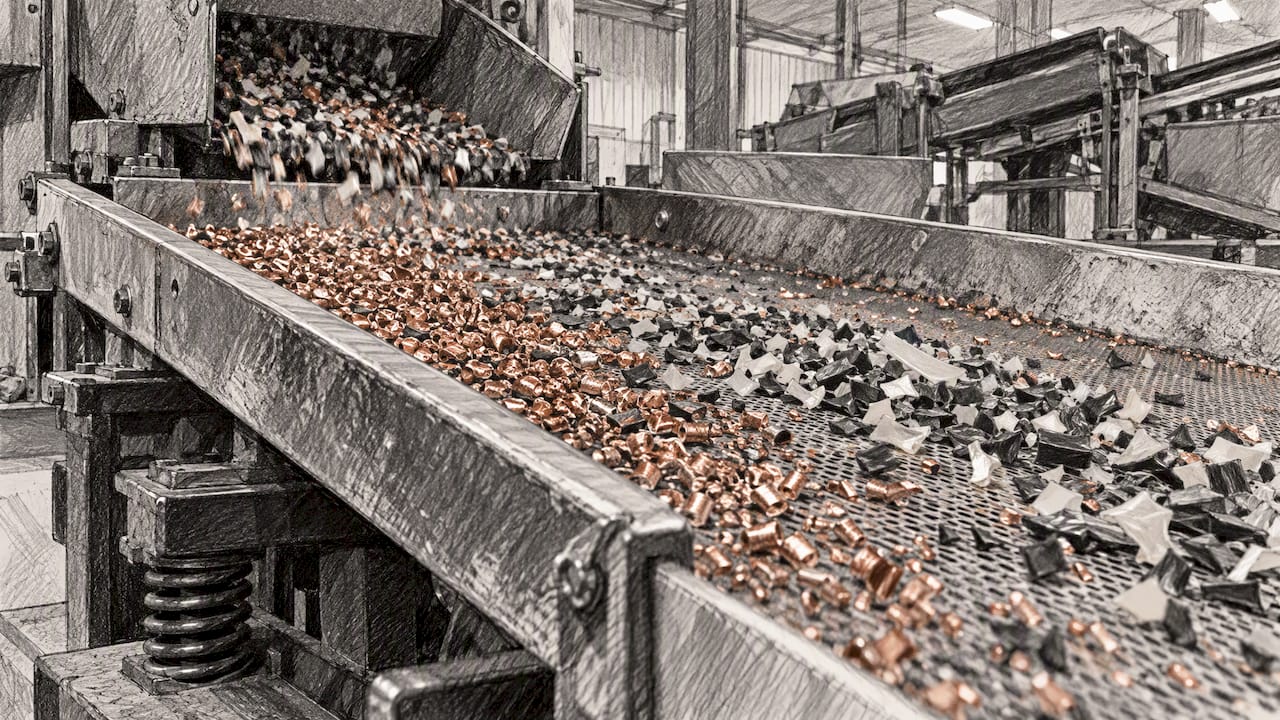
Construction matters too. Stranded conductors consist of fine wires, while solid conductors are one piece. Both can be processed with destruction and separation equipment, though bulky armored or jacketed cable may need extra handling. In industrial settings, separating copper from plastic with mineral-processing methods such as jigging and shaking tables has produced copper concentrates of around 97% in a case study, which shows how much of the metal can be recovered once the cable is granulated.
Your practical takeaway: pull copper-heavy runs out of mixed piles, and set aside any cord that still works. Working cords can be reused or donated.
Where should you take cables and wires: convenience or value?
Your volume and your patience decide the route. Here are your four main options:
- Retail and manufacturer take-backs: Stores such as Best Buy and Staples, along with some manufacturer programs, commonly accept consumer cables and cords for free. Expect convenience, not payment, and expect limits on quantity and cable type.
- Scrap metal yards: Yards pay by grade and weight. Call ahead to ask what they accept and how they quote. Sorted bundles of one type typically earn more than a mixed load, because the yard spends less time grading.
- Mail-in and national collection programs: These suit small volumes when no drop-off is nearby. They are a tidy way to get an odd box of peripherals out of the shop.
- Municipal e-waste events and donation: Local events take cords during scheduled collection days, and working cables and chargers can go to schools, makerspaces or reuse groups.
Our own write-up on ways to recycle cables and peripherals goes deeper on destination options, though it is written in Spanish. The short version: retail for a drawer of cords, yards or managed pickups for anything you would measure in pallets or by the truckload.
How should crews prepare cables for recycling?
Good prep prevents rejected loads and speeds up the handoff. Follow these steps:
- Sort by type. Keep building wire, extension cords, data cable and armored cable in separate bins.
- Pull working cables. Set aside anything reusable before the rest heads out.
- Bundle and coil. Tie coils tightly so they can be weighed and moved without tangling.
- Remove attached devices. Take off power bricks, adapters and hardware if your destination requires it.
- Skip the stripping. In professional recycling, hand-stripping insulation rarely pays for the labor, and recyclers generally prefer unstripped bundles they can run through mechanized processing.
A quick safety checklist for the crew: de-energize every run before cutting, snip plugs off only when the destination asks, and keep oil-soaked, burned or visibly damaged cable apart from clean loads. Wear gloves, because cut copper ends are sharp.
How do recyclers determine what your cable is worth?
Payout follows the metal market. The value of recycled wire is tied to live copper and aluminum commodity prices, and business programs can pay or credit contractors for significant volumes of copper-heavy cable, with pricing indexed to metal exchange rates.
Prices move with the exchange, so ask the buyer how long a quote remains valid.
Grade comes next. Bare copper sits at the top, insulated copper wire pays less because the plastic has to be removed, tinned copper and mixed-metal cables get graded lower still, and shielding or heavy jacketing lowers the per-pound figure. Contamination hurts too. Oil, dirt, steel fittings and certain PVC insulation can cut an offer or get a load downgraded, so pre-sorting pays for itself.
Ask these questions before you commit a load:
- Do you quote against an insulated wire price or a bare metal index?
- Can you grade a sample of my material first?
Those three answers tell you most of what you need to compare two buyers.
What are your options as a contractor or business?
Once you pass a few bins of cable, logistics start to matter more than the per-pound price. Managed collection services handle hauling, weighing and paperwork, and can deliver better net value than a self-haul once you count truck time and crew hours. Enterprise programs such as CableLoop show where the industry is heading: end-to-end collection, traceability and buyback that feed recovered copper and aluminum back into new cable. Programs at that level typically expect substantial volumes.
Documentation is the other reason to consider managed service:
- Certificates of recycling your client may request for sustainability reporting
A rough decision guide: haul to a yard when you have a truckload, a free afternoon and no paperwork requirements. Schedule a pickup when volumes are large, your clients ask for certificates or crew time is better spent on billable work. Book pickups early in a project so material is not piling up at closeout. Our guide to electronics disposal planning steps for businesses covers the scheduling side in more detail.
How long does cable recycling take from drop-off to final material recovery?
The timeline has two parts: the handoff, then the processing. The handoff is usually quick, but timing depends on the location, queue, and provider schedule.
Processing happens afterward, and you rarely see it. Material is sorted by type and grade, then destroyed or granulated, and the metal is separated from the plastic. Mechanical methods such as the ones in the mineral-processing case study work on cable that has been reduced to small particles. Industrial plants can also combine cold and hot treatments, and research on scrap copper cable recycling reports recovery rates near 99% for certain cable types, though that relies on specialized equipment and controlled conditions. The recovered metal then goes to smelters and mills and can be fed back into new cable.
For you, the timeline that matters is payment. A yard may settle at the scale, while managed programs may pay or credit after the load is processed and graded. Ask each buyer for their terms in writing, and do not assume that a fast drop-off means a fast payout.
What does it cost to recycle cable at business volumes?
Small loads cost nothing. Retail take-backs and many municipal events accept consumer cords for free, and a yard will typically pay you for sorted metal, so the real cost for most small jobs is your own time and fuel.
For larger volumes, build your estimate from these pieces:
- Labor and handling: sorting, bundling and loading, which is why stripping rarely pays
- Transport: your own truck time, or a pickup fee if a provider hauls for you
- Processing or service fees: some managed services charge for collection, container placement or documentation, and fees depend on material, volume and location
- Offsets: payout or credit for copper-heavy cable, which can cover part or all of the above
Fees vary by provider and by the mix of material, so the only reliable number is a written quote for your actual load. Large decommissioning projects with plenty of copper cabling can see meaningful value returned, while a load heavy in thin data cable or aluminum may roughly break even. Compare net figures, not per-pound prices: payout, minus hauling, minus labor, plus the value of the paperwork you receive.
If you are weighing recycling against a value-recovery plan for other electronics on the same job, our business guide to value recovery from electronics lays out how to compare options.
Why cable recycling belongs in your jobsite closeout
Most of the value people lose on cable is lost through habit, not bad prices. Wire gets tossed into a dumpster, mixed with debris or left behind because nobody owned the task. My view is that cable recycling belongs in job closeout, right next to punch lists and cleanup.
Receipts and certificates matter to clients and to your accountant. A managed pickup can save crew time compared with stripping on site, and that time may be worth more than the extra copper you would expose.
— Keith
How we support contractors and businesses with bulk cable recycling
When your cable volume outgrows a trunk and a Saturday trip, we can take over the logistics. Our Recycling Services cover B2B e-waste recycling pickup, IT asset disposition and recovery, and local electronics recycling, so cable can move out alongside the old computers, peripherals and other equipment from the same project. We provide receipts and certificates you can pass to clients for compliance needs.
Choose a managed pickup when volumes are large, when your client needs documentation, or when you would rather keep your crew billable; see our guidance on EV charging cable management standards for installers for cable handling best practices. Tell us what you have, how much, and where it is, and we will quote the job.

Request a quote or schedule a pickup through our IT asset recovery page and we will take it from there.
FAQ
Is cable wire worth scrapping?
Yes, when it contains copper and you have enough of it. Value follows live copper and aluminum prices, so sorted, copper-heavy cable is worth the effort while a few thin consumer cords are not.
How do you get rid of old cable wires?
Match the route to the volume. Small amounts can go to a retail take-back program or a municipal e-waste event, while larger loads go to a scrap yard or a scheduled business pickup. Keep working cables aside for reuse or donation.
Where can you get money for old cables?
Scrap metal yards are the usual place, because they pay by grade and weight for sorted wire. Managed recycling programs for businesses can also pay or credit you for copper-heavy loads. Retail drop-offs generally do not pay.
Can you get money for old wires?
You can, if the wire has enough metal and is reasonably clean. Sort by type, avoid contamination, and ask the buyer how they quote before you haul it. Mixed or contaminated loads fetch less.
Sources
- Nexans – Frequently asked questions about CABLELOOP
- CableLoop – Expert cable recycling for a sustainable electrification
- Industrial Recycling of Scrap Copper Cables and Wires: Combining Cold and Hot Treatments for Maximum Recovery and Minimal Emissions
- Separation of Copper from Electric Cable Waste Based on Mineral Processing Methods: A Case Study
Recommended
- Ways to Recycle Cables and Peripherals in 2026
- Hardware Recycling Challenges Businesses Face in 2026
- How to Recycle Networking Gear: 2026 IT Guide
- Electronics Disposal Planning Steps for Businesses