
A certified recycling workflow is the standardized process businesses use to guarantee responsible handling, secure data destruction, and full traceability in e-waste recycling operations. Unlike informal disposal methods, a certified process ties every device to documented chain-of-custody records, destruction events, and downstream vendor accountability. The leading frameworks governing these workflows include R2v3, NAID AAA, e-Stewards, and NIST SP 800-88. Organizations that follow a certified waste management process protect themselves from regulatory penalties, data breach liability, and audit failures. This guide explains every stage of the process, the certifications that validate it, and the tools that make it work.
What certifications and standards define a certified recycling workflow?
Three certifications define the floor for any credible certified recycling workflow: R2v3, NAID AAA, and e-Stewards. Each addresses a different layer of responsibility, and together they cover environmental compliance, data security, and downstream material tracking.
- R2v3 (Responsible Recycling version 3): The current standard for electronics recyclers. It requires annual third-party audits and documented adherence to environmental, health, safety, and data security requirements. Auditors check that every device is tracked from intake through final disposition.
- NAID AAA: The data destruction certification issued by the National Association for Information Destruction. It validates that destruction methods, technician credentials, and event records meet the highest security standards. Mobile shredding units that allow on-site physical destruction qualify under NAID AAA when clients witness the process.
- e-Stewards: A certification focused on preventing illegal export of e-waste to developing countries. It enforces strict downstream vendor controls and prohibits landfill disposal of hazardous materials.
- NIST SP 800-88: Not a certification but a federal guideline specifying acceptable data sanitization methods. It requires verification and recording of the destruction method, technician identity, date, and outcome to produce legally defensible certificates.
Downstream vendor due diligence is a non-negotiable element across all three certifications. Recyclers must audit and document where every dismantled material goes, and that documentation must live in an integrated compliance system, not in email threads or spreadsheets. Audit readiness depends on having these records available on demand.
What tools and technologies support a certified recycling workflow?
The right technology stack separates a workflow that passes audits from one that creates liability. Three categories of tools are non-negotiable for any organization running a certified sustainable recycling process.
| Tool Category | Function | Compliance Relevance |
|---|---|---|
| Serialized asset tracking software | Logs each device by serial number from intake to disposition | Required for R2v3 and NAID AAA chain-of-custody records |
| Integrated ERP or recycling platform | Links intake, sanitization, destruction, and financial records | Auditors expect unified records, not manual reconciliation |
| Data sanitization and destruction equipment | Executes NIST 800-88 compliant wiping or physical shredding | Generates automated certificates tied to asset records |
| GPS-tracked secure transport | Documents physical custody during transit | Supports chain-of-custody requirements under NAID AAA |
Serialized asset tracking in recycling is the foundation of every other tool. Without a unique identifier tied to each device from the moment it leaves your facility, no downstream record can be verified. Auditors check that the serial number on the intake log matches the serial number on the destruction certificate and the downstream shipment record.

Integrated ERP or specialized recycling software closes the gap between operational records and compliance documentation. Auditors expect chain-of-custody records generated automatically from a unified system linking intake, sanitization, destruction, downstream shipment, and financial events tied to each device’s serial number. Manual reconciliation from multiple disconnected systems is a primary cause of certification suspension.
Pro Tip: When evaluating recycling software platforms, ask vendors specifically whether destruction certificates are generated automatically from asset records or require manual entry. Automatic generation is the only audit-safe option.
For businesses managing their own IT assets before handoff, understanding IT asset tracking fundamentals helps you prepare accurate inventories that align with what your recycling partner will log at intake.
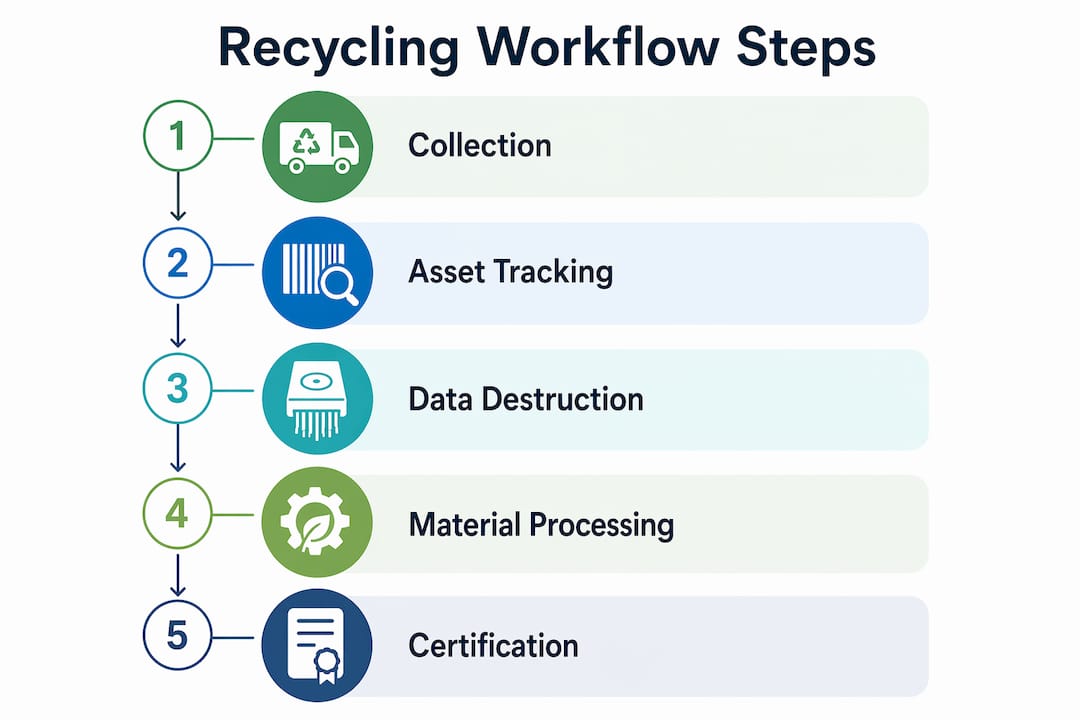
How to execute each step in the certified recycling workflow
A certified workflow follows a fixed sequence. Deviating from any step creates documentation gaps that auditors flag as compliance failures.
-
Secure pickup with documented chain-of-custody transfer. All devices must leave your site in locked, tamper-evident containers or vehicles with GPS tracking. The recycler issues a chain-of-custody receipt at pickup, recording device counts, types, and the transfer time. This receipt is the first link in the audit trail.
-
Inventory processing with serial number logging. Upon arrival at the recycling facility, every device receives a unique intake record tied to its serial number. Certified facilities document every device by serial number and tie all subsequent records to that identifier. Skipping this step makes downstream verification impossible.
-
Decision point: data sanitization or physical destruction. Devices with recoverable value may qualify for NIST SP 800-88 software-based sanitization, which overwrites data to a standard that makes recovery technically infeasible. Devices with damaged storage media, or those requiring the highest security assurance, go to physical destruction. Both paths require the same level of documentation.
-
Issuing the Certificate of Data Destruction. This document is the legal proof that data was destroyed. Certificates must include the sanitization methodology, technician credentials, date and time, and downstream vendor tracking records. A certificate that omits any of these fields is not defensible in a regulatory audit or litigation.
-
Managing downstream vendor accountability. Every material stream leaving the facility, whether refurbished devices, shredded metals, or plastics, must go to a documented and audited downstream vendor. The recycler must verify that vendors meet environmental standards and record where each material category was sent. This is where many workflows fail: informal records like email confirmations do not satisfy R2v3 or e-Stewards requirements.
Pro Tip: Request your recycler’s downstream vendor list and their audit documentation before signing a service agreement. A recycler that cannot produce this list on demand is not operating a certified workflow.
Integrated systems that link compliance and financial records reduce discrepancies between billing and destruction certificates. When these records match automatically, audit preparation takes hours instead of weeks.
What common challenges arise in maintaining certified recycling workflows?
Most compliance failures in certified recycling trace back to the same set of avoidable problems. Recognizing them early prevents certification suspension and data breach exposure.
- Manual or spreadsheet-based tracking. Spreadsheets cannot generate automatic chain-of-custody records or link destruction events to serial numbers in real time. Manual reconstruction from multiple systems is a major compliance risk that leads to certification suspension or non-renewal. Any gap in the asset history signals a flawed workflow to auditors.
- Delayed or inconsistent destruction documentation. Certificates issued days or weeks after destruction events cannot be verified against real-time records. The shift toward audit-ready real-time digital records is now the industry benchmark. Delays in reconstructing asset history signal flawed workflows and pose data security risks.
- Missing downstream vendor verification. Recyclers who rely on informal agreements with downstream processors cannot produce the audit documentation that R2v3 and e-Stewards require. This exposes your organization to liability for materials that end up in landfills or are exported illegally.
- Disconnected data and financial systems. When billing records and destruction certificates live in separate systems, discrepancies appear. Facilities with integrated ERP systems have better audit outcomes and less operational risk than those using disconnected record-keeping.
- Failure to verify technician credentials. NIST 800-88 and NAID AAA both require that destruction events record the technician responsible. If your recycler cannot name the technician on a specific certificate, the record is incomplete.
The digital security considerations that apply to recycling operations go beyond data wiping. They include access controls on intake areas, background checks for technicians, and encrypted transmission of destruction records. Organizations that treat these as secondary concerns routinely fail NAID AAA audits.
Sustainable recycling advances also favor integrated mechanical and chemical treatments that improve material recovery rates while lowering environmental impact compared to conventional disposal. A certified workflow that captures these efficiencies delivers both compliance and measurable environmental benefit.
Key Takeaways
A certified recycling workflow requires serialized asset tracking, NIST 800-88 compliant data destruction, and integrated digital records to satisfy R2v3, NAID AAA, and e-Stewards audits.
| Point | Details |
|---|---|
| Certifications set the floor | R2v3, NAID AAA, and e-Stewards each address distinct compliance layers that together cover data, environment, and downstream accountability. |
| Serialized tracking is non-negotiable | Every device must carry a unique identifier from intake through final disposition to produce a defensible audit trail. |
| Integrated systems prevent failures | Disconnected or manual records are the leading cause of certification suspension and audit liability. |
| Certificates require full detail | A valid Certificate of Data Destruction must name the methodology, technician, date, and downstream vendor. |
| Downstream vendor audits close the loop | Documented verification of where every material stream goes is required under R2v3 and e-Stewards. |
Why certified workflows are now a baseline expectation, not a differentiator
When I started working closely with organizations on e-waste compliance, a certified recycling workflow was something a handful of forward-thinking companies pursued. That has changed completely. Regulators, corporate procurement teams, and cyber insurance underwriters now treat certification as a baseline requirement, not a competitive advantage.
The part that surprises most organizations is how much of the compliance burden falls on the client, not just the recycler. You are responsible for verifying that your vendor holds current certifications, that their downstream vendors are documented, and that the certificates you receive are complete. Handing devices to a recycler and assuming the liability transfers with them is the most expensive mistake I see businesses make.
The other shift I have watched closely is the move toward real-time audit readiness. Organizations that used to prepare for audits by pulling records together over several weeks are now expected to produce complete chain-of-custody documentation on demand. That expectation is only going to tighten. If your current recycling partner cannot give you a full asset history within 24 hours of a request, your e-waste compliance posture is weaker than you think.
The businesses that handle this well treat certified recycling as an ongoing operational discipline, not a one-time vendor selection. They audit their recycler annually, review downstream vendor lists, and verify that certificates match their own asset inventories. That discipline is what separates organizations that pass audits from those that scramble through them.
— Keith
Certified e-waste recycling services from Usedcartridge
Usedcartridge provides certified e-waste recycling and secure data destruction services built around the compliance standards your organization needs to meet. Every engagement includes documented chain-of-custody transfer, serialized asset logging, and Certificates of Data Destruction that satisfy R2v3 and NAID AAA requirements.

Whether you are retiring a server room, replacing workstations, or managing a one-time equipment refresh, Usedcartridge handles the full workflow from secure pickup through downstream disposition. Their e-waste recycling services are designed for organizations that need both environmental compliance and data security in a single, documented process. Contact Usedcartridge for a free quote and to review their current certification documentation before your next disposal cycle.
FAQ
What is a certified recycling workflow?
A certified recycling workflow is a documented, auditable process for collecting, tracking, sanitizing, and disposing of electronic devices in compliance with standards like R2v3, NAID AAA, and NIST SP 800-88. It produces legally defensible records at every stage from intake through final material disposition.
What does a Certificate of Data Destruction include?
A valid Certificate of Data Destruction must include the sanitization methodology, the technician’s credentials, the date and time of destruction, and downstream vendor tracking records tied to the device’s serial number.
Why can’t spreadsheets support a certified recycling workflow?
Spreadsheets cannot generate automatic chain-of-custody records or link destruction events to serial numbers in real time. Auditors require integrated digital records, and manual reconstruction from disconnected systems is a recognized cause of certification suspension.
How often must certified recycling facilities be audited?
R2v3 requires annual third-party audits to maintain certification. Auditors verify that chain-of-custody records, data destruction documentation, and downstream vendor accountability meet current standard requirements.
What is downstream vendor due diligence in recycling?
Downstream vendor due diligence requires recyclers to audit and document where all dismantled materials are sent after processing. This documentation must live in an integrated compliance system and must be available for auditor review on demand.