
An e-waste downstream audit is only credible if it can prove five things: a written ITAD policy, complete chain-of-custody records, certificates of destruction or recycling for every lot, documented vendor qualifications, and verification evidence such as sampling or unannounced inspections. Auditors anchor these checks to named standards, chiefly e-Stewards Standard V4.1, R2/RIOS, and NIST SP 800-88 Rev.2 for data sanitization. Miss any one piece, and the audit trail has a hole a regulator or client will find.
TL;DR:
- An audit-ready e-waste trail requires specific chain-of-custody records, certificates for each lot, vendor certifications, and documented sampling or inspections.
- Downstream verification must include unannounced inspections, GPS tracking, and sampling over a rolling three-month window to detect potential subcontracting or diversion.
- Evidence of data destruction must be tied to specific media with certificates, witness logs, and documented sanitization methods, especially for reuse or resale.
- Confirm vendor certifications with recognized standards, ensure contractual right-to-audit clauses, and verify operational metrics like depollution efficiency and recovery rates.
- Building an organized, digital, and retention-scheduled audit file with real-world evidence such as photos, logs, and discrepancies accelerates passing inspections.
Table of Contents
- What Auditors Actually Look for: An Audit-Ready Checklist
- Chain-of-Custody Documentation: What to Collect and How to Store It
- How Do Auditors Verify Downstream Handling?
- Data Destruction and Media Sanitization: What Counts as Evidence?
- Vendor Qualification: Reading Certifications Correctly
- The Audit Process, Step by Step: Plan, Execute, Verify, Close
- Common Gaps, Red Flags, and Fast Remediation
- Preparing Evidence and Creating an Audit-Ready File
- What I’ve Learned Running Downstream Audits
- Get Audit-Ready Certification Without Building the Program Yourself
- Standards and Guidance Worth Keeping on File
- Sources
What Auditors Actually Look for: An Audit-Ready Checklist
Every downstream audit starts with the same question: can you prove, on paper, that equipment went where you say it went? Auditors are not interested in intentions. They want documents that survive cross-checking.
A working audit file needs five categories of evidence, and each one has to hold up independently:
- Written ITAD policy naming who owns each decision, from intake to final disposition, with roles and responsibilities spelled out rather than implied.
- Certificates of destruction or recycling issued per lot or shipment, not a single blanket certificate covering a year of activity.
- Chain-of-custody records that tie specific asset tags and serial numbers to specific shipping manifests.
- Vendor qualification files, including signed contracts, current certifications, and copies of the vendor’s own audit reports.
- Sampling and verification plans, plus the retained evidence (photos, logs, inspection notes) proving those plans were actually executed.
A downstream recycling vendor’s compliance track record matters as much as your own paperwork, since a weak link in the chain becomes your liability the moment materials leave your loading dock. Auditors increasingly ask for both sides of that relationship at once.
Chain-of-Custody Documentation: What to Collect and How to Store It
Chain-of-custody is the backbone of any defensible e-waste audit, and it fails most often on missing data fields rather than missing documents.
The core document set includes intake records at the point of pickup, transfer manifests for every handoff, bills of lading for transport, and certificates of recycling or destruction at the end of the chain. Each document needs specific fields populated, not just a signature line:
- Serial number and internal asset ID for every device or lot.
- Weight recorded at intake and again at each transfer point.
- Date and location of each handoff, with named handler contacts.
- Origin and destination facility addresses, matched against permits on file.
Retention periods typically run three to seven years depending on your industry and contractual obligations, and version control matters. Overwriting a manifest instead of appending a correction destroys the audit trail. Digitize records at the point of capture using barcode or serial scanning tied directly to secure cloud storage, and restrict edit access so the record stays tamper evident.
How Do Auditors Verify Downstream Handling?
Paperwork alone doesn’t satisfy a serious auditor. Verification means confirming that what the documents claim actually happened on the ground.
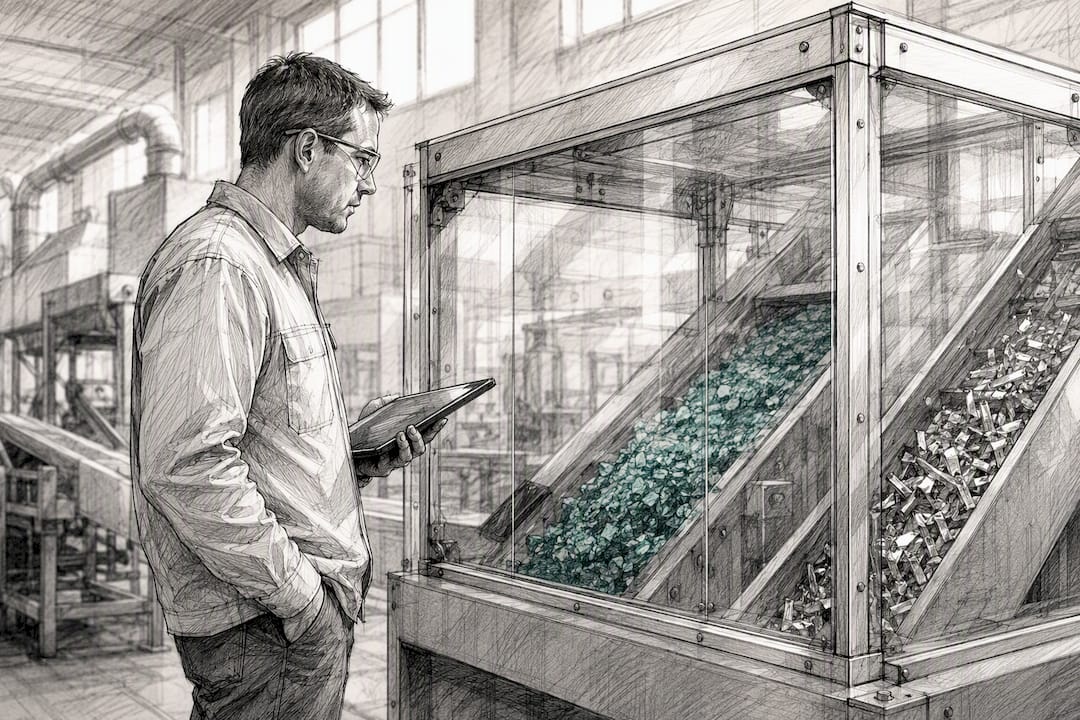
e-Stewards Standard V4.1 requires downstream due diligence built around sampling shipping records for a period of time of transfers, extending past the immediate downstream vendor to catch subcontracting that would otherwise stay invisible. That window matters because a vendor can look clean for one shipment and still be quietly rerouting material through an unpermitted subcontractor on the next.
Common verification methods include:
- Shipment-level sampling across a rolling three-month window of transfer records.
- Unannounced inspections that check working conditions, permits, and actual material flow against what manifests report.
- GPS tracking on transport vehicles, paired with photo and video evidence at each transfer point.
- Third-party attestations from conformity assessment bodies or independent auditors who have no financial stake in the outcome.
e-Stewards explicitly recommends pairing unannounced inspections with GPS-based tracking, and that combination consistently produces stronger verification outcomes than scheduled visits alone.
Pro Tip: Request your downstream vendor’s last two inspection reports before you sign a contract, not after. A vendor reluctant to share them is telling you something.
Data Destruction and Media Sanitization: What Counts as Evidence?
NIST SP 800-88 Rev.2 sets the reference standard for sanitization, defining three methods: clear, purge, and destroy. Clear removes data through standard read/write commands, purge uses more aggressive techniques like cryptographic erasure for media headed toward reuse, and destroy renders the media physically unusable, the only acceptable option when the data classification demands zero recovery risk.
Evidence auditors expect includes:
- A certificate of destruction tied by serial number to the specific media destroyed, not a generic batch certificate.
- On-site destruction records with witness logs or video, or off-site chain-of-custody proving unbroken control until destruction.
- Documented logical sanitization procedures for devices headed to reuse or refurbishment, including which purge method was applied and when.
That last category trips up more programs than any other. A device wiped for resale still needs a documented sanitization method on file, even though nothing was physically destroyed.
Vendor Qualification: Reading Certifications Correctly
Certification tells you what a facility is supposed to do, not what it actually does every day. That distinction drives how you should read e-Stewards and R2/RIOS credentials.
Both standards define downstream accountability controls, and R2’s Appendix specialties (data destruction, materials recovery, and others) indicate which specific processes a facility is certified to perform, so a general R2 certification doesn’t automatically cover every downstream activity you need. Confirm the facility’s conformity assessment evidence and check that the auditor who issued it holds recognized qualifications; e-Stewards specifically defines a “Qualified Auditor” standard for this reason.
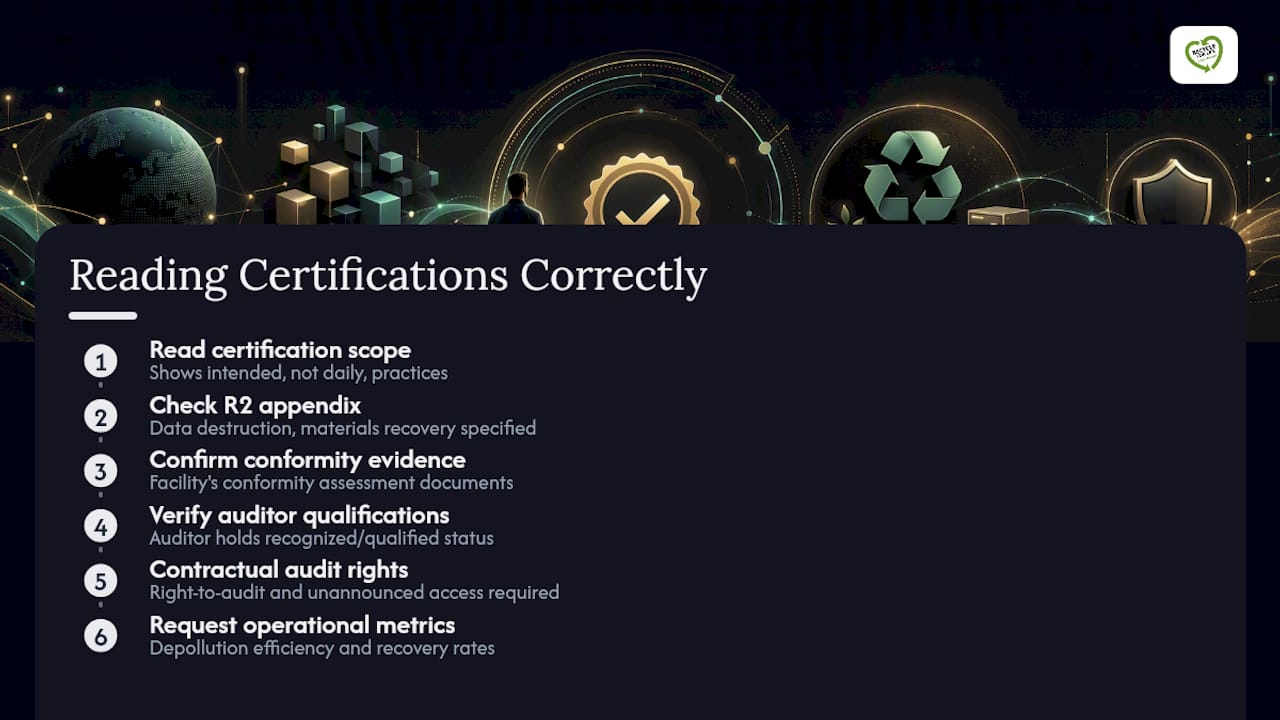
Before signing, require contract language granting right-to-audit and unannounced site access, and request operational reporting on depollution efficiency and material recovery rates. Those two metrics separate facilities that meet minimum compliance from ones actually recovering value responsibly.
The Audit Process, Step by Step: Plan, Execute, Verify, Close
A downstream audit runs in four phases, and skipping the planning phase is the single fastest way to end up with an unusable report.
- Plan the scope: define sample sizes, list every document you’ll request, and set a realistic timeline before anyone shows up on site.
- Execute onsite: review documents against physical inventory, tour the facility, interview handling staff, and watch sample lots move through actual processing.
- Capture evidence: photograph equipment and conditions, collect manifests and certificates on the spot, and log GPS data for any material in transit.
- Close out: document every nonconformity found, require a corrective action plan with deadlines, and schedule follow-up verification to confirm the fix actually happened.
Skipping step four is common and costly. A finding without a documented correction just resurfaces at the next audit cycle.
Common Gaps, Red Flags, and Fast Remediation
Most downstream audits fail on a short list of repeat offenders. Incomplete chain-of-custody, missing per-lot certificates, vague vendor agreements with no audit clause, and absent sampling records account for the majority of findings.
Watch for these red flags during inspection:
- Offsite subcontracting with no corresponding paperwork on your side.
- Weights that don’t reconcile between intake and downstream transfer records.
- Missing serial numbers on any document in the chain.
Remediate immediately by requesting the missing document from the vendor in writing, logging the date the gap was found and closed, and updating your vendor contract to require the document going forward. Auditors care less about a clean history than about proof you catch and close gaps fast.
Preparing Evidence and Creating an Audit-Ready File
Build one file, organized by category: policies, vendor contracts, transfer manifests, certificates, sample photos, GPS and export logs, and corrective action history.
- Structure it by shipment or lot number so any single audit query resolves in one lookup.
- Set a retention schedule matching your longest contractual or regulatory requirement.
- Present the file digitally and indexed. An auditor who has to hunt for a document tends to ask more questions, not fewer.
What I’ve Learned Running Downstream Audits
The evidence that convinces auditors fastest is never the polished policy document. It’s the messy stuff: a GPS log with a timestamp, a weight discrepancy flagged and explained, a photo from an unannounced visit. Auditors trust records that show your process working under scrutiny, not records written to look good on paper.
Audit-ready engagements are structured around exactly that principle: build the trail before someone asks for it.
— Keith
Get Audit-Ready Certification Without Building the Program Yourself
Most compliance teams don’t have the bandwidth to build chain-of-custody systems, qualify downstream vendors, and generate per-lot certificates while also running their day job. Some providers offer on-site and off-site data destruction with documented witness logs, certificates of destruction tied to serial numbers, and chain-of-custody reporting built into every pickup.

That means the evidence package auditors ask for, intake records, weights, destruction certificates, and transfer documentation, arrives already structured instead of assembled after the fact under deadline pressure. Engagements often start with a scoped quote based on equipment volume and data sensitivity, followed by a scheduled pickup or on-site destruction date, and close with certificates and audit-ready reporting delivered directly to a compliance file.
If your next audit cycle is approaching, request a quote for e-waste recycling and asset recovery or start with certified hard drive destruction to close your biggest data-risk gap first.
Standards and Guidance Worth Keeping on File
For sanitization rules, keep NIST SP 800-88 Rev.2 on hand. For downstream accountability and verification requirements, reference the e-Stewards Standard V4.1. For conformity assessment methodology, consult the SERI conformity assessment handbook. For vetting facilities directly, the EPA’s certified electronics recyclers guidance lists verified operators by region.
Sources
- The e-Stewards Standard for Ethical and Responsible Reuse, Recycling, and Disposition of Electronic Equipment and Information Technology Version 4.1
- Guidelines for Media Sanitization (NIST SP 800-88 Rev. 2)
- Certified electronics recyclers | US EPA