
Electronics lifecycle management (ELM) is the systematic coordination of an electronic product’s entire existence, from raw material sourcing through design, use, and end-of-life disposal, to improve sustainability, compliance, and asset value retention. Also known in industry frameworks as Product Lifecycle Management (PLM) applied to electronics, ELM integrates people, processes, and technology across every stage of a product’s life. For business professionals and IT managers, understanding what is electronics lifecycle management means recognizing it as a core operational discipline, not just an environmental checkbox. Organizations that adopt ELM gain measurable advantages in supply chain resilience, regulatory readiness, and total cost of ownership.
What is electronics lifecycle management and why does it matter?
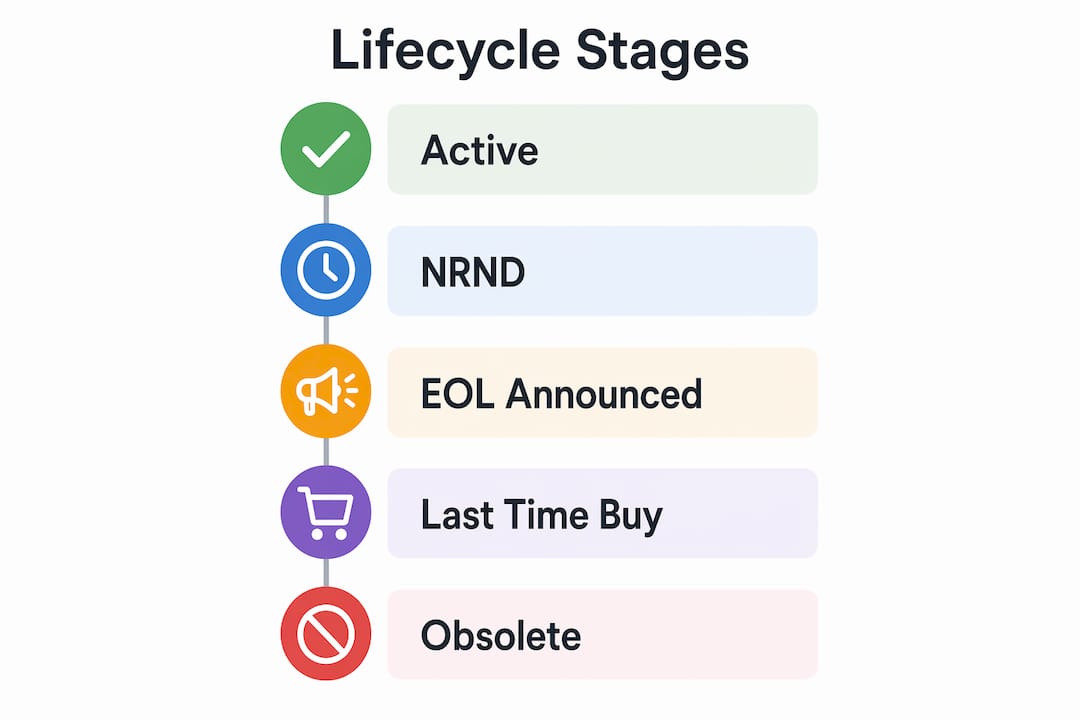
Electronics lifecycle management is defined as the structured oversight of electronic assets across five recognized phases: Active, Not Recommended for New Designs (NRND), End-of-Life Announced, Last Time Buy, and Obsolete. Each phase carries distinct procurement and compliance implications that directly affect your operations.
The five standardized lifecycle stages give procurement and engineering teams a shared language for decision-making. An Active component is fully supported by its manufacturer. NRND status signals that the part is still available but should not be specified in new product designs. End-of-Life Announced means the manufacturer has issued a Product Discontinuation Notice (PDN), typically giving buyers a 6–12 month window for final procurement. Last Time Buy is the final purchase opportunity before production stops entirely. Obsolete means the component is no longer available through authorized distributors.

The consequences of ignoring these phases are real and expensive. 37% of components become obsolete without advance notice, leaving procurement teams scrambling for alternatives. Component life cycles now often span only a few years, compared to the decades-long timespans common in earlier generations of electronics. That compression creates constant pressure on design and supply chain teams.
Pro Tip: Set automated alerts in your PLM system at the NRND stage, not the EOL Announced stage. Waiting for a PDN cuts your response window in half.
| Lifecycle phase | Key action required |
|---|---|
| Active | Monitor for NRND signals from manufacturer |
| NRND | Begin evaluating alternative components |
| EOL Announced | Initiate last-time buy analysis and redesign planning |
| Last Time Buy | Place final orders and update bill of materials |
| Obsolete | Activate alternative sourcing or redesign |
How does ELM support sustainability and reduce environmental impact?
Electronics lifecycle management connects directly to environmental outcomes because the design phase contributes the majority of environmental impact, even though those effects manifest throughout the product’s life. Decisions made at the design table, such as material selection, repairability, and energy efficiency, determine the environmental footprint years before a product reaches a consumer.
Life Cycle Assessment (LCA) is the recognized methodology for quantifying that footprint. Integrating LCA early in the design phase is the most effective way to identify and reduce environmental hotspots in electronics. Waiting until the disposal phase to address sustainability greatly limits carbon and waste reduction opportunities. That is why electronics life cycle analysis belongs at the product development table, not the recycling dock.
Circular economy principles give ELM its environmental teeth. The core strategies include:
- Design for repairability: Products built with modular components extend usable life and reduce replacement frequency.
- Material recovery: Structured take-back programs recover rare earth metals and precious materials that would otherwise end up in landfills.
- Refurbishment and reuse: Extending electronics lifespan through repair reduces the demand for new manufacturing, which carries the heaviest carbon cost.
- Responsible recycling: Certified e-waste recycling processes recover materials while preventing toxic substances from entering soil and water systems.
“Organizations treating hardware as long-term assets gain resilience against global supply shocks.” — IT Supply Chain
Shifting from a linear “buy, use, discard” model to a circular one also cuts emergency procurement costs and reduces supply chain transport emissions. The environmental and financial benefits reinforce each other, which is why regulators and investors increasingly treat lifecycle thinking as a governance requirement, not a voluntary practice.
How does lifecycle management address obsolescence and supply chain risk?
Obsolescence is the most underestimated risk in electronics asset management. Market obsolescence typically occurs years before hardware failure, meaning a component becomes unavailable through authorized distributors long before it stops working in the field. IT managers who confuse physical lifespan with market lifespan get caught off guard when a critical part disappears from the supply chain.
Proactive lifecycle strategies prevent that gap from becoming a crisis. The most effective approaches include:
- Last-time buy planning: When a PDN is issued, calculate the quantity needed to sustain production through the expected redesign window and place a single consolidated order.
- Alternative sourcing: Maintain a pre-qualified list of pin-compatible substitutes for every critical component. Waiting until obsolescence to start that search adds months of delay.
- Redesign preparation: For components in NRND status, begin engineering evaluation of replacements before the EOL notice arrives. This compresses the redesign timeline significantly.
- Environmental stress modeling: Arrhenius acceleration models predict real-world failure rates by simulating thermal cycling and humidity exposure. Sectors like aerospace and healthcare rely on these models to anticipate failures before they occur in the field.
Pro Tip: Build a critical components register that flags every part currently in NRND or EOL Announced status. Review it quarterly with both your procurement and engineering leads.
PLM systems with active case-management workflows transform static component databases into dynamic management tools. They track supplier discontinuation signals, manage last-time buy windows, and automate alternative part assessment. That automation is what separates organizations that absorb supply shocks from those that halt production lines.
How to manage electronics lifecycle within business and IT operations
Effective lifecycle management in electronics requires cross-functional alignment. Procurement, engineering, compliance, and IT operations each hold a piece of the lifecycle picture. Without a shared governance model, critical signals get missed and decisions get made in silos.
The foundation is a unified data system. PLM platforms serve as the central record for component status, supplier communications, and design history. When procurement teams can see the same lifecycle data as engineering teams, last-time buy decisions happen faster and with better accuracy. Comprehensive traceability from original build data through repair history is critical for regulatory compliance and maximizing return on investment on high-reliability electronics.
Governance structures give that data system its authority. A working lifecycle management program includes:
- Defined roles: Assign clear ownership for lifecycle monitoring, supplier communication, and obsolescence response.
- Policy thresholds: Set formal triggers for action at each lifecycle phase transition, such as initiating an alternative part search when any critical component enters NRND status.
- Performance metrics: Track mean time to respond to PDN notices, percentage of components with qualified alternatives, and audit readiness scores.
- Regular reviews: Schedule quarterly lifecycle reviews that include both supply chain and compliance stakeholders.
The benefits of lifecycle management show up in measurable ways. Organizations with mature ELM programs report fewer production disruptions, lower emergency sourcing costs, and faster regulatory audit responses. For IT managers specifically, planned hardware refresh cycles tied to lifecycle data reduce unplanned downtime and support budget predictability.
| Governance element | Business outcome |
|---|---|
| Unified PLM data system | Faster procurement decisions and fewer supply gaps |
| Cross-functional lifecycle reviews | Reduced production disruptions and compliance gaps |
| Automated obsolescence alerts | Lower emergency sourcing costs |
| Traceability records | Audit readiness and regulatory compliance |
Good electronics disposal planning is the final governance layer. End-of-life assets that are not tracked and disposed of correctly create both environmental liability and data security exposure.
Key Takeaways
Electronics lifecycle management is the most direct path to reducing supply chain risk, cutting environmental impact, and maintaining regulatory compliance across your entire hardware portfolio.
| Point | Details |
|---|---|
| Five standardized phases | Active through Obsolete phases each require specific procurement and design responses. |
| Design phase drives impact | Environmental decisions made at design time determine the majority of a product’s total footprint. |
| Obsolescence precedes failure | Market obsolescence arrives years before hardware fails; proactive strategies prevent costly supply gaps. |
| PLM enables dynamic management | Case-management workflows in PLM systems automate alerts and alternative sourcing to protect production. |
| Governance closes the loop | Cross-functional roles, metrics, and disposal planning complete a compliant lifecycle program. |
Why most ELM programs stall before they deliver results
The organizations I see struggle with lifecycle management share one common pattern: they treat ELM as a procurement problem rather than a governance problem. They buy a PLM tool, load it with component data, and then wonder why nothing changes. The tool is not the program. The program is the set of decisions, roles, and review cycles that make the tool worth using.
The second pattern I see is treating end-of-life as an afterthought. Teams invest heavily in the Active and NRND phases, then lose discipline when assets reach the disposal stage. That is where data security exposure and environmental liability accumulate quietly. A hard drive sitting in a storage room is not a managed asset. It is a liability waiting to be discovered during an audit.
The shift toward circular models is real and accelerating. Regulators in the U.S. and Europe are tightening requirements around e-waste disposal and data destruction. Organizations that build lifecycle governance now will absorb those requirements without disruption. Organizations that wait will face compliance gaps at the worst possible time, usually during a supply shock or a regulatory review.
My recommendation for business leaders is straightforward: start with your critical components register and your end-of-life disposal process. Those two points are where the most risk concentrates and where structured management delivers the fastest return.
— Keith
Usedcartridge helps businesses close the lifecycle loop
When electronic assets reach end-of-life, the final stage of lifecycle management requires the same rigor as every earlier phase. Secure data destruction, certified recycling, and documented asset recovery are not optional steps. They are compliance requirements.

Usedcartridge specializes in e-waste recycling and IT asset recovery for businesses that need certified, compliant disposal at scale. From on-site hard drive destruction to full hardware recycling programs, Usedcartridge provides the documentation and chain-of-custody records your compliance team needs. For organizations managing hardware recycling challenges across multiple sites, Usedcartridge offers free quotes and pickup options that fit into existing IT asset workflows without adding administrative burden.
FAQ
What is electronics lifecycle management in simple terms?
Electronics lifecycle management is the process of tracking and managing electronic products from design and manufacturing through active use to final disposal. It covers procurement decisions, sustainability practices, obsolescence planning, and compliant end-of-life handling.
What are the five phases of the electronics component lifecycle?
The five standardized phases are Active, Not Recommended for New Designs (NRND), End-of-Life Announced, Last Time Buy, and Obsolete. Each phase signals a different level of manufacturer support and requires a specific response from procurement and engineering teams.
Why does obsolescence happen before hardware failure?
Market obsolescence occurs when manufacturers discontinue a component due to shifting technology or production economics, often years before the hardware stops functioning. 37% of components become obsolete without advance notice, making proactive lifecycle tracking a business necessity.
How does lifecycle management support regulatory compliance?
Maintaining traceability records from original build data through repair history and final disposal gives organizations the audit trail regulators require. Planned maintenance cycles and certified disposal documentation reduce compliance risk at every lifecycle stage.
What role does end-of-life disposal play in electronics lifecycle management?
End-of-life disposal is the final and often most legally sensitive phase of lifecycle management. Certified e-waste recycling and secure data destruction protect organizations from environmental liability and data privacy violations while completing the compliance record for each asset.