
Electronic inventory removal is defined as the structured process of auditing, categorizing, and disposing of electronic assets through resale, refurbishment, liquidation, or certified recycling. Businesses that know how to organize electronic inventory removal correctly reduce carrying costs, protect sensitive data, and stay compliant with environmental regulations. The stakes are real: unmanaged electronic stock creates legal exposure under data privacy laws, generates unnecessary storage costs, and sends hazardous materials toward landfills. Standards like NAID AAA and ADISA certification exist specifically to govern this process. A structured approach, supported by the right tools and partners, turns a compliance burden into a recoverable asset.
What preparatory steps are essential for organizing electronic inventory removal?
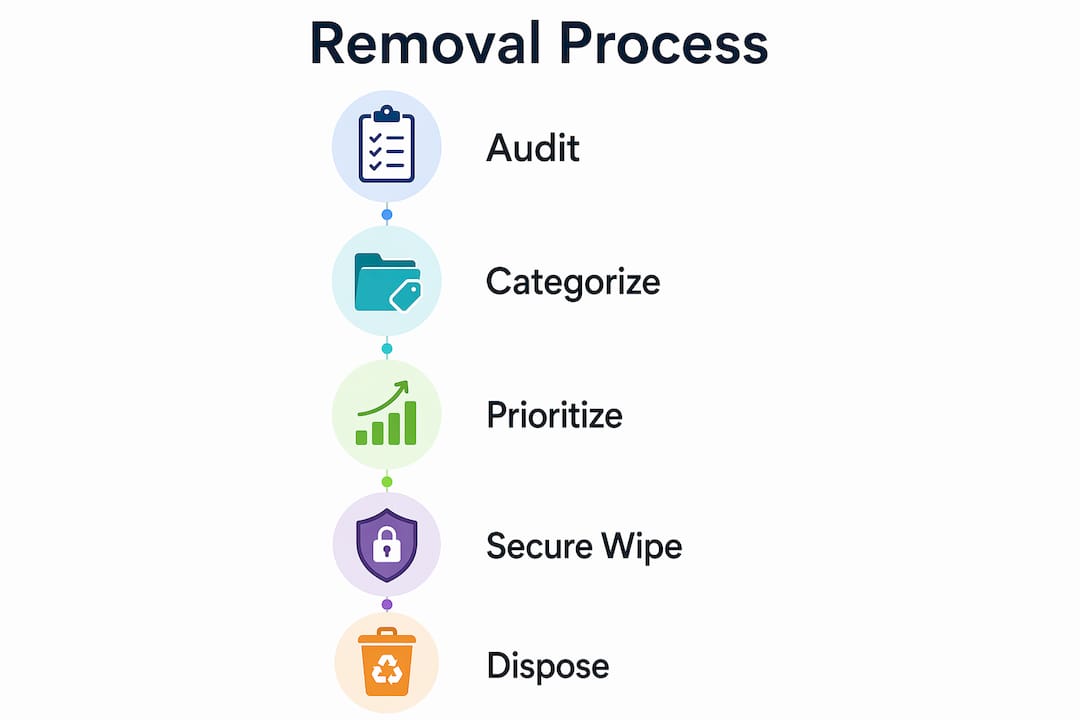
A thorough inventory audit is the foundation of any effective removal process. Before you move a single device, you need a complete picture of what you have, where it sits, and what condition it is in. Inventory disposition optimizes value by auditing and categorizing stock for resale, liquidation, refurbishment, or recycling. That categorization step is what separates a controlled removal from a reactive scramble.
Start with these core preparation actions:
- Classify every asset by condition (working, damaged, end-of-life), age, and estimated residual value.
- Set removal objectives in writing. Define whether the goal is maximum value recovery, fastest clearance, or full regulatory compliance.
- Choose a tracking system that logs serial numbers, asset tags, and chain-of-custody records. Spreadsheets fail at scale; purpose-built IT asset management software does not.
- Identify data-bearing devices early. Laptops, servers, phones, and storage drives all require secure data destruction before any transfer or disposal.
- Assign ownership. Name the department or individual responsible for each removal stage so nothing falls through the cracks.
Proactive disposition before inventory becomes obsolete allows higher value recovery and reduces write-offs. Waiting until equipment is fully depreciated or broken eliminates your best recovery options. Build removal triggers into your asset lifecycle policy, such as age thresholds or utilization rates, so the process starts before value disappears.
Pro Tip: Create a tiered priority list that sequences your recovery options from highest return (resale) to lowest (recycling). This gives your team a clear decision tree and prevents defaulting to disposal when better options exist.

How can data-driven technologies improve electronic inventory removal?
Manual inventory reviews fail to scale when you are managing hundreds or thousands of devices across multiple locations. The complexity of tracking age, sales velocity, demand forecasts, and carrying costs by hand creates errors and delays. AI-driven tools recommend disposing, marking down, or transferring stock to minimize loss. That recommendation layer is what makes automation genuinely useful rather than just faster.
The operational benefits of automation in electronic inventory removal include:
- Consistent compliance: Automated workflows apply the same rules to every asset, reducing the risk of human error in documentation or routing decisions.
- Faster decisions: AI agents assess shelf life and carrying costs in real time, cutting the time between identifying excess stock and acting on it.
- Financial visibility: Automated systems can run financial simulations showing the net recoverable value of different disposal paths before you commit to one.
- Scalability: A process that works for 50 devices works the same way for 5,000 when it is built on software rather than manual review.
Automated alerts triggered by inventory age thresholds speed transition into removal actions, preserving net recoverable value and reducing manual effort. This means your team spends time executing decisions rather than making them from scratch each cycle. For businesses managing inventory lifecycle management, integrating analytics into the removal workflow is no longer optional. It is the difference between a process that runs on schedule and one that only activates when storage costs become painful.
What are the step-by-step processes for executing removal securely?
A compliant removal workflow follows a defined sequence. Skipping steps, especially around data destruction and documentation, creates legal and financial risk.
- Generate removal orders. Create a formal removal order for each asset batch. Include asset IDs, assigned disposition path, and responsible party.
- Perform secure data destruction. All data-bearing devices must be wiped or physically destroyed before leaving your control. NAID AAA and ADISA certification provides traceability and certificates of destruction. These certificates are your legal defense in the event of a data breach investigation.
- Route assets by disposition path. Working equipment goes to resale through secondary markets. Damaged but repairable units go to refurbishment. Non-functional stock routes to certified recycling partners.
- Document every transfer. Generate chain-of-custody records for each asset. Include pickup dates, receiving party, and destruction or recycling method.
- Coordinate with your 3PL or recycling partner. Confirm that your logistics partner holds the certifications your compliance program requires. A partner without ADISA or R2 certification creates a gap in your audit trail.
- File regulatory documentation. Retain certificates of destruction, recycling manifests, and transfer records for the period required by your applicable regulations.
“Unsellable stock is routed to environmentally responsible recycling and destruction partners with full documentation.” This principle applies to every device that cannot be resold or refurbished. Routing it to a certified partner with documented chain of custody is the only defensible approach.
Disposal options include resale through secondary markets, refurbishment for like-new status, and recycling with certified third parties. Each path has a different return profile. Resale delivers the highest recovery. Refurbishment extends asset life and recovers moderate value. Recycling recovers the least financially but satisfies environmental compliance requirements. Your removal policy should sequence these options and apply them based on asset condition, not convenience. For detailed guidance on electronics disposal planning, a structured framework helps teams apply the right path consistently.
How do you troubleshoot common challenges during removal?
Reactive removal is the most expensive mistake organizations make. When removal only happens after storage costs spike or a compliance audit looms, the best recovery options are already gone. Lack of coordinated workflows creates reactive rather than proactive inventory management. The fix is building removal into your standard operating cycle, not treating it as a crisis response.
Common pitfalls and how to address them:
- Siloed departments: IT, finance, and operations often manage different parts of the asset lifecycle without talking to each other. Assign a cross-functional removal team with clear handoff points.
- Inaccurate asset records: Removal decisions made on bad data produce bad outcomes. Audit your asset register before every removal cycle, not after.
- Skipping data destruction: Sending a device to resale or recycling without wiping it first is a data breach waiting to happen. Every device with storage capacity requires documented secure data destruction before transfer.
- Landfill disposal: Routing electronics to general waste violates environmental regulations in most jurisdictions and exposes your organization to fines. Certified recycling is the only compliant alternative.
- No documentation trail: Without chain-of-custody records, you cannot prove compliance in an audit. Document every step, every time.
Pro Tip: Run a quarterly removal review rather than an annual one. Shorter cycles keep asset values higher, reduce storage costs, and prevent the backlog that makes removal feel unmanageable.
For organizations managing large or distributed fleets, multi-location distributor challenges show that scale amplifies every process gap. A missing step that causes one problem at 50 devices causes 50 problems at 5,000.
What metrics should businesses track to measure removal effectiveness?
Measuring removal performance turns a one-time cleanup into a repeatable, improving process. KPIs like net recoverable value, carrying cost savings, and audit compliance help evaluate removal effectiveness. Tracking these numbers also gives procurement the data it needs to prevent excess inventory from accumulating in the first place.
| KPI | What it measures | Why it matters |
|---|---|---|
| Net recoverable value (NRV) | Revenue recovered minus removal costs | Shows whether your disposition path is financially sound |
| Carrying cost reduction | Storage and insurance costs eliminated | Quantifies the financial benefit of faster removal cycles |
| Audit compliance rate | Percentage of removals with complete documentation | Measures legal and regulatory risk exposure |
| Cycle time | Days from removal trigger to final disposition | Identifies bottlenecks in your workflow |
| Recycling diversion rate | Percentage of assets kept out of landfill | Tracks environmental performance and regulatory compliance |
Data feedback enables procurement to identify causes of excess inventory and improve forecasting. When your metrics show a pattern, such as a specific product category consistently reaching end-of-life faster than expected, that is a signal to adjust your purchasing model. Removal metrics are not just a scorecard. They are a diagnostic tool for the entire asset lifecycle.
Key Takeaways
Effective electronic inventory removal requires proactive auditing, certified data destruction, and documented disposal workflows that run on a regular cycle rather than in response to a crisis.
| Point | Details |
|---|---|
| Audit before you act | Classify every asset by condition, age, and value before assigning a disposal path. |
| Certify data destruction | Use NAID AAA or ADISA-certified partners and retain certificates of destruction for every data-bearing device. |
| Sequence your disposal options | Prioritize resale, then refurbishment, then certified recycling to maximize value recovery. |
| Automate removal triggers | Set age or utilization thresholds that automatically flag assets for removal before value drops. |
| Track KPIs every cycle | Measure net recoverable value, carrying cost reduction, and audit compliance to improve each removal cycle. |
What I have learned from watching organizations get this wrong
Most organizations treat electronic inventory removal as a cleanup task. They wait until storage is full, a compliance deadline is approaching, or a device failure forces the issue. By that point, the best recovery options are gone and the documentation gaps are already baked in.
The organizations that do this well treat removal as a standing operational process, not a project. They set age thresholds, run quarterly reviews, and have certified partners already contracted before the need becomes urgent. That preparation is what keeps net recoverable value high and audit exposure low.
The other pattern I see consistently is underestimating data destruction. Teams focus on the logistics of moving equipment and forget that a single unwiped hard drive in a resale batch can trigger a breach notification. Certified destruction with documented chain of custody is not a premium add-on. It is the baseline requirement for any organization handling sensitive data.
The environmental side also gets treated as an afterthought. Routing electronics to general waste is not just an ethical problem. It is a regulatory one in most states and many industries. Certified recycling through a partner like Usedcartridge closes that gap and gives you the documentation to prove it.
The shift from reactive to ongoing disposition cycles is the single biggest lever most organizations have not pulled yet. Pull it.
— Keith
Usedcartridge: certified removal support for your business
Managing electronic inventory removal at scale requires partners who hold the certifications your compliance program demands.

Usedcartridge provides certified e-waste recycling and removal services built for businesses that need documented, compliant disposal of electronic assets. From secure data destruction with official certificates to full IT asset recovery, Usedcartridge handles the entire removal workflow with on-site options and free pickup. Whether you are clearing a single office or managing a multi-site fleet, you can request a free quote and get a removal plan that meets your regulatory and environmental requirements without the guesswork.
FAQ
What is electronic inventory removal?
Electronic inventory removal is the process of auditing, categorizing, and disposing of electronic assets through resale, refurbishment, liquidation, or certified recycling. It covers both the logistics of physical removal and the compliance requirements around data destruction and environmental disposal.
What certifications matter for secure electronic disposal?
NAID AAA and ADISA are the primary certifications for secure asset disposition. They provide documented chain of custody and certificates of destruction, which are required for defensible compliance in most regulatory frameworks.
How do you handle data destruction during removal?
Every data-bearing device must be wiped or physically destroyed before transfer. Use a certified partner that issues a certificate of destruction for each device, and retain those certificates as part of your audit documentation.
What are the best disposal options for electronic inventory?
Resale through secondary markets delivers the highest financial return. Refurbishment recovers moderate value and extends product life. Certified recycling handles non-functional stock and satisfies environmental compliance requirements.
How often should businesses run electronic inventory removal cycles?
Quarterly removal cycles outperform annual ones by keeping asset values higher and preventing documentation backlogs. Build automated age-threshold alerts into your asset management system to trigger removal before value drops significantly.