
Follow these core controls, in order, and you’ll keep sensitive data secure, stay audit-ready, and recover real value from retired IT equipment: full asset inventory with data classification, sanitization aligned to NIST SP 800-88, unbroken chain of custody, per-asset certificates of destruction, recycling through R2v3 or e-Stewards certified processors, and periodic verification sampling to confirm the whole chain actually held. Skip any one of these and you don’t have an ITAD program, you have a liability waiting for an auditor or a breach notification to find it.
Most organizations get the equipment part right and miss everything that isn’t a physical box. A laptop leaving the building is obvious. A cloud snapshot nobody deleted after a project wrapped, or an IAM credential still active six months after someone left, is not. Standards like ISO/IEC 27040 treats storage security and sanitization as one governance problem, whether the media is a hard drive in a drawer or a volume sitting in a cloud account. A provider like UsedCartridge.com handles the physical side. Your policy has to cover both.
Here’s the priority order, ranked by how much damage skipping each one causes:
- Inventory and classify first. You can’t sanitize or destroy what you haven’t found, and you can’t pick the right method without knowing what’s on the device.
- Match sanitization method to media and sensitivity. Clearing works for low-risk reuse; purging, cryptographic erase, or physical destruction are required for anything holding regulated or high-sensitivity data.
- Maintain chain of custody from pickup to processing. Every handoff needs a signature, a timestamp, or a photo, and gaps here are the number one thing auditors flag.
- Collect a certificate of destruction or erasure for every asset. Not a summary invoice. A document tied to a serial number.
- Use certified recyclers for anything that leaves as e-waste. R2v3 or e-Stewards certification is the baseline for downstream accountability.
- Verify, don’t just trust. Sample forensic checks and provider audits catch the failures certificates alone hide.
Key Takeaways
Secure ITAD depends on inventorying every asset, sanitizing to a documented standard, preserving chain of custody, and verifying the results instead of trusting a certificate alone.
| Point | Details |
|---|---|
| Inventory before you sanitize | Capture serial number, classification, and storage type for every asset, physical and virtual, before choosing a disposition path. |
| Match method to sensitivity | Use clearing for low-risk reuse and cryptographic erase or destruction for regulated or high-value data. |
| Verify, don’t just certify | Sample-test provider results with forensic checks rather than relying solely on paperwork. |
| Vet providers on evidence, not claims | Require current R2v3, e-Stewards, or NAID AAA certificates tied to serial-numbered documentation. |
| Usedcartridge supports the execution layer | UsedCartridge.com offers on-site destruction, certified recycling, and per-asset audit-ready certificates for organizations building or outsourcing an ITAD program. |
Table of Contents
- What Are the Core ITAD Best Practices Every Program Needs?
- How Do You Build an Accurate IT Asset Inventory?
- Which Data Sanitization Method Should You Use?
- How Do You Choose the Right ITAD Provider?
- How Should You Handle Pickup, Transport, and Chain of Custody?
- What Documentation Should Every ITAD Provider Deliver?
- How Do You Recover Value Through Refurbishing and Remarketing?
- How Do You Verify That Sanitization Actually Worked?
- What Environmental Standards Should Your Recycling Partner Meet?
- What Metrics and Reporting Cadence Prove Your ITAD Program Works?
- How Do You Roll Out an ITAD Program Step by Step?
- How Do NIST and ISO Standards Shape Your Sanitization Policy?
- A Publisher’s Perspective on What Actually Breaks ITAD Programs
- How UsedCartridge Supports Your ITAD Program
- Frequently Asked Questions
- Sources
What Are the Core ITAD Best Practices Every Program Needs?
ITAD best practices break into two categories: the controls that prevent a data breach, and the controls that prove to an auditor those controls actually worked. Both matter equally, and most failed audits trace back to organizations having the first without the second.
The security side is straightforward on paper. Sanitize every piece of storage media before it leaves your custody, using a method that matches the data’s sensitivity and the media’s physical characteristics. The compliance side is where programs fall apart, because it requires documentation discipline most IT teams aren’t built for: serial-numbered certificates, retained chain-of-custody logs, and a paper trail that survives a regulator’s request three years later.
A useful gut check: if a lawyer asked you tomorrow to prove that a specific decommissioned server’s hard drive was properly destroyed, could you produce a document with that drive’s serial number on it within an hour? If the answer is no, your program has a documentation gap, regardless of how good your actual destruction process is. ITAD programs that operate on four pillars, sanitization, value recovery, certified recycling, and documented compliance, tend to close that gap because each pillar forces its own evidence trail.
How Do You Build an Accurate IT Asset Inventory?
You can’t dispose of what you can’t see, and most organizations see less of their IT footprint than they think. A retiring device inventory needs specific fields, not a general spreadsheet of “old laptops”:
- Serial number and model, tied to a unique asset ID
- Current or last known owner and department
- Physical location or last known network location
- Procurement date, lease terms, and expected retirement date
- Operating system, firmware version, and storage type (HDD, SSD, hybrid)
- Data classification of the last known contents
That last field is the one teams skip, and it’s the one that determines everything downstream. A laptop that only ever touched marketing collateral needs a different sanitization path than one that processed customer payment data, even if both models rolled off the assembly line the same week.
Don’t Forget What Doesn’t Have a Serial Number
Physical inventory is the easy half. The harder half is virtual: cloud snapshots left over from a decommissioned project, unattached storage volumes nobody’s billed to anymore, S3 buckets from a vendor integration that ended two years ago, SaaS accounts for tools the company stopped paying for but never deprovisioned, and IAM credentials tied to employees who left. Enterprise programs increasingly treat these non-physical assets with the same disposition rigor as hardware, because an orphaned cloud volume with customer data is exactly as much of a breach risk as an unsanitized hard drive in a closet, and far easier to overlook.
Run a quarterly discovery sweep across your cloud provider consoles and IAM systems specifically looking for resources with no active owner tag. That single habit catches more “escaped” assets than any annual audit does.
One tool worth building into your process: the Statement of Volatility. It’s a document, often provided by the device manufacturer, that lists every type of storage media inside a specific device model and whether each one retains data after power-off. For a server with an onboard SSD, a BIOS chip, and a RAID controller cache, the SoV tells you exactly which components need sanitization and which don’t hold data at all. Skip this step and teams tend to either over-sanitize (wasting time and destroying resalable value) or under-sanitize (missing a component that quietly retained data).
Pro Tip: Cross-reference your procurement system’s asset list against your actual network discovery scan once a quarter. The gap between the two lists is exactly where your “escaped” assets are hiding.
Which Data Sanitization Method Should You Use?
The method depends on the media type and the data’s sensitivity, not on what’s fastest or cheapest. NIST SP 800-88 defines the core options, and picking the wrong one for the wrong media is where most technical failures happen.
Clear is a software-level overwrite, appropriate for lower-sensitivity data on media you plan to reuse internally. Purge applies more aggressive techniques, firmware-level commands or degaussing, that render data recovery infeasible even with lab-grade forensic tools. Cryptographic erase destroys the encryption key protecting data that was encrypted at rest, which is often faster and more reliable than a full overwrite on modern drives. Physical destruction, shredding or crushing, is the only option for the highest-sensitivity media or anything where recovery risk cannot be tolerated at any level.
Solid-state drives deserve their own conversation, because the rules that apply to spinning hard drives don’t transfer cleanly. SSDs use wear leveling, which spreads data across cells in ways a traditional overwrite command can’t fully reach, and remanence in flash memory can leave recoverable fragments even after a wipe reports success. That’s why cryptographic erase or outright physical destruction is often the only defensible choice for high-sensitivity SSDs, regardless of how thorough a software wipe appears to be.
| Media Type | Recommended Method | Verification Artifact |
|---|---|---|
| Traditional HDD | Purge (overwrite or degauss) or destruction | Wipe log with pass/fail status, or destruction photo with serial number |
| SSD / flash storage | Cryptographic erase or physical destruction | CE confirmation report or shredded-media photo with serial number |
| Mobile device NAND | Cryptographic erase, factory reset validated by wipe report | Device-level wipe certificate tied to IMEI/serial |
| Removable flash (USB, SD) | Physical destruction | Destruction batch photo with asset log reference |
| Backup tapes | Degauss or destruction | Degauss log or shred certificate |
| Cloud snapshots/volumes | Deletion with provider-level confirmation | Deletion confirmation export from cloud console, retained in audit log |
Verification is what separates a real program from a checkbox exercise. Ask for wipe-validation reports showing pass/fail status per drive, hash checks where the method supports them, serial-numbered photos of destroyed media, and a certificate that ties back to your original asset list, not a generic batch summary. Secure recycling programs that document each of these steps give you something to hand an auditor instead of a promise.
Pro Tip: For high-risk assets in transit, combine methods rather than picking one. Run cryptographic erase at the point of pickup, then still require facility-level physical destruction on arrival. If either step fails or gets skipped, the other one covers the gap.
How Do You Choose the Right ITAD Provider?
Certifications tell you what a provider claims to be capable of. Documentation practices tell you whether they actually follow through. You need both before signing a contract.
Start with the required assurances. Look for demonstrated alignment with NIST SP 800-88 sanitization guidance, NAID AAA certification specifically for data destruction, and either R2v3 or e-Stewards certification for the recycling side of the business. ISO 27001 matters if the provider handles data-adjacent processes beyond straight destruction. A provider without current, verifiable versions of these certificates isn’t a partner, they’re a risk you haven’t priced in yet.
Then check operational capability against what your risk profile actually requires:
- On-site destruction availability for your highest-sensitivity assets, so nothing sensitive travels unsanitized.
- SSD-capable cryptographic erase, not just legacy HDD overwrite tools.
- Chain-of-custody tracking with GPS-monitored transport and locked, tamper-evident containers.
- Photo documentation and per-asset certification, tied to serial numbers, not batch totals.
- Vetted, background-checked personnel with access controls at every facility.
Ask these questions directly during procurement: Can you show me a current copy of your R2v3 or e-Stewards certificate? What does your chain-of-custody documentation look like for a single asset, start to finish? Who is your downstream processor, and can you show their certification? What happens contractually if a wipe fails verification after the fact?
Red flags show up fast if you know where to look. A provider who offers certificates but can’t tie them to individual serial numbers is offering paperwork, not proof. Refusal to produce a current certificate on request, vagueness about who their downstream recycling partner actually is, and pricing that’s dramatically below market, often a sign that audit documentation and proper chain-of-custody tracking are the corners being cut, all warrant walking away.
How Should You Handle Pickup, Transport, and Chain of Custody?
The gap between “the drive left our building” and “the drive was destroyed” is where most ITAD failures actually happen, not in the sanitization step itself. A device sitting unsanitized in a truck for six hours is a breach risk regardless of how good the eventual destruction process is.
Packaging needs to create tamper evidence, not just physical protection. Sealed containers, tamper-evident bags with sequential numbering, and an asset manifest that ties specific serial numbers to specific container IDs give you a record that shows exactly what was in each shipment and whether anything was opened before it should have been.
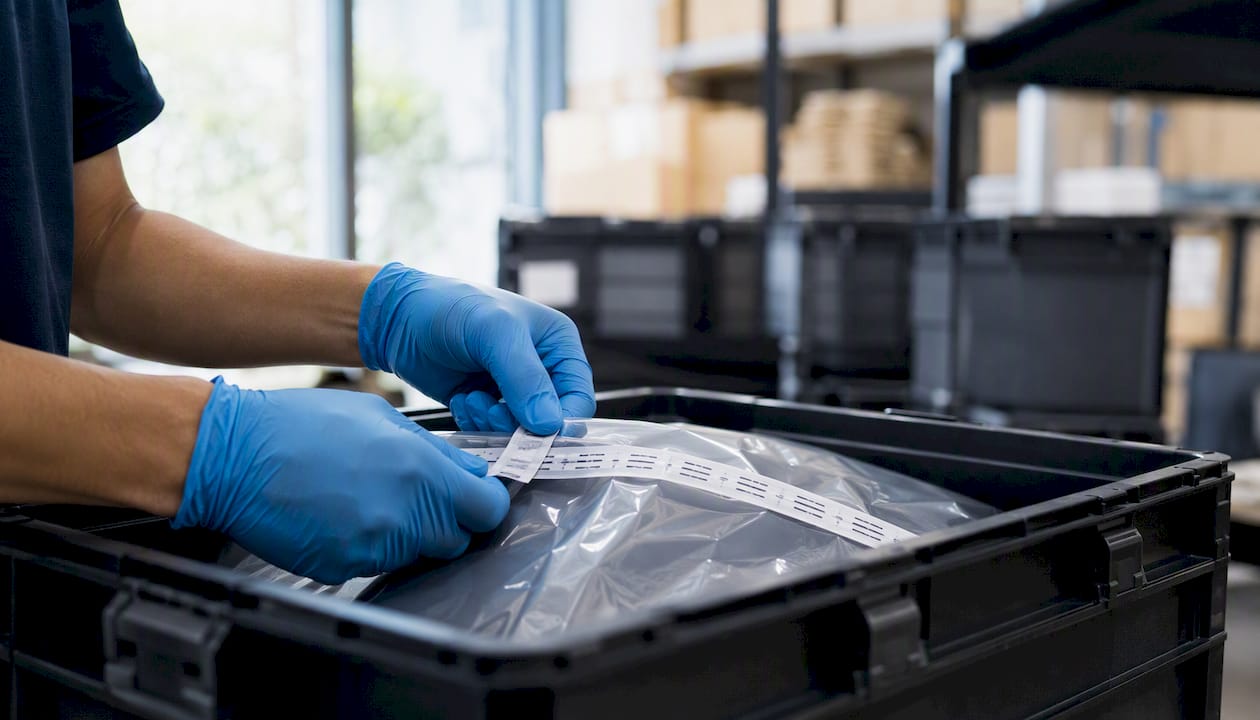
Transport controls matter just as much. Dual-custody checks at loading and unloading, GPS-tracked vehicles, background-checked and vetted drivers, and locked cages inside the vehicle all reduce the window where an asset can go missing or get accessed without a record. Every handoff along the route, loading dock to truck, truck to facility, facility to destruction line, needs a signature or a timestamp.
Your chain-of-custody record should capture, at minimum: asset serial number, container ID, pickup date and time, personnel name at each handoff point, and a photo at both loading and unloading. Programs that treat every retiring device as a controlled item from the moment it’s flagged for retirement rarely have gaps here, because the discipline starts before the truck even arrives.
Pro Tip: Segregate transport routes by sensitivity when volume allows it. High-sensitivity loads (financial records, health data, executive devices) shouldn’t share a truck run with routine office equipment. If something goes wrong in transit, you want to know immediately which sensitivity tier was affected, not have to cross-reference a mixed manifest.
What Documentation Should Every ITAD Provider Deliver?
A certificate of destruction is only useful if it contains enough detail to survive scrutiny. Generic “your assets were destroyed” letters aren’t documentation, they’re marketing collateral.
Every certificate should include the asset’s serial number and model, the account or owner it was assigned to, the data classification that determined the sanitization method, the specific method used, verification artifacts (a hash check, a wipe log, a destruction photo), a unique certificate ID, the date and time of processing, the operator’s signature or ID, and the facility where the work happened.
| Field | Why It Matters |
|---|---|
| Asset serial number | Ties the certificate to a specific inventory record, not a batch |
| Sanitization method used | Confirms the method matched the data’s sensitivity level |
| Verification artifact | Gives you proof beyond the provider’s own assertion |
| Certificate ID | Allows cross-referencing in your asset management system |
| Operator signature/ID | Establishes accountability if a dispute arises later |
| Facility identifier | Supports downstream audit trails and location-based compliance needs |
Retention practice varies by industry, but a reasonable baseline is keeping destruction certificates, chain-of-custody logs, and recycling documentation for as long as your broader records-retention policy requires, often several years past the disposition date, so the paperwork outlives any reasonable audit window. Healthcare organizations handling protected health information face additional documentation obligations under HIPAA, which makes the certificate-to-inventory reconciliation step non-negotiable rather than a nice-to-have.
Reconciliation is the step teams underestimate. A stack of certificates sitting in an email inbox isn’t a compliance system. Every certificate needs to be matched back to its original inventory record and logged in whatever asset management or ERP system your finance team relies on, closing the loop from “asset retired” to “asset provably destroyed.”
Pro Tip: Push your provider to deliver certificates in a structured format, CSV or API feed, rather than individual PDFs, so ingestion into your asset management system can be automated. Manual reconciliation of hundreds of PDF certificates is exactly where gaps creep in.
How Do You Recover Value Through Refurbishing and Remarketing?
Not every retiring asset belongs in a shredder, and treating disposition as strictly destructive leaves money on the table. The decision between reuse, refurbishment, and recycling comes down to a handful of criteria: the device’s age relative to its expected useful life, its physical condition, whether it’s still under warranty or lease terms that restrict resale, and its data-sensitivity history.
A two-year-old laptop that only ever touched low-sensitivity data and passes a hardware diagnostic is a candidate for refurbishment and internal redeployment or resale. A five-year-old server that processed regulated financial data for its entire lifecycle is a destruction candidate regardless of how well it still runs.
Refurbishment itself needs process controls just like destruction does. Factory-reset standards should be validated, not assumed, reimaging needs to follow a documented procedure, and any component replacement (a drive swap, a battery replacement) needs its own record showing what was removed and how the removed component was handled.
- Document recovered value per asset for finance, tying resale or redeployment value back to the original asset ID.
- Track warranty status before committing to refurbishment, since warranty transfers can materially change resale value.
- Treat donation and internal redeployment as legitimate alternatives to resale, provided sensitive data removal is documented with the same rigor as a sale.
- Build value-recovery triggers into your refresh cycle so devices get evaluated for reuse before they age past resale value.
Pro Tip: Set a calendar trigger tied to your procurement refresh cycle, not your disposal cycle. Devices lose resale value fast in their first 18 months of retirement; waiting until year three to think about remarketing usually means recycling is your only remaining option.
How Do You Verify That Sanitization Actually Worked?
Certificates tell you what should have happened. Verification tells you what actually did. The difference matters more than most programs admit, because a provider can hand you a flawless-looking certificate for a wipe that technically failed.
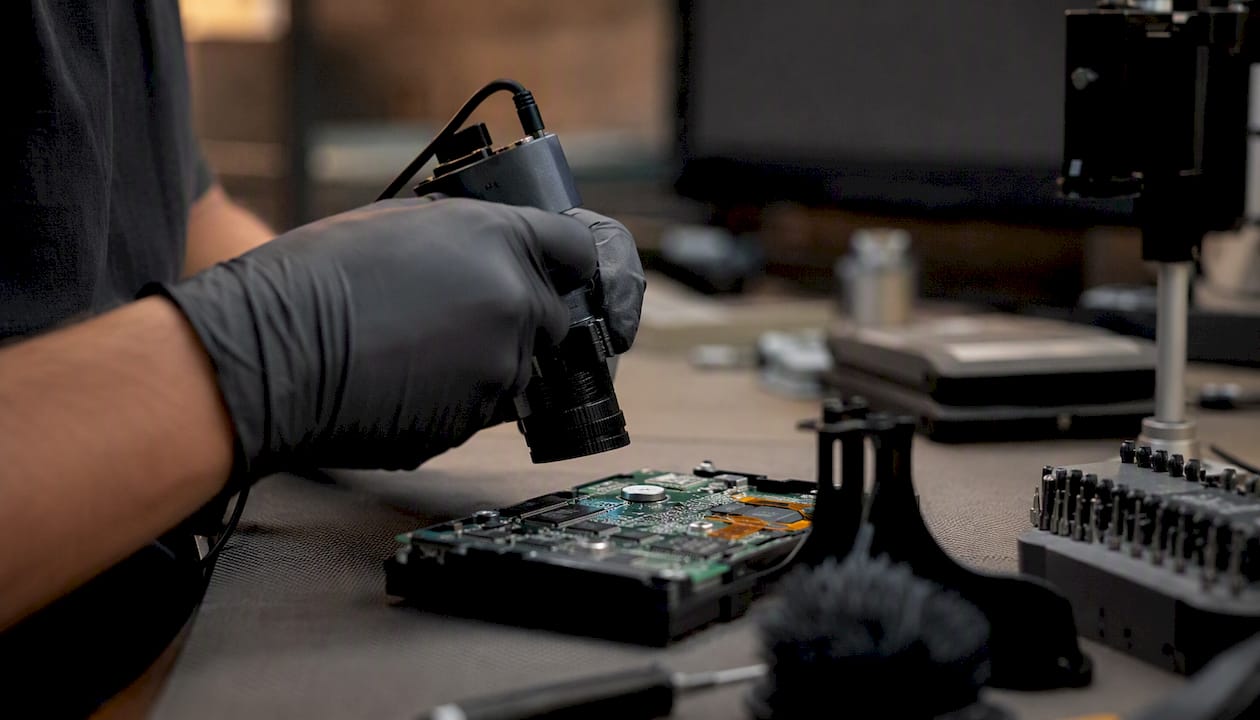
A sound QA program samples a percentage of processed assets for independent verification, with the sampling rate scaled to sensitivity: a small percentage for low-risk office equipment, a much higher rate, sometimes full coverage, for anything that held regulated or high-value data. Any failed verification needs a defined escalation path, not an informal follow-up email.
Forensic verification methods include forensic imaging to check for residual data, hex-level inspection of storage sectors, and hash validation where the sanitization method supports it. These aren’t tools you need for every asset, but you need access to them for your highest-risk tier and for any dispute that arises.
When a wipe fails or an asset gets returned as improperly sanitized, the response needs to be documented: what failed, how it was remediated, and what contractual remedy applies. Your provider contract should specify reprocessing obligations and, where appropriate, financial penalties for verification failures, so there’s a real consequence beyond an apology.
Pro Tip: Run blind-sample exercises periodically, sending a small batch of assets through your provider’s normal process without flagging them for special attention, then independently verifying the results. Providers who ace their announced audits sometimes perform very differently on the batches they don’t know are being checked.
What Environmental Standards Should Your Recycling Partner Meet?
Data security and environmental responsibility aren’t separate problems in ITAD, they’re the same audit trail viewed from two angles. A provider who cuts corners on downstream recycling accountability is usually cutting corners on data destruction evidence too.
R2v3 and e-Stewards are the two certifications that matter most for downstream processing. Both set standards for how certified processors handle hazardous materials, track equipment through the recycling chain, and restrict improper export of e-waste to countries lacking safe processing infrastructure. The distinction matters because global e-waste volumes are enormous and formal recycling rates remain low, which means uncertified processing all too often means equipment ends up informally dismantled abroad, exposing workers to lead, mercury, and other hazardous materials with none of the environmental controls a certified facility requires.
Specific components need specific handling: batteries require separate collection streams due to fire risk, mercury-containing components (older monitors, some fluorescent backlighting) need controlled disposal, and printed circuit boards contain materials regulated under EPA hazardous-waste guidance. A certified recycling partner builds these separations into their intake process rather than treating all e-waste as one undifferentiated stream.
For reporting purposes, track tonnage recycled, your diversion rate (the percentage of retired assets that went to certified recycling rather than landfill or informal disposal), and whether you have downstream audit evidence from your processor’s own certified partners, not just your direct vendor.
Pro Tip: Require your provider to supply downstream chain-of-custody documentation showing exactly which certified processor handled the material after it left their facility. A provider who is R2v3 certified but can’t show where the material actually ended up is passing you a certification without the accountability that’s supposed to come with it.
What Metrics and Reporting Cadence Prove Your ITAD Program Works?
Leadership doesn’t fund security programs on faith, they fund them on evidence that risk is being managed and money isn’t being wasted. A handful of tracked metrics turns “we have an ITAD program” into a defensible business case.
Track assets disposed per reporting period, the percentage sanitized for reuse versus destroyed outright, revenue recovered from resale or redeployment, average time-to-destroy from pickup to certificate delivery, your audit pass rate on internal or external reviews, and your diversion-to-recycling rate for environmental reporting.
SLA expectations should be written into your provider contract, not assumed. Set explicit timelines for pickup scheduling, processing turnaround, and certificate delivery, and hold the provider to them contractually rather than treating delays as routine.
Cost evaluation isn’t just the invoice for the service. Weigh it against residual asset value recovered, the cost of a breach avoided by proper sanitization, and the environmental compliance risk avoided by certified recycling. A cheaper provider that skips audit documentation isn’t actually cheaper once you price in what a documentation gap costs during a real audit.
Close the loop quarterly with procurement, security, and finance. Procurement needs recovery revenue figures to inform refresh budgets, security needs audit pass rates to report up the chain, and finance needs reconciled certificates to close out asset depreciation schedules cleanly.
How Do You Roll Out an ITAD Program Step by Step?
Standing up a program from scratch, or fixing a broken one, follows a sequence that rarely benefits from skipping steps.
- Assign ownership: IT owns the inventory and technical sanitization requirements, legal owns data classification and retention policy, procurement owns vendor selection and contracts, facilities owns physical logistics.
- Complete a full asset inventory, physical and virtual, before writing policy, so the policy reflects what you actually have rather than what you assume you have.
- Draft a written sanitization and disposition policy that maps data classification tiers to required methods.
- Issue an RFP to prospective providers requiring proof of NAID AAA, R2v3 or e-Stewards, and NIST 800-88 alignment.
- Run a pilot disposition cycle with a small asset batch, verifying documentation quality before committing to full volume.
- Roll out full program, integrating certificate ingestion into asset management systems from day one.
- Establish quarterly review cadence for KPIs, audit sampling, and provider performance.
A condensed timeline helps procurement teams plan realistically. In the first 30 days, complete inventory and draft policy. By day 60, finalize vendor RFP responses and select a provider. By day 90, complete a pilot batch and move to full rollout.
Your RFP and statement of work should require explicit sanitization standard alignment (NIST 800-88), proof of current certifications with expiration dates, defined liability limits for data breach resulting from provider failure, and proof of insurance covering data breach and environmental liability.
- Keep the RFP scoring weighted toward documentation quality and certification currency, not just price per unit.
- Require sample certificates during the RFP process, not just after contract signature.
- Build a 90-day pilot review into every new provider relationship, regardless of how established the vendor is.
How Do NIST and ISO Standards Shape Your Sanitization Policy?
Standards bodies didn’t write these guidelines as abstract best practice, they wrote them because inconsistent sanitization decisions are what actually cause breaches involving retired media. Grounding your policy in the standard language gives you something specific to point to when justifying method choices, not just “we thought this was safer.”
NIST SP 800-88 sets out a clear sequence: categorize the information based on confidentiality, select a sanitization method appropriate to that categorization and the media type, document why that method was deemed adequate, and retain that documentation as evidence. ISO/IEC 27040 takes a broader view, treating storage security and sanitization as a governance function that needs defined policy, assigned roles, and integration into your overall data security planning rather than a one-off IT task handled ad hoc at disposal time.
That single sentence, paraphrased from NIST’s guidance, is the operational core of a defensible ITAD policy. Method selection isn’t a technical afterthought, it’s a documented decision tied to a specific confidentiality determination.
| Asset/Data Type | Confidentiality Level | Recommended Action |
|---|---|---|
| General office device, no regulated data history | Low | Clear (overwrite), eligible for resale |
| Department workstation with internal business data | Medium | Purge or cryptographic erase, reuse or recycle after verification |
| Server with regulated customer or health data | High | Cryptographic erase plus physical destruction |
| Cloud snapshot with production customer data | High | Provider-level secure deletion with confirmation export |
| Backup tape with unknown historical contents | Medium to High | Degauss or destroy, treat unknown as high by default |
Map this decision matrix directly into your vendor requirements and your internal audit checklist. When a provider proposes a sanitization method, you should be able to check it against exactly this kind of table rather than taking their recommendation on faith.
A Publisher’s Perspective on What Actually Breaks ITAD Programs
The programs that fail an audit almost never fail because the destruction itself went wrong. They fail because the paperwork trail has a hole in it somewhere between pickup and certificate delivery, and nobody noticed until an auditor asked for a specific serial number’s documentation and it wasn’t there. That gap is almost always a process failure, not a technology failure. The shredder worked fine. The chain of custody didn’t survive contact with reality.
What gets underestimated most is how much risk sits in the transport window. Everyone focuses energy on sanitization method, degauss versus cryptographic erase versus physical destruction, because it feels like the technical, high-stakes decision. But a device sitting unsanitized in the back of a truck for an afternoon is exactly as exposed as a device left unattended in an unlocked office. The best sanitization method in the world doesn’t help if custody breaks down before the device ever reaches the facility that’s supposed to destroy it.
There’s a reasonable case for a hybrid model in regulated organizations: handle low-sensitivity, high-volume disposition in-house with a documented internal process, and route anything touching regulated or high-value data through a certified provider with full chain-of-custody tracking and on-site destruction capability. Trying to force everything through one model, either fully in-house or fully outsourced, tends to either overload internal teams with volume they’re not equipped to document properly, or pay premium destruction rates for equipment that never needed that level of assurance in the first place.
How UsedCartridge Supports Your ITAD Program
Everything in this guide, sanitization matched to media type, chain of custody, per-asset certificates, certified downstream recycling, comes down to execution, and execution is where most in-house teams run out of bandwidth or specialized equipment. UsedCartridge.com handles secure on-site and off-site data destruction, e-waste recycling, and IT asset recovery with the documentation trail auditors actually want to see, serial-numbered certificates, not batch summaries.

Where you land on in-house versus outsourced depends on volume and sensitivity, exactly as covered above: high volumes of low-sensitivity equipment can often be handled internally with a documented process, but anything touching regulated data benefits from a provider with on-site destruction and audit-ready certification built into every step. UsedCartridge’s IT asset recovery and disposition process is built around that exact requirement, verifiable evidence per asset, not a generic letter at the end of a batch job.
If you’re evaluating your current disposition process or building one from scratch, request a free quote for e-waste recycling and secure destruction and get specific pricing and pickup logistics for your asset volume before your next refresh cycle hits.
Frequently Asked Questions
What is the single most common ITAD compliance failure?
Documentation gaps between pickup and certificate delivery, not sanitization failures. Chain-of-custody breaks are what auditors flag most often.
Do cloud snapshots and virtual assets really need ITAD treatment?
Yes. Unattached volumes, orphaned snapshots, and inactive IAM credentials create the same exposure as an unsanitized hard drive and are frequently missed in inventory sweeps.
Is a certificate of destruction enough proof for an audit?
Only if it’s tied to a specific serial number with a verification artifact attached. A generic batch letter without per-asset detail rarely satisfies a thorough audit.
Should every retired device be destroyed rather than resold?
No. Devices with a clean data-sensitivity history and remaining useful life are often better candidates for refurbishment and resale, recovering value instead of only recycling cost.
What’s the difference between R2v3 and e-Stewards certification?
Both govern responsible downstream recycling and export controls, and either is an acceptable baseline. The right choice usually comes down to which certification your specific provider holds and can document.
This article provides general operational guidance and does not constitute legal or regulatory advice. Confirm current requirements for your industry and jurisdiction with a qualified compliance professional or the primary standards bodies referenced above.
This article is general information, not a substitute for advice from a qualified lawyer. Consult a qualified legal professional about your own circumstances before acting on anything here.
Sources
Auditors and policy writers should go directly to the primary standards rather than relying on secondhand summaries.
- Guidelines for Media Sanitization (NIST SP 800-88r2)
- Guidelines for Media Sanitization (NIST SP 800-88r2 – CSRC)
- Electronic waste (e-waste) fact sheet – WHO