
Chain of custody in recycling is the documented, unbroken record of material handling that verifies accountability and compliance from the moment of disposal through final processing. Without it, organizations bear legal liability for what happens to their waste after it leaves their facility. Under the RCRA cradle-to-grave liability principle, waste generators remain liable even after transferring materials to a vendor. That liability does not disappear at the loading dock. For businesses managing e-waste, hazardous materials, or data-bearing devices, chain of custody is not optional. It is the foundation of every responsible recycling program.
What is chain of custody in recycling, and why does it matter?
Chain of custody, formally defined in waste management and legal contexts as a continuous, documented record of material possession and handling, applies to recycling whenever accountability must be proven. The term originates in legal and forensic practice but carries equal weight in environmental compliance. For regulated waste streams like e-waste, it is the mechanism that connects your organization’s disposal decision to the final verified outcome.
Procurement officers increasingly require verified chain of custody records before approving recycling vendors. This shift reflects a broader recognition that recycling accountability is a legal and reputational issue, not just an environmental one. A vendor without documented custody records is a liability, regardless of how credible they appear.
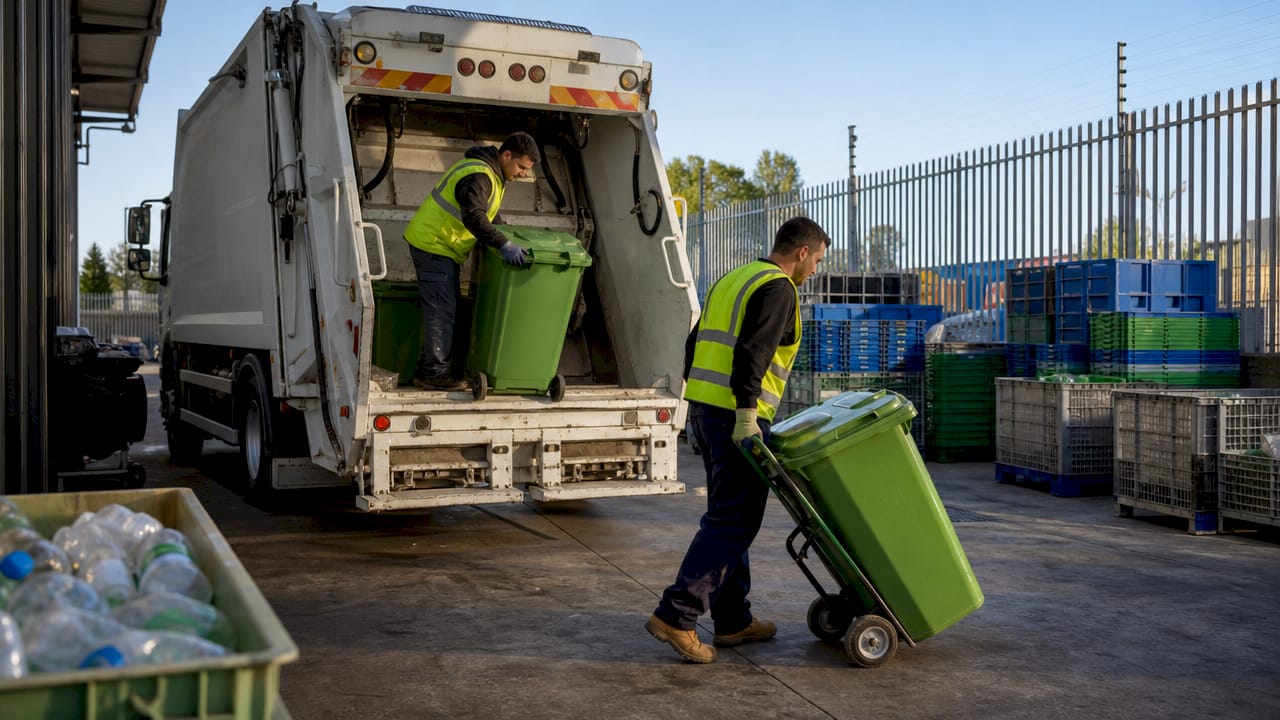
The standard industry term for this concept is “material chain of custody,” and it applies across recycling streams from plastics to electronics. The role of chain of custody in recycling goes beyond paperwork. It creates a verifiable audit trail that regulators, procurement teams, and insurers can examine when questions arise.
What are the core documentation requirements for chain of custody?
A complete chain of custody record contains five distinct layers of documentation. Each layer corresponds to a physical transfer or verification point in the recycling process.
- Pickup confirmation. This includes the date, time, hauler identity, and a full inventory of items collected. Every item leaving your facility should appear on a signed manifest.
- Transport records. Vehicle identification, route documentation, and driver credentials establish who handled materials between your facility and the processing site.
- Facility receipt with weight confirmation. The receiving facility must confirm arrival and document the weight of materials accepted. Discrepancies between pickup inventory and facility receipt are a red flag.
- Final disposition records. These specify whether materials were recycled, refurbished, donated, or sent to a permitted landfill. Vague disposition language like “processed responsibly” does not satisfy regulatory requirements.
- Photographic evidence and inspection reports. Federal regulations under 40 CFR 761.218 require a Certificate of Disposal for regulated shipments, and photographic documentation at transfer points supports that certificate’s validity.
Pro Tip: Require time-stamped photos at every transfer point, not just at pickup. A photo taken at the receiving facility proves the materials arrived intact and in the condition documented at origin.
Each layer builds on the previous one. A gap at any point breaks the chain and exposes your organization to the liability that documentation was meant to prevent.
Why is chain of custody critical for e-waste and hazardous materials?
E-waste recycling carries two distinct risks that standard commercial recycling does not. The first is environmental liability. The second is data security. Both require chain of custody to manage effectively.
On the environmental side, 40 CFR 761.218 mandates a Certificate of Disposal for every regulated shipment. This certificate must reflect a complete, documented custody record. Organizations that cannot produce it face enforcement action under RCRA, regardless of whether they personally mishandled the waste.
On the data security side, the principles are equally strict. Digital evidence chain of custody principles apply directly to data-bearing devices in e-waste recycling. Documented handling prevents undetected alteration or data extraction between the point of collection and the point of destruction. A hard drive that passes through three undocumented hands before shredding is a data breach waiting to be discovered.
Key risks organizations face without proper chain of custody documentation include:
- RCRA enforcement actions for failing to demonstrate cradle-to-grave accountability
- Data breach liability when custody gaps allow unauthorized access to storage media
- Vendor disqualification from procurement programs that require verified recycling accountability
- Loss of certification compliance when documentation gaps cannot be explained
“Courts differentiate negligence from intentional destruction. Unexplainable documentation gaps pose major liabilities regardless of intent.” — LegalClarity, Chain of Custody Principles
Vendor certifications like R2 (Responsible Recycling) and e-Stewards set baseline standards for e-waste handling. These certifications require audited chain of custody records as a condition of certification. Choosing a certified vendor is a necessary step, but it does not replace your own documentation obligations. You still need records proving your materials reached that certified vendor intact.
Understanding compliance in electronics recycling is the starting point for building a defensible custody record. The role of recycling vendors in this process is equally critical, and selecting the right partner determines whether your documentation holds up under scrutiny.
What chain of custody models exist for complex recycling flows?
Physical chain of custody, where specific materials are tracked as discrete units from origin to destination, works well for electronics and other identifiable items. It becomes impractical for bulk commodity streams like plastics or chemical recycling feedstocks, where physical segregation is economically unviable.
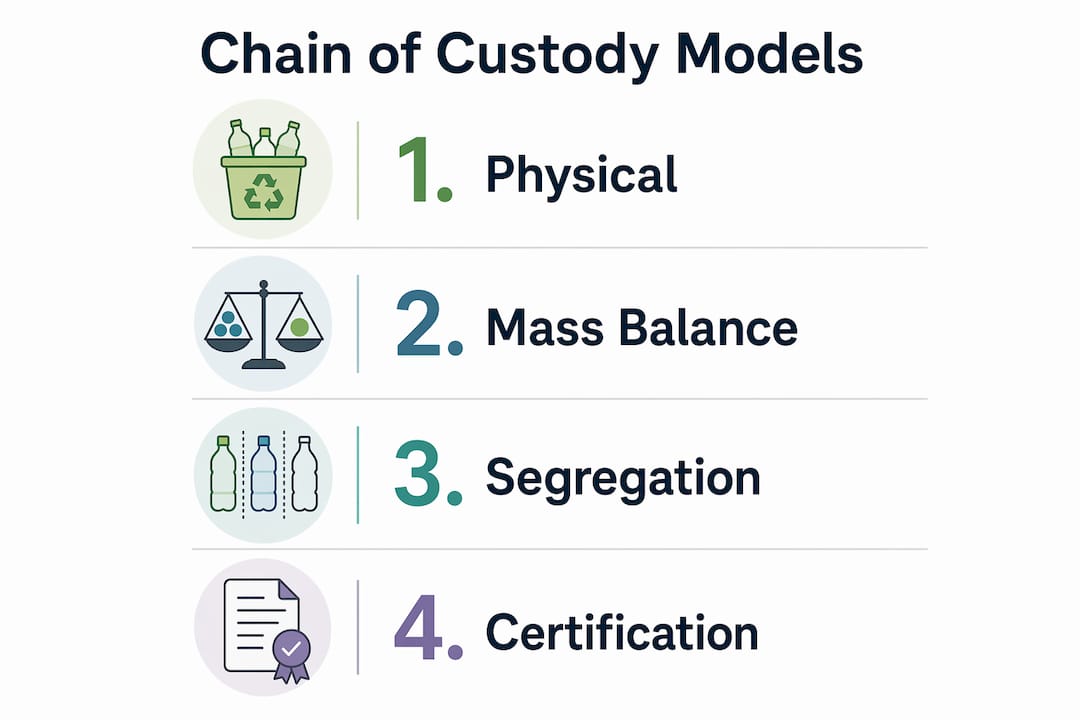
Mass balance chain of custody solves this problem. Mass balance frameworks in chemical recycling allow recycled feedstock to be credited across a production system without requiring physical separation of recycled and virgin material. The recycled content is tracked mathematically rather than physically. This unlocks recycled material use at industrial scale.
The tradeoff is verification complexity. Strict Monitoring, Reporting, and Verification (MRV) protocols and independent audits are required to prevent double-counting and material leakage. Without rigorous third-party oversight, mass balance claims become unverifiable and legally indefensible.
| Model | Best for | Verification method |
|---|---|---|
| Physical chain of custody | Electronics, identifiable assets | Serial numbers, manifests, photos |
| Mass balance | Bulk plastics, chemical recycling | MRV audits, certified accounting |
| Certified recycled content | Post-consumer resin claims | APR or ISO-aligned third-party audit |
APR certification programs audit the entire recycling material journey independently, verifying sourcing and handling against ISO standards. Third-party audited chain of custody is becoming a regulatory expectation, not just a market differentiator.
Pro Tip: If your organization purchases recycled content materials, ask suppliers for their specific chain of custody model and the name of their third-party auditor. “Certified recycled content” without a named auditor is an unverifiable claim.
How can organizations implement an effective chain of custody system?
Implementation starts at the point of receipt, not at the point of disposal. Physical inspection of shipments upon receipt, including verifying tamper-evident seals and documenting any anomalies, is a legally required step that most organizations skip. That gap breaks the chain before it even begins.
Practical steps for building a defensible system include:
- Establish a digital log. Paper manifests get lost. A digital recordkeeping system with time-stamped entries creates an audit-ready trail that survives staff turnover and storage failures.
- Photograph at every transfer point. Images should capture item condition, seal integrity, and identifying labels. Store photos alongside the corresponding manifest entry.
- Verify vendor certifications independently. Do not rely on a vendor’s self-reported certification status. Check the certifying body’s public registry directly.
- Require signed receipts at every handoff. Each transfer of custody should produce a signed document from the receiving party. Verbal confirmations do not satisfy regulatory requirements.
- Conduct periodic audits of your own records. Incomplete or broken chain of custody can lead to loss of certification compliance and significant legal consequences. Internal audits catch gaps before regulators do.
The most common pitfall is treating chain of custody as a vendor responsibility rather than a shared one. Your organization’s documentation obligations begin the moment materials are designated for disposal and do not end until you receive a verified Certificate of Disposal.
Pro Tip: Build chain of custody verification into your vendor onboarding checklist. Require sample documentation from prospective vendors before signing any service agreement. A vendor who cannot produce clean sample records will not produce clean records for your materials.
Integrating asset tracking in recycling operations with your custody documentation creates a single source of truth that satisfies both environmental compliance and IT security requirements simultaneously.
Key Takeaways
A complete, audited chain of custody is the single most effective tool organizations have for managing legal liability, data security risk, and vendor accountability in recycling.
| Point | Details |
|---|---|
| RCRA liability persists after transfer | Waste generators remain legally responsible even after handing off materials to a vendor. |
| Five documentation layers are required | Pickup, transport, facility receipt, final disposition, and photographic evidence each serve a distinct legal function. |
| E-waste requires dual protection | Data-bearing devices need chain of custody for both environmental compliance and data security. |
| Mass balance models need third-party audits | MRV protocols and independent verification prevent double-counting in complex recycling flows. |
| Inspection at receipt is non-negotiable | Failing to inspect and document incoming shipments breaks the chain and creates liability exposure. |
Chain of custody is harder than it looks, and that is the point
I have reviewed a lot of recycling programs that looked solid on paper. The vendor was certified. The contract mentioned chain of custody. The sustainability report cited responsible disposal. Then someone asked for the actual documentation, and the gaps were immediate.
The uncomfortable truth is that most organizations treat chain of custody as a checkbox rather than a system. They collect a Certificate of Disposal at the end of the process and assume that covers them. It does not. A certificate is only as credible as the documentation trail behind it. If you cannot produce pickup manifests, transport records, and facility receipts that align with that certificate, the certificate is decorative.
What I have found actually works is building custody verification into the vendor relationship from day one. Not as a legal formality, but as an operational expectation. Vendors who handle custody documentation well are almost always better operators in every other dimension too. The documentation discipline reflects the operational discipline.
The emerging mass balance frameworks in chemical recycling are genuinely promising. They solve a real problem. But they also create new opportunities for vague claims and weak verification. Organizations buying recycled content under mass balance schemes need to ask harder questions than they currently do. Named auditors, specific MRV protocols, and publicly verifiable certifications are the minimum standard.
For e-waste specifically, the data security dimension makes chain of custody non-negotiable in a way that other waste streams do not. A broken custody record for a pallet of cardboard is a compliance headache. A broken custody record for a server rack is a potential breach notification event. Treat them accordingly.
— Keith
Usedcartridge provides chain of custody documentation you can actually use
Organizations that need verified, compliant e-waste disposal should not have to assemble custody documentation from multiple vendors and hope it holds together.

Usedcartridge handles secure e-waste pickup and recycling with chain of custody documentation built into every service. From pickup confirmation through final disposition, the records are structured to satisfy RCRA requirements and procurement audits. For organizations managing data-bearing devices, Usedcartridge provides certified data destruction with documented custody at every transfer point. Businesses facing hardware recycling challenges in 2026 can request a free quote and pickup assessment directly through the site.
FAQ
What is chain of custody in recycling?
Chain of custody in recycling is the continuous, documented record of who handled materials, when, and how, from the point of disposal through final processing. It creates a verifiable audit trail that satisfies legal, environmental, and procurement requirements.
Why does chain of custody matter for e-waste specifically?
E-waste chain of custody addresses both environmental liability under RCRA and data security risk from data-bearing devices. Federal regulations under 40 CFR 761.218 require a Certificate of Disposal backed by complete custody documentation for every regulated shipment.
What happens if chain of custody documentation is incomplete?
Incomplete chain of custody can result in RCRA enforcement actions, loss of vendor certification, and significant legal liability. Courts treat unexplained documentation gaps as evidence of negligence, regardless of actual intent.
What is a mass balance chain of custody model?
A mass balance model tracks recycled content mathematically across a production system rather than physically segregating materials. It requires strict third-party MRV audits to prevent double-counting and is used primarily in chemical recycling and bulk plastics processing.
How do organizations verify a vendor’s chain of custody claims?
Organizations should check vendor certifications directly through the certifying body’s public registry, require sample documentation before signing service agreements, and verify that final disposition records align with pickup manifests and facility receipts.