
Under 40 CFR Part 273, most spent batteries that qualify as hazardous waste, including rechargeable lithium-ion, nickel-cadmium, and single-use lithium primary cells, can be managed as universal waste batteries instead of full hazardous waste. That status trades heavy paperwork (manifests, EPA identification numbers) for lighter rules on labeling, storage, and a one-year accumulation window. It does not apply once a cell casing is breached or a battery starts leaking; at that point, treat it as hazardous waste and bring in a qualified handler like Usedcartridge.
TL;DR:
- Batteries remain universal waste until they are breached or leaking, at which point they must be managed as full hazardous waste with a permitted handler.
- The one-year accumulation limit starts when the battery becomes waste, requiring precise documentation to avoid violations and transfer to full hazardous waste treatment.
- Only certain batteries, including lithium-ion, nickel-cadmium, and single-use lithium primary cells, qualify for universal waste management, excluding lead-acid batteries which follow separate regulations.
- Handling activities such as sorting, disassembling, and taping terminals are permissible under Part 273, but shredding or processing batteries on-site moves them into full hazardous waste jurisdiction.
- Transportation still falls under DOT hazmat rules, requiring proper packaging, certification, and carrier documentation, separate from universal waste regulatory compliance.
Table of Contents
- What the Universal Waste Batteries Rule Actually Says
- Which Batteries Qualify and Which Don’t
- SQHUW vs. LQHUW: What Your Handler Category Requires
- How to Store and Handle Batteries Without Losing Universal Waste Status
- Shipping Batteries: Where DOT Rules Still Apply
- State Rules Can Be Stricter Than Federal Law
- When Batteries Lose Universal Waste Status at the Recycler
- Your Compliance Checklist: What to Do This Week
- Why Getting This Right Protects More Than Your Compliance Record
- How Usedcartridge Handles Compliant Battery Recycling for You
- Sources
What the Universal Waste Batteries Rule Actually Says
The Environmental Protection Agency built the universal waste program to solve a specific problem: hazardous batteries were piling up in landfills because full Subtitle C hazardous waste rules were too burdensome for the small quantities most businesses generate. Congress and the EPA responded with 40 CFR Part 273, a regulatory shortcut for a handful of widely generated hazardous wastes, batteries among them.
The rule defines a battery under 40 CFR 273.9 as one or more electrically connected electrochemical cells designed to store and deliver electric energy. That covers everything from a single AA cell pulled from a smoke detector to a multi-cell pack from a forklift or an electric vehicle diagnostic tool.
Universal waste status changes how you manage the battery, not whether it is hazardous. A spent battery that meets a hazardous waste characteristic, corrosivity or toxicity, most often, is still a hazardous waste under federal law. Part 273 simply lets handlers skip several Subtitle C requirements as long as they follow the streamlined rules instead. Here’s what changes and what stays the same:
- No manifest required for most universal waste battery shipments between handlers and destination facilities.
- No EPA identification number needed for small and large quantity handlers of universal waste.
- Reduced training requirements compared to full hazardous waste generator status.
- Full hazardous waste liability remains if you mismanage the waste or a battery breaches containment.
One exemption trips up a lot of facilities: lead-acid batteries. Spent lead-acid batteries are typically managed under the Battery Act and 40 CFR Part 266 Subpart G, a separate regulatory track built around the reality that most lead-acid batteries get returned to a retailer or manufacturer for reclamation. If your facility handles forklift batteries or vehicle starter batteries, don’t assume Part 273 governs them. Check which track applies before you build a storage or labeling program around the wrong rule.
Which Batteries Qualify and Which Don’t
Most battery chemistries that fail a hazardous waste characteristic test qualify for universal waste management. That includes rechargeable lithium-ion packs from laptops and power tools, nickel-cadmium and nickel-metal-hydride batteries, and single-use lithium primary cells like those in smoke detectors and medical devices. The EPA’s lithium-ion battery guidance confirms both rechargeable and primary lithium chemistries fall under the universal waste umbrella when they’re hazardous.
A few categories fall outside the standard picture:
- Unused, unopened battery stock is not yet a waste at all, so universal waste rules don’t apply until you decide to discard it.
- Spent lead-acid batteries generally fall under Part 266 Subpart G rather than Part 273.
- Non-hazardous batteries, ones that pass hazardous waste characteristic testing, can sometimes go to ordinary solid waste disposal, though most facilities manage all batteries conservatively regardless.
Determining hazardous status comes down to two tests: is the battery a listed hazardous waste, or does it exhibit a characteristic like corrosivity or toxicity through heavy metals such as cadmium or lead? Testing every battery individually isn’t practical, so most compliance officers default to treating all spent batteries as hazardous and managing them as universal waste. For lithium batteries specifically, the EPA recommends conservative handling across the board given fire risk, regardless of whether a formal hazardous determination has been run.
Consumer products with an embedded battery, a laptop, a two-way radio, a cordless drill, present another wrinkle. Removing the battery to manage it separately as universal waste is allowed, but the device itself may need separate e-waste handling once the battery is out.
SQHUW vs. LQHUW: What Your Handler Category Requires
Part 273 splits battery handlers into two categories based on how much universal waste they accumulate at any one time. A small quantity handler of universal waste (SQHUW) accumulates universal waste on-site in quantities below the threshold set by federal regulations, covering all universal waste streams combined, not just batteries. A large quantity handler (LQHUW) exceeds that threshold.
Both categories share the same core accumulation limit: batteries cannot sit on-site for longer than one year from the date they became waste, unless you can demonstrate the accumulation is necessary to reach shipping quantities. That single rule trips up more facilities than any other requirement in Part 273, mostly because nobody wrote down when the clock started.
- Document the accumulation start date on the container the moment a battery becomes waste, since the one-year clock begins there.
- Use compatible, non-leaking containers and prevent releases to the environment, a requirement neither handler class can skip.
- Skip the EPA identification number and manifest that would otherwise apply to hazardous waste generators, one of the biggest paperwork savings under Part 273.
- Provide basic employee training on proper handling and emergency procedures, lighter than full hazardous waste training but not optional.
- Notify your state if required; LQHUWs in some states face notification obligations that SQHUWs don’t.
Cross a line most facilities don’t expect, and you become a destination facility instead of a handler. Shredding batteries, extracting materials, or otherwise processing them on-site pushes you into full hazardous waste treatment, storage, and disposal facility (TSDF) territory, complete with permitting requirements. Almost no small or mid-size organization wants that liability, which is exactly why shredding is off-limits for handlers under the rule.
How to Store and Handle Batteries Without Losing Universal Waste Status
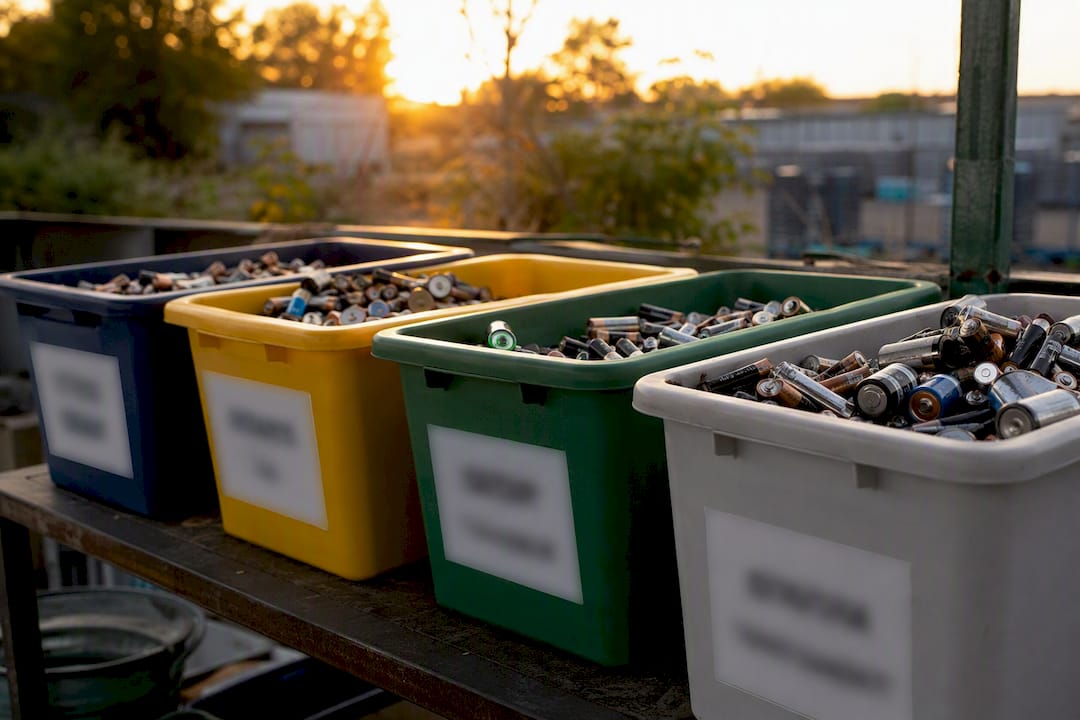
Part 273 permits a specific set of activities without disturbing universal waste status, and it prohibits one big one. According to 40 CFR 273.13 and 273.33, handlers may sort batteries by type, mix compatible chemistries in the same container, discharge them, disassemble battery packs, remove batteries from consumer products, and tape terminals to prevent short circuits. What handlers cannot do is shred batteries. That activity crosses into treatment, which requires a permit most facilities don’t have.
Storage and labeling requirements are specific enough to build a checklist around:
- Every container must be labeled “Universal Waste — Battery(ies)” or an equivalent phrase indicating the date accumulation began.
- Containers need to be structurally sound, closed, and made of material compatible with the battery chemistry inside, no cardboard boxes for leaking cells.
- Segregate battery chemistries where practical, since mixing lithium with alkaline or nickel-cadmium in poorly organized bins raises fire risk during transport and storage; following proper battery safety precautions is critical to prevent thermal runaway.
- Store containers on non-combustible shelving or in fire-rated cabinets, particularly for lithium-ion volumes above a handful of packs.
- Keep containers away from heat sources, direct sunlight, and high-traffic areas where they might get crushed or punctured.
Damaged, swollen, or leaking batteries need immediate separate handling. Move a compromised battery into its own compatible container packed with non-conductive, absorbent material, away from other waste. Once a cell casing is breached, the universal waste allowances no longer apply. The material must be evaluated and managed as full hazardous waste, which typically means faster removal timelines and stricter containment.
Pro Tip: Tape the terminals on every lithium battery before it goes into a storage bin, even ones that look fine. Keep a simple log with the date, battery count, chemistry, and a phone photo of each container. When an inspector or auditor asks for accumulation records, that log is the difference between a five-minute conversation and a multi-day scramble.
A common failure mode worth flagging: facilities treat universal waste batteries like ordinary recyclables, tossing mixed chemistries into a single bin with no terminal protection. That’s how a single punctured lithium cell starts a fire that takes out an entire storage room. Standardized bins labeled by chemistry and a weekly visual inspection catch most problems before they become incidents.
Shipping Batteries: Where DOT Rules Still Apply
Universal waste status under RCRA doesn’t touch transportation law. Even when a battery shipment skips the hazardous waste manifest, DOT’s hazardous materials regulations under 49 CFR parts 171 through 180 still govern how it gets packaged, marked, and moved. Lithium batteries in particular carry specific UN numbers and packaging requirements that a carrier needs to recognize before they’ll accept a pickup.
This is the gap that catches facilities off guard: no manifest doesn’t mean no shipping paperwork. Confirm these before your shipment leaves the dock:
- Verify the carrier is trained and equipped to handle battery shipments under DOT hazmat rules, not every general freight carrier is.
- Confirm correct packaging and UN numbers apply if your battery volume or chemistry triggers specific DOT packaging requirements.
- Get carrier documentation confirming pickup, weight, and destination, even without a formal hazardous waste manifest.
- Keep a copy of any hazmat shipping papers the carrier generates alongside your universal waste accumulation records.
Treat RCRA and DOT as two separate compliance tracks running in parallel. Satisfying one doesn’t satisfy the other, and an inspector checking transport compliance won’t care that your storage program is spotless if the shipping documentation is missing.
State Rules Can Be Stricter Than Federal Law
Federal Part 273 sets a floor, not a ceiling. States authorized to run their own hazardous waste programs can add battery types to their universal waste list, tighten the accumulation time limit, or impose notification requirements the federal rule doesn’t. California’s Department of Toxic Substances Control, for example, publishes its own battery-specific universal waste guidance that businesses operating there need to check separately from the federal rule.
Before finalizing a compliance program, confirm your state’s position directly:
- Search for your state’s environmental agency universal waste program page, most publish battery-specific guidance.
- Call your state hazardous waste program office directly if the published guidance doesn’t address your exact scenario.
- Document whatever state-specific requirement you find alongside your federal compliance records, since an auditor will ask which rule you followed.
When federal and state rules conflict, the stricter rule governs. A company running facilities in multiple states should build a simple matrix tracking each state’s variations rather than assuming one policy works everywhere. That single document has saved more than a few compliance officers from a bad surprise during an interstate inventory transfer.
When Batteries Lose Universal Waste Status at the Recycler
A destination facility is where universal waste batteries stop being universal waste. Once a permitted recycler shreds battery packs or processes them into recoverable material streams, that operation is now subject to full hazardous waste treatment and storage requirements, not the streamlined Part 273 rules that applied while the batteries were in transit or storage.
This matters directly to you as the generator. Verify that whatever recycler or facility receives your batteries holds the appropriate permits for that processing step, and request a certificate of recycling or disposition for every shipment. Keep that paperwork; it’s your proof the batteries reached a legitimate destination rather than a landfill or an unpermitted operation. One clarification worth remembering: “black mass,” the processed material left after battery shredding, is not universal waste. It’s a hazardous waste output that destination facilities manage under their own permits.
Your Compliance Checklist: What to Do This Week
Most battery compliance failures trace back to skipped basics, not obscure regulatory gray areas. Work through this sequence and you’ll close the gaps that actually get flagged during inspections:
- Classify the waste. Determine whether each battery chemistry in your facility is hazardous and confirm it isn’t lead-acid, which follows a separate track.
- Label every container the moment batteries go in, using the exact phrase “Universal Waste — Battery(ies).”
- Record the accumulation start date on the container itself, not just in a spreadsheet somewhere else.
- Segregate by chemistry and tape terminals, especially for lithium-ion and lithium primary cells.
- Engage a compliant transporter and destination facility that can confirm permits and DOT hazmat training.
- Retain certificates of recycling and any state correspondence for a minimum of three years.
A facility that skips step three alone accounts for a large share of the accumulation-time violations EPA and state inspectors flag during routine audits, since without a documented start date, there’s no way to prove the one-year limit wasn’t exceeded.
Documentation to keep on file, always: date-stamped photos of labeled containers, your accumulation log, every certificate of recycling or disposition, and copies of any state agency correspondence. Usedcartridge builds this kind of documentation into every pickup, which matters most the day an auditor or inspector shows up unannounced and asks for proof rather than a promise.
Why Getting This Right Protects More Than Your Compliance Record
I’m Keith, and I’ve spent enough time around e-waste logistics and audit processes to know that battery compliance failures rarely come from ignorance of the law. They come from good intentions and no system. A facility manager knows batteries need special handling but never wrote down when the accumulation clock started. That gap is where fines, fire incidents, and reputational damage live. The businesses that treat this seriously build a simple, repeatable process and stop thinking about it. That’s the goal: not the fear of an audit, but the boredom of a system that just works.
— Keith
How Usedcartridge Handles Compliant Battery Recycling for You
Usedcartridge exists for the moment when in-house handling stops being practical, whether that’s a single overflowing bin of lithium packs or a multi-site cleanout ahead of an audit. Instead of researching permitted destination facilities and chasing DOT-compliant carriers yourself, Usedcartridge coordinates pickup, transport to a permitted recycler, and the certificate of recycling that proves where your batteries ended up.

In-house handling makes sense for a small office managing a handful of laptop batteries a year with a clear log and a labeled bin. It stops making sense once volume grows, chemistries mix, or an inspection is on the calendar and your paperwork trail has gaps. Usedcartridge’s e-waste recycling services cover the full chain of custody, from on-site pickup through documented disposition, so the audit trail exists before anyone asks for it. If your battery volume has outgrown a spreadsheet and a supply closet, request a pickup and disposition quote and get the paperwork built into the process from day one.