
GDPR in e-waste is defined as the legal obligation to protect personal data stored on electronic devices throughout their entire disposal lifecycle, not just during active use. Any laptop, server, smartphone, or storage drive your organization retires still holds personal data subject to the General Data Protection Regulation. Improper disposal creates the same legal exposure as a live database breach. Fines can reach €20 million or 4% of global annual turnover, whichever is higher. Standards like NIST SP 800-88 and certifications like ADISA exist specifically to close this gap. For IT and business professionals, understanding what GDPR e-waste compliance requires is no longer optional.
What is GDPR in e-waste and why does it apply to hardware?
GDPR applies to personal data in any form, including data stored on physical hardware. When your organization decommissions a device, the data on it does not disappear. Residual data on decommissioned devices is one of the most common and preventable causes of data breaches. A retired HR server, a leased laptop returned to a vendor, or a broken tablet sent to a recycler all carry the same risk if not properly sanitized.
The regulation does not treat e-waste as a separate category. It treats personal data as personal data, regardless of where it lives. That means your data protection obligations follow the device from the moment it leaves active service until the moment its data is confirmed irrecoverable. This scope surprises many IT teams who assume GDPR ends when a device is powered off.
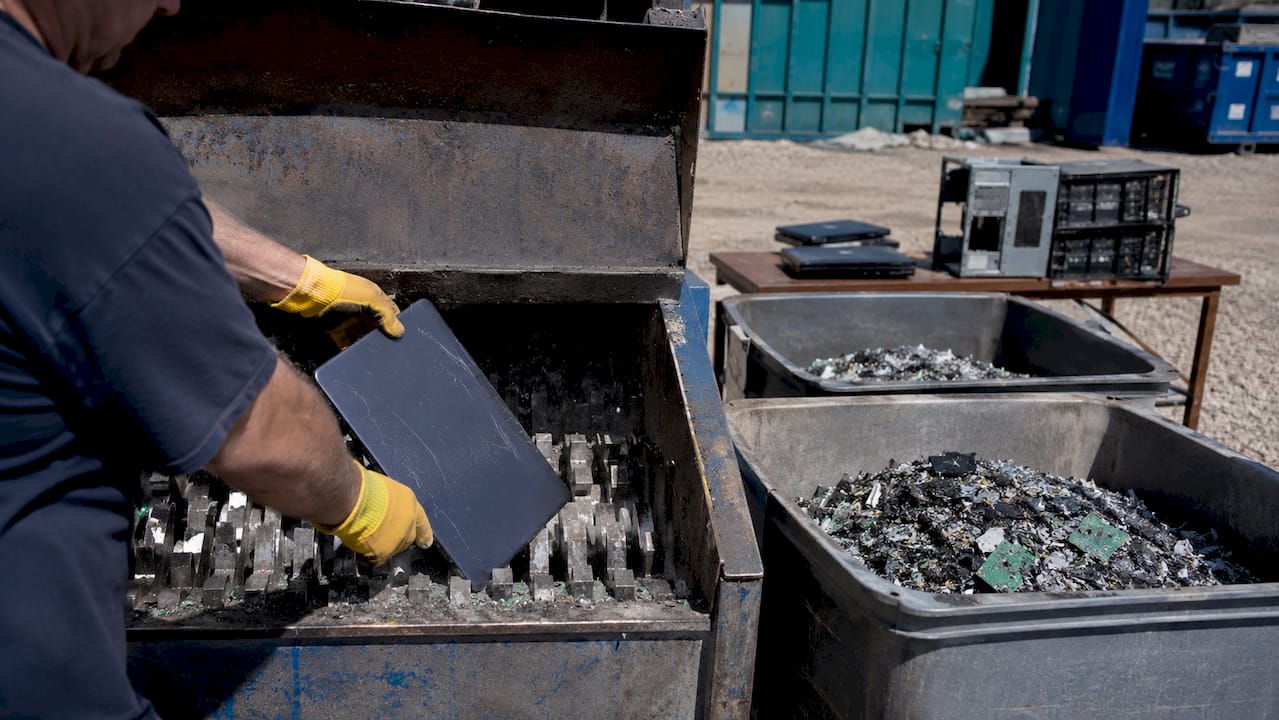
GDPR and electronic waste intersect most sharply at the point of disposal. The Accountability Principle, one of GDPR’s core requirements, places the burden of proof on your organization. You must demonstrate compliance, not just claim it. That requires documentation, vendor oversight, and a clear process from decommission to destruction.
How GDPR governs the full e-waste lifecycle
GDPR compliance does not end when a device leaves your building. The obligation continues through storage, transport, and final destruction. Each stage carries risk, and each stage requires controls.
Here is how the lifecycle breaks down from a compliance standpoint:
- Decommissioning. Remove the device from active service and log it with its serial number, assigned user, and data classification. This record starts your chain of custody.
- Secure storage. Hold devices in a locked, access-controlled area while awaiting disposal. Unsecured storage is a breach waiting to happen.
- Vendor selection. Choose a certified disposal partner with documented processes. ISO 27001 accreditation supports risk management but is insufficient alone without documented controls and evidence.
- Transport. Use tracked, secure transport with a signed manifest listing every device by serial number.
- Destruction. Apply a destruction method appropriate to the device type and data sensitivity. Confirm irrecoverability.
- Certification. Obtain a destruction certificate for every device, confirming method, date, and the certifying engineer.
An auditable chain of custody covering every step above is what GDPR’s Accountability Principle actually demands. A gap at any stage, such as an undocumented handoff to a recycler, creates regulatory exposure.
Pro Tip: Treat your e-waste disposal log the same way you treat your data processing register. Both are audit documents. Both need to be current, complete, and retrievable on short notice.
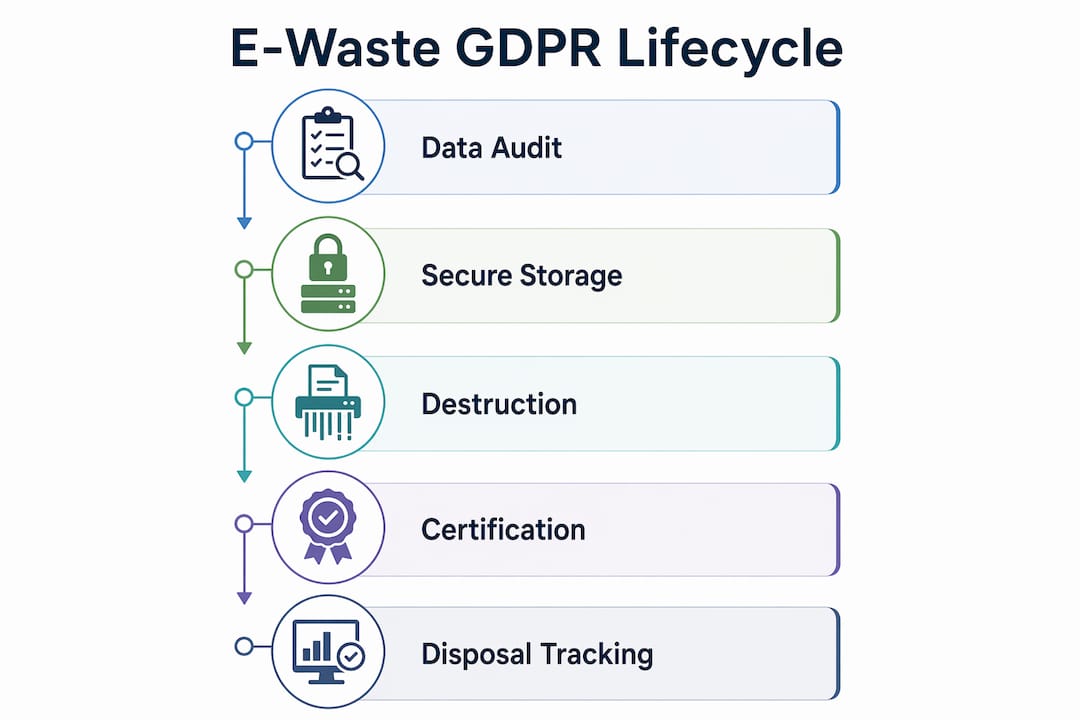
The risks of weak points in the disposal chain are real. Regulators increasingly examine the full disposal process when investigating breaches, not just the moment of data loss. Gaps in transport manifests or missing destruction certificates signal poor governance and invite deeper scrutiny.
What data destruction methods meet GDPR requirements?
GDPR imposes outcome-based obligations, not prescriptive destruction methods. The requirement is that personal data becomes irrecoverable, with security proportionate to the risk the data represents. How you achieve that outcome depends on the device type and the sensitivity of the data it held.
The table below compares the most common destruction approaches across device types:
| Device type | Recommended method | Relevant standard | Key limitation |
|---|---|---|---|
| HDD (hard disk drive) | Overwriting or degaussing | NIST SP 800-88 | Multiple-pass overwriting required for sensitive data |
| SSD (solid-state drive) | Purge-level commands or physical shredding | NIST SP 800-88 | Standard overwriting is insufficient for flash storage |
| Mobile devices | Factory reset plus encryption, or shredding | HMG Infosec Standard 5 | Factory reset alone does not guarantee irrecoverability |
| Servers and RAID arrays | Degaussing plus shredding | ADISA Certification | Complex configurations require device-level verification |
| Optical media and USB drives | Physical shredding | NIST SP 800-88 | No reliable electronic erasure method exists |
The SSD issue deserves specific attention. Standard overwriting is often insufficient for SSDs. Flash storage architecture means data can persist in memory cells that overwriting commands do not reach. NIST SP 800-88 requires purge-level commands or physical shredding for SSDs. Many organizations still apply HDD protocols to SSDs, which creates a compliance gap they are unaware of.
Physical destruction, typically industrial shredding, is the most definitive method for any device type. It eliminates recovery risk entirely. The trade-off is that shredded devices cannot be resold or refurbished, which affects IT asset recovery value.
Certificates of destruction must include the device serial number, destruction method used, date of destruction, and the name of the certifying engineer. A certificate without a serial number is not a compliance document. It is a generic receipt that proves nothing about a specific device.
Pro Tip: Ask your disposal vendor for a sample certificate before you sign a contract. If it does not include serial numbers and a named certifying engineer, find a different vendor.
What are the legal and financial consequences of non-compliance?
The financial exposure from GDPR non-compliance in e-waste is significant. Fines can reach €20 million or 4% of global annual turnover, whichever figure is higher. For a mid-size company with €50 million in annual revenue, that ceiling is €2 million. For a multinational, the number scales accordingly.
Financial penalties are only part of the picture. The consequences of a breach involving improperly disposed hardware include:
- Regulatory investigation. A single complaint or reported breach can trigger a full audit of your disposal processes, not just the incident itself.
- Reputational damage. Customers and partners lose confidence when a breach is traced to discarded hardware. The story writes itself badly in the press.
- Contractual liability. If the breached data belongs to a client, your contracts likely include data protection warranties. A breach triggers those clauses.
- Repeat scrutiny. Regulators track organizations that have previously failed. A second incident draws harsher treatment.
“Secure destruction is a demonstrable, structured process from device decommission to data irrecoverability, supported by rigorous documentation and oversight.” Professional Security
Common causes of e-waste-related breaches include informal handoffs to unvetted recyclers, missing transport documentation, applying HDD sanitization protocols to SSDs, and assuming a vendor’s certification covers your compliance obligation. None of these are technical failures. They are governance failures. Regulators treat them accordingly.
Proactive audits of your disposal process are the most effective way to find these gaps before a regulator does. Review your chain of custody records, verify your vendor’s certifications, and confirm that your destruction certificates meet the serial-number standard described above.
Best practices for GDPR-compliant e-waste disposal
Building a compliant e-waste process requires treating disposal as a formal stage of your data lifecycle, not an afterthought handled by facilities management. The following practices reflect what regulators expect to see when they examine an organization’s disposal controls.
- Write a formal e-waste disposal policy. The policy should define who owns the process, what documentation is required, which vendors are approved, and how certificates are stored. Without a written policy, you cannot demonstrate consistent practice.
- Conduct vendor due diligence before signing contracts. Request evidence of certifications such as ADISA, R2, or e-Stewards. Review their chain of custody procedures. Confirm they issue per-device destruction certificates. Documented vendor controls are what shift accountability to the vendor in the event of a dispute.
- Maintain a device inventory from procurement to destruction. Every device should have a record that follows it from purchase through decommission to confirmed destruction. The role of documentation in this process cannot be overstated. It is your primary defense in an audit.
- Align with WEEE regulations alongside GDPR. The Waste Electrical and Electronic Equipment Directive governs the environmental side of disposal. GDPR governs the data side. Both apply simultaneously. A vendor that handles only one is not a complete solution.
- Integrate e-waste procedures into your IT asset management system. Disposal should trigger automatically when a device reaches end of life, not when someone remembers to deal with it. Automation reduces the risk of devices sitting in storage without a disposal record.
- Avoid informal assurances. A vendor who tells you “we handle everything” without providing written documentation and per-device certificates is not a compliant partner. Verbal assurances have no value in a regulatory investigation.
For a structured approach to corporate e-waste disposal that covers both GDPR and environmental requirements, building your process around documented controls rather than certifications alone is the standard regulators expect.
GDPR e-waste compliance is a governance problem, not a tech problem
I have seen organizations spend significant budget on certified shredding equipment and then hand devices to an unvetted courier with no transport manifest. The technology was right. The governance was absent. That is the pattern I see most often, and it is the one that creates real exposure.
GDPR compliance for e-waste is becoming a governance and accountability challenge rather than a purely technical one. The destruction method matters, but the documentation around it matters just as much. Regulators do not just ask what you did. They ask how you can prove it.
The emerging challenge I watch closely is IoT and cloud-associated devices. A smart building sensor or a cloud-connected endpoint may hold authentication credentials, personal identifiers, or cached data that standard sanitization protocols were not designed for. Most organizations have no disposal policy that addresses these device categories at all.
My advice is to treat your next internal audit as a dry run for a regulatory inspection. Pull your chain of custody records for the last 12 months. Check whether every decommissioned device has a destruction certificate with a serial number. If you find gaps, fix them before someone else does.
The balance between compliance and sustainability is real but manageable. Devices that can be securely sanitized and resold reduce both environmental impact and disposal cost. Physical shredding should be reserved for devices where sanitization cannot be verified. That distinction requires judgment, policy, and documentation. It is exactly the kind of governance work that separates compliant organizations from those that are simply hoping for the best.
— Keith
Secure, certified e-waste disposal with Usedcartridge

Usedcartridge provides professional e-waste disposal services designed to meet GDPR data protection requirements from device collection through confirmed destruction. Every disposal engagement includes per-device destruction certificates with serial numbers, destruction method, date, and certifying engineer, giving your organization the documented evidence GDPR’s Accountability Principle demands. Usedcartridge handles secure transport, chain of custody documentation, and environmentally responsible processing in compliance with both GDPR and WEEE regulations. For organizations managing secure data destruction at scale, Usedcartridge offers IT asset recovery options that recover value from sanitized devices while maintaining full compliance records. Request a free quote and learn how Usedcartridge can close the gaps in your current disposal process.
FAQ
What is GDPR in e-waste, exactly?
GDPR in e-waste refers to the legal requirement under the General Data Protection Regulation to protect personal data stored on electronic devices during disposal. Organizations must ensure data is rendered irrecoverable before or during the disposal process to avoid breach liability.
Does GDPR apply to all types of electronic devices?
GDPR applies to any device that stores personal data, including laptops, servers, smartphones, tablets, and storage drives. The obligation covers the data, not the device category, so any hardware that held personal data falls under the regulation’s disposal requirements.
What destruction methods are GDPR-compliant for SSDs?
Standard overwriting is insufficient for SSDs. NIST SP 800-88 requires purge-level commands specific to flash storage architecture or physical shredding to confirm data irrecoverability and meet GDPR standards.
What does a valid certificate of destruction include?
A compliant certificate of destruction must include the device serial number, the destruction method used, the date of destruction, and the name of the certifying engineer. A certificate without a serial number does not prove that a specific device was destroyed.
What fines can businesses face for improper e-waste disposal under GDPR?
GDPR fines for data breaches involving improper hardware disposal can reach €20 million or 4% of global annual turnover, whichever is higher. Reputational damage and regulatory scrutiny compound the financial risk significantly.