
Physical recycling is only half the compliance story. The role of documentation in e-waste management is what separates businesses that pass audits from those that don’t, and the gap between the two is wider than most organizations expect. You can run an airtight operation on the floor and still fail a regulatory review because your records don’t support what your processes claim to do. This guide covers what documentation regulators actually require, how to build a system that holds up under scrutiny, and what’s at stake when records are incomplete or disorganized.
Table of Contents
- Key Takeaways
- Role of documentation in e-waste management regulations
- Traceability, audit readiness, and multi-framework compliance
- Building an e-waste documentation system that holds up
- Real-world implications of strong documentation practices
- My perspective on documentation as a strategic asset
- How Usedcartridge can support your compliance documentation
- FAQ
Key Takeaways
| Point | Details |
|---|---|
| Documentation is audit evidence | Regulators and auditors verify compliance through records, not just observed physical processes. |
| Multi-framework obligations overlap | Environmental and data security documentation requirements must both be satisfied simultaneously. |
| Retention periods are legally defined | Large-quantity handlers must keep shipment records for at least 3 years under federal guidelines. |
| Separation of document types matters | Controlled documents and operational records must be kept distinct to avoid audit failures. |
| Digital systems improve traceability | Moving to digital compliance platforms strengthens chain-of-custody evidence and simplifies audits. |
Role of documentation in e-waste management regulations
E-waste compliance is not a single rulebook. Depending on your organization’s size, location, and what you handle, you may answer to federal law, state regulators, international frameworks, and third-party certification bodies at the same time. Each of those layers has its own documentation expectations.
At the federal level, the EPA’s e-Manifest system tracks hazardous waste shipments electronically, replacing paper manifests and centralizing record retention. Under RCRA, large-quantity handlers must keep detailed shipment records for at least three years, capturing origin, destination, quantities, and dates for every transfer. Smaller handlers face fewer obligations, but those obligations still exist and scale up quickly as volume increases.
California’s DTSC framework is among the strictest in the country. The state imposes penalties reaching $70,000 per violation per day for improper e-waste handling when chain-of-custody and data destruction documentation are missing or inadequate. Organizations operating in California must also maintain NIST 800-88-compliant wiping records alongside full chain-of-custody logs. That’s two parallel documentation tracks that must stay synchronized.
The R2v3 certification standard, used widely by recyclers and processors, adds another layer. It requires facilities to maintain a structured library of both controlled documents and operational records. India’s E-Waste (Management) Rules, 2022, tie documentation to Extended Producer Responsibility evaluation criteria, reflecting a global trend toward formalizing traceability requirements.
Key documentation categories across these frameworks include:
- Chain-of-custody records: Track device movement from collection through final disposition, including all intermediaries
- Shipment manifests: Document weight, type, origin, and destination for every transfer
- Data destruction certificates: Confirm secure wiping or physical destruction to a recognized standard
- Management system documentation: Policies, procedures, training records, and downstream vendor qualifications
- Controlled documents: Version-controlled policies and procedures with review dates and owners
Pro Tip: Set calendar reminders for document review cycles tied to each regulatory framework you operate under. Regulations update, and a procedure written for last year’s rules may create a compliance gap you won’t discover until an auditor does.
Traceability, audit readiness, and multi-framework compliance
Documentation is not a formality. It’s the mechanism auditors use to verify that what you claim happened actually happened. Auditors rely on documentation as a proxy for events they cannot observe directly. A facility that physically processes e-waste responsibly but keeps weak records can still fail an R2v3 certification audit because the paper trail doesn’t support the operation.
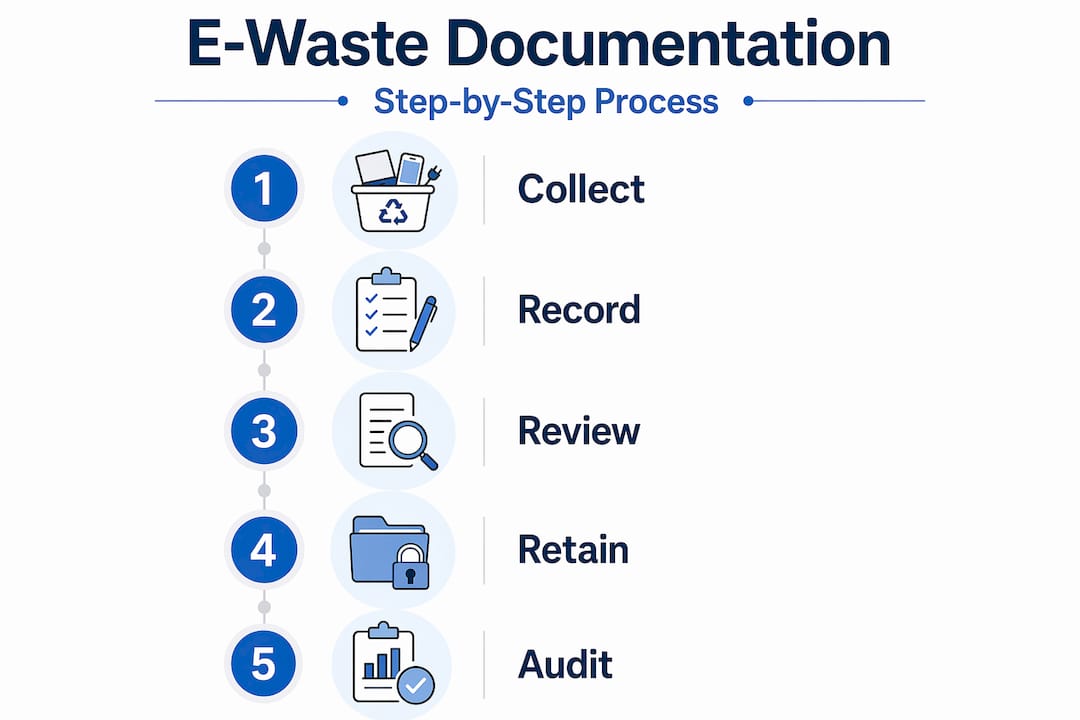
Traceability is where this becomes concrete. Without device-level chain-of-custody records, you cannot credibly claim that a specific device was handled responsibly from pickup to final recycling. You can make the claim, but you cannot prove it. And in a regulated environment, unverified claims carry no weight.
The multi-framework challenge compounds this. Your e-waste operation likely touches both environmental regulations and data security requirements simultaneously. Environmental law governs how materials move and are processed. Data security law governs what happens to the information stored on those devices. Missing documentation in either framework increases enforcement risk independently, meaning a gap in data destruction records can trigger a penalty even if your environmental records are perfect.
“Certificates of data destruction and chain-of-custody logs form a combined audit artifact set that must reference compatible standards like NIST 800-88 for seamless compliance evaluation.” — Human-I-T, Understanding E-Waste Regulations in California
When documentation gaps surface during an audit, the consequences are layered. You face the immediate risk of certification suspension or regulatory penalty. You also face reputational damage with customers and partners who expect documented proof of responsible disposal. For any organization with ESG reporting obligations, a gap in e-waste compliance documentation undermines public sustainability claims. The risk is financial, operational, and reputational at the same time.
Building an e-waste documentation system that holds up
The difference between a documentation system that survives an audit and one that falls apart under scrutiny usually comes down to architecture. Most organizations that struggle with e-waste compliance don’t lack documentation. They lack organization. Records exist, but they’re scattered, inconsistently labeled, and impossible to trace through multiple handoffs.
Here’s a practical framework for building a system that works:
-
Separate controlled documents from operational records. Controlled documents are your policies, procedures, and training materials. Operational records are the logs, manifests, and certificates produced by daily activity. Mixing these types creates confusion during audits and weakens the evidence link between your documented processes and what actually happened.
-
Build a document register. Every controlled document should be tracked in a register with the document title, version number, owner, last review date, and next scheduled review. This prevents outdated procedures from being used and gives auditors a clean index to work from.
-
Define retention periods by document type. Shipment manifests and chain-of-custody logs need at least three years under federal rules, but data destruction records may need longer depending on state law or customer contract terms. Document your retention schedule in writing and stick to it.
-
Choose a digital platform with an audit trail. Paper-based systems fail when records are lost, misfiled, or illegible. Digital compliance systems improve traceability and accountability by capturing timestamps, user actions, and document histories automatically. Look for platforms that integrate electronic waste tracking across the entire value chain.
-
Standardize handoff documentation. Every time e-waste transfers from one handler to another, the record must include originator and destination names and addresses, transfer date, and material quantities. A single missing field breaks the chain of custody.
-
Schedule internal audits. Don’t wait for an external auditor to find gaps. Run internal documentation reviews quarterly, checking that all operational records match procedures, retention requirements are being met, and no controlled documents are overdue for review.
| Document type | Retention minimum | Format requirement |
|---|---|---|
| Shipment manifests | 3 years | Digital or paper, indexed |
| Data destruction certificates | 3+ years (varies by state) | NIST 800-88 aligned |
| Chain-of-custody logs | 3 years | Device-level detail |
| Controlled procedures | Current + prior version | Version controlled |
| Vendor qualification records | Duration of contract + 3 years | On file, auditable |
Pro Tip: When onboarding a new downstream vendor, request their documentation package before the first transfer. A vendor who can’t produce current certifications, insurance, and process procedures before work begins is a liability in your compliance chain.
Real-world implications of strong documentation practices
The most compelling case for documentation discipline comes from what happens when it’s absent. And more importantly, from what organizations gain when they get it right.
Consider a mid-size company that upgrades its hardware fleet and sends 500 decommissioned laptops to a recycler. Without data destruction certificates aligned to NIST 800-88 standards, the company has no proof that sensitive employee and customer data was destroyed. If a device resurfaces with recoverable data, the company faces potential HIPAA, GDPR, or state privacy law liability on top of any e-waste violation. The documentation gap is also the legal gap.
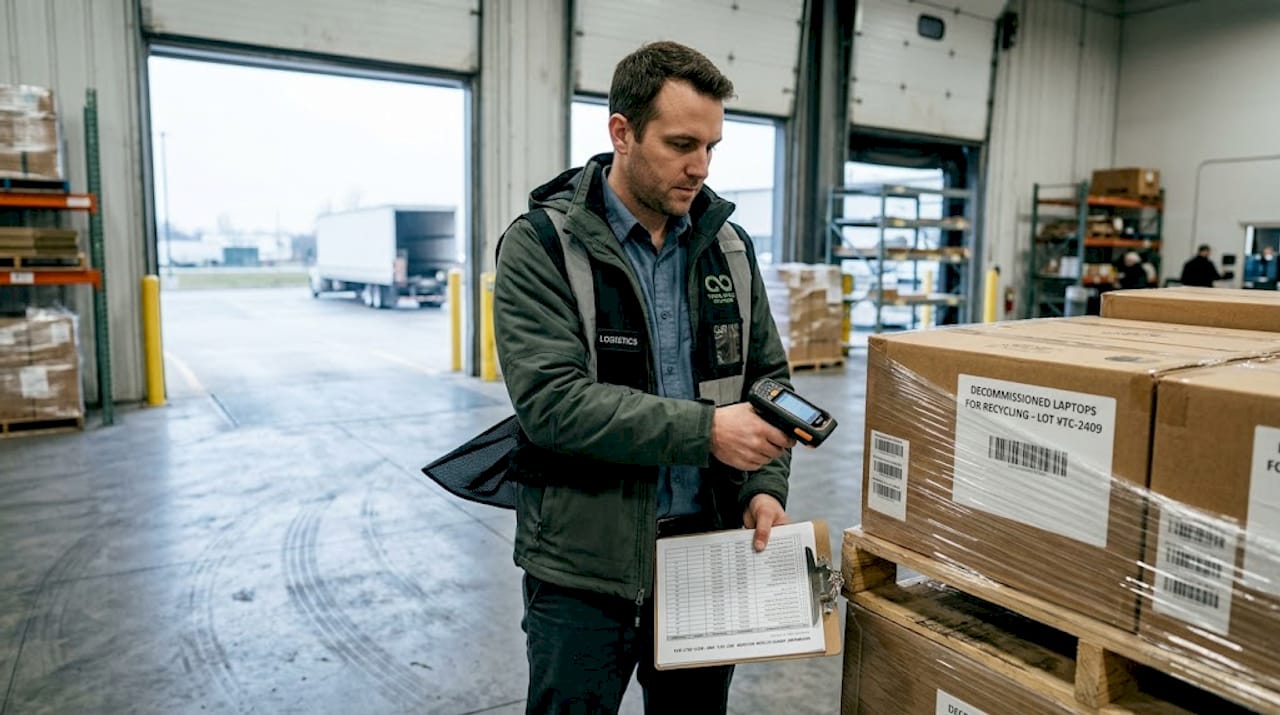
Shipment recordkeeping protects organizations in a different way. Detailed manifests with verified origin and destination data create a defensible record if a regulator questions where materials went. Without them, the burden of proof falls entirely on the organization, and reconstructing the chain of custody after the fact is nearly impossible.
Strong downstream vendor documentation has a compounding effect. When you require recyclers and processors to provide their own certifications, audit reports, and process documentation before you transfer materials to them, you protect yourself from inheriting their compliance failures. The liability doesn’t stay with the vendor; it follows the material. Your records proving due diligence on vendor qualification are part of your own defense.
Organizations that treat documentation as a strategic asset also find it useful beyond regulatory compliance. Detailed records of material volumes, types, and processing outcomes feed directly into ESG reporting frameworks. ESG compliance documentation increasingly demands this level of specificity, and organizations with strong e-waste records can substantiate their environmental claims with data rather than estimates. Customers, investors, and auditors all respond to that difference.
My perspective on documentation as a strategic asset
I’ve worked with enough organizations on e-waste compliance to know what the common failure looks like. It’s not negligence. It’s assumption. Most businesses assume that if their physical processes are solid, the documentation will take care of itself. It won’t.
What I’ve found is that documentation architecture rarely gets the same intentional design that physical processes do. Teams spend months engineering a responsible recycling workflow, then track the results in spreadsheets nobody updates consistently. When an auditor arrives, the gap between what the process promises and what the records show is obvious. And in my experience, that gap is almost always avoidable.
The organizations that get this right treat documentation as an output of every process step, not a retrospective task. When a device is transferred, a record is created automatically. When a destruction event occurs, a certificate is generated and filed in a defined location. The system is designed so that compliance documentation happens as a byproduct of doing the work, not as a separate administrative burden.
I’d also push back on the idea that documentation is purely a risk management exercise. Yes, it protects you from audit failures and regulatory penalties. But it also creates internal accountability. When every process step has a required record, your team operates with clarity about what “done” actually means. That discipline shows up in operational consistency, vendor relationships, and customer trust.
If you haven’t conducted a documentation architecture review in the past year, that’s where I’d start.
— Keith
How Usedcartridge can support your compliance documentation
If this article has clarified how much documentation work your e-waste program actually requires, the next question is whether your current process can support it. Usedcartridge offers certified electronic waste management services built specifically for the documentation and traceability demands businesses face today.

From chain-of-custody logs and data destruction certificates to downstream vendor qualifications and shipment records, Usedcartridge handles the documentation architecture so your compliance team isn’t piecing records together after the fact. The team supports multi-jurisdictional requirements including federal, California DTSC, and R2v3 certification expectations. For organizations prioritizing business sustainability and compliance, every service comes with the audit-ready records to back your ESG reporting. Request a quote through the IT asset disposition page and get a clear picture of what compliant documentation looks like in practice.
FAQ
What does the role of documentation in e-waste management actually mean?
Documentation in e-waste management refers to the records that verify how electronic waste was collected, transferred, processed, and disposed of. These records are what auditors and regulators use to confirm that an organization’s physical practices match its compliance claims.
How long do businesses need to keep e-waste records?
Large-quantity handlers must retain shipment records for at least three years under federal rules, but data destruction certificates and chain-of-custody logs may require longer retention depending on state law and contract requirements.
What happens if e-waste documentation is incomplete?
Incomplete documentation can cause organizations to fail certification audits like R2v3 even when physical processes are strong, and can result in penalties up to $70,000 per day in states like California where documentation requirements are strictly enforced.
What is a chain-of-custody record in e-waste?
A chain-of-custody record tracks every transfer of e-waste from initial collection through final processing, including the names and addresses of all parties, transfer dates, and material quantities. Without device-level chain-of-custody records, credible compliance claims are impossible to substantiate.
What is the difference between controlled documents and operational records?
Controlled documents are version-managed policies and procedures that define how processes should be performed. Operational records are the logs, manifests, and certificates produced when those processes are executed. Separating these document types is critical to passing audits and maintaining clear evidence linkage between procedures and actual outcomes.