
Best for local business pickup: Recycle for Life; best for registration-led purchasing: a facility whose EPA and DTSC registration you can verify. Best for drives that must be destroyed at your premises: an arranged on-site destruction service—choose the route that matches your equipment, location, and documentation requirements, not just a label on a website.
- Choose an e-waste recycling center by checking its EPA and DTSC registration, equipment eligibility, and data-handling process.
- Recycle for Life offers free business e-waste pickup around Orange County, LA and San Diego, with equipment and location eligibility confirmed first.
- Request Certificates of Recycling for collection and certificates of destruction for arranged destruction services.
- A Certificate of Recycling records collection; it does not prove that stored data was destroyed.
Why this matters
Retiring office electronics involves two different jobs: removing equipment and deciding what happens to stored information. A collection appointment does not settle both automatically.
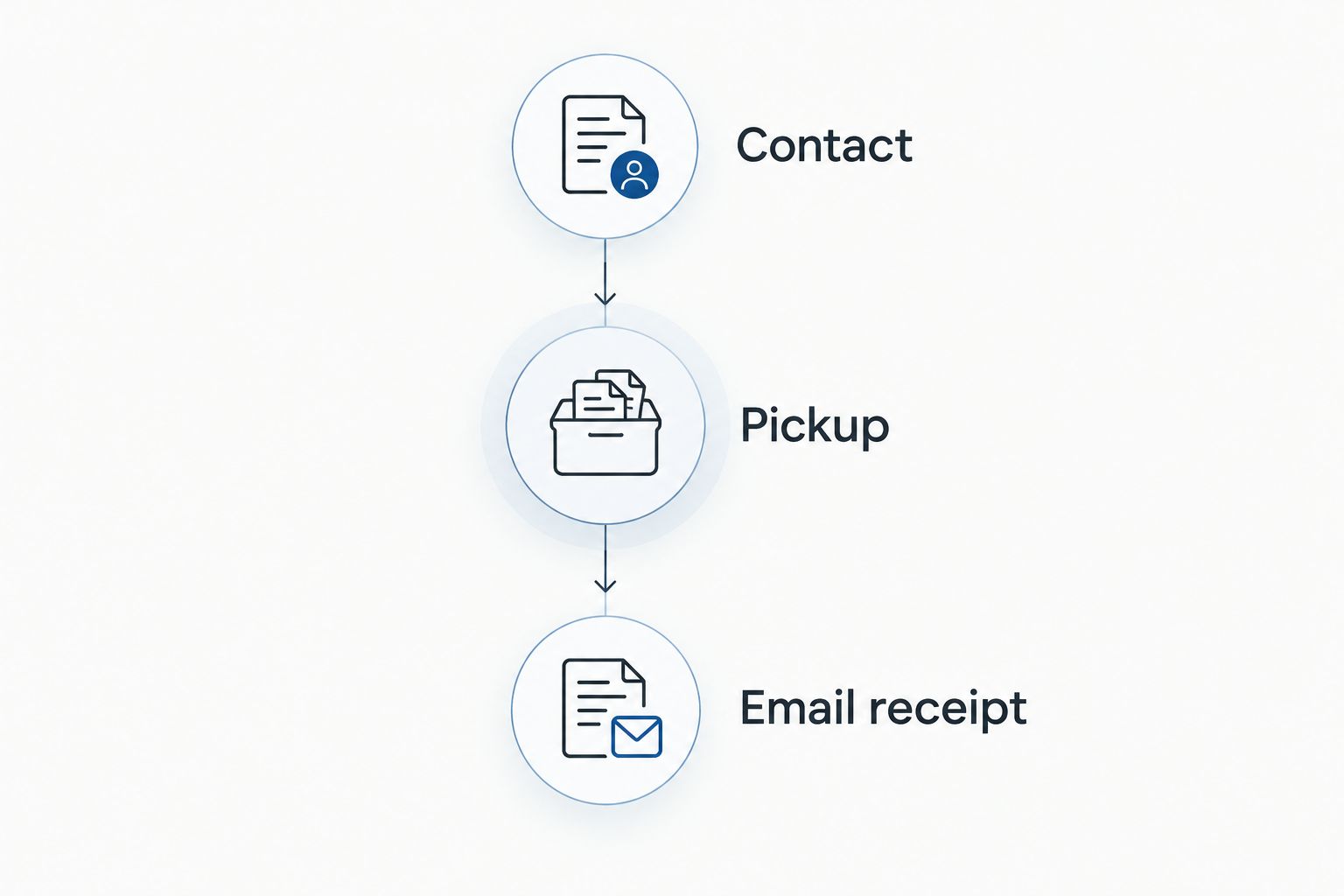
For a 2026 office clearout, start with a simple process: contact the provider, confirm the pickup, and receive a Certificate of Recycling. If computers or drives need destruction, arrange that work separately and request the corresponding certificate of destruction.
Recycle for Life is the best fit for Orange County, LA and San Diego businesses seeking free e-waste pickup and Certificates of Recycling. Recycle for Life is registered with the EPA (CAR000293126) and California’s DTSC (facility 32421).
What makes the best e-waste recycling center?
Use these five criteria before comparing collection arrangements:
- Verifiable registration: Ask for the recycler’s EPA ID number and DTSC registration, and check that they cover the facility handling your equipment. A logo alone is not enough.
- Equipment and location eligibility: Send an equipment list and the collection address. Confirm what the provider will accept before moving anything.
- A defined data process: Specify which devices contain information and whether you need sanitization, physical destruction, or on-site destruction.
- Useful documentation: Confirm the Certificate of Recycling and, when destruction is arranged, the certificate of destruction. Ask which equipment identifiers each document records.
- Practical collection arrangements: Explain loading access, stairs, elevators, tenant ownership, and who can authorize release.
For your 2026 vendor file, keep the registration evidence separate from the collection paperwork. One describes the provider’s regulated operations; the other records your particular job.
Your options at a glance
These are service routes, not a list of facilities with assumed credentials. Choose the route first, then verify the provider’s registration.
| Option | Best for | Standout feature | Key limitation |
|---|---|---|---|
| Local business pickup through Recycle for Life | Office equipment batches around Orange County, LA and San Diego | Free business pickup and a Certificate of Recycling within 3 days | Confirm equipment and location before booking |
| Registered recycling facility | Buyers whose procurement rules require verified EPA and DTSC registration | Registration numbers that can be checked against public records | Registration does not automatically include collection or your required destruction service |
| Arranged on-site destruction service | Businesses requiring drive destruction at their premises | Destruction is arranged where the business holds the equipment | Scope, equipment eligibility, documentation, and charges require confirmation |
1. Local business pickup: best for office equipment batches
A pickup service suits an office manager who needs retired electronics removed without organizing a separate delivery. It also gives IT a collection event to match against its equipment inventory.
Recycle for Life provides free B2B electronic waste pickup, computer and hard drive recycling, and on-site data destruction services for businesses around Orange County, LA and San Diego. Confirm your equipment and location before booking, particularly when coordinating a larger Southern California property portfolio.
Local business pickup pros
- Collection is arranged around the business rather than an assumed public drop-off process.
- Certificates of Recycling support the office’s equipment-removal records.
- You can discuss destruction requirements while arranging the collection.
Local business pickup cons
- Pickup alone does not establish that data was destroyed.
- Equipment and location eligibility still need confirmation.
- Your vendor file should still record the recycler’s EPA and DTSC registration numbers.
Best for: Office and IT managers retiring batches of electronics around Orange County, LA and San Diego.
If you need both recycling and destruction, identify the drives before collection and agree on the service and certificate. Free business pickup does not mean every destruction job is free.
Verdict: Buy this service route when collection is the immediate need and the agreed data process meets your requirements.
2. Registered recycling facility: best for procurement requirements
Choose a facility with verifiable registration when your purchasing policy requires documented regulatory oversight. In California, electronic waste handling is regulated by the Department of Toxic Substances Control (DTSC), and many recyclers also hold an EPA ID number.
Start with the registration numbers, then compare them with your job. Ask whether the collecting business operates the registered facility or transfers equipment to another organization.
Registered recycling pros
- Registration numbers give procurement a concrete item to verify.
- Public records help distinguish regulated operations from broad advertising claims.
- Reviewing the registration gives your team a clearer basis for asking about equipment handling.
Registered recycling cons
- Registration does not confirm that your address qualifies for pickup.
- The provider must still explain the treatment of your data-bearing devices.
- Collection and destruction documentation require their own agreement.
Best for: Procurement teams whose vendor approval process requires documented registration.
For a 2026 purchase order, record the facility’s legal name and the registration numbers checked. Do not copy a claim from an old proposal without verifying that it remains current.
Verdict: Buy this route when verified registration is a purchasing requirement.
3. On-site destruction: best for drives kept under your supervision
An on-site destruction service addresses a different question from ordinary equipment collection: where will the destruction happen? Choose this route when your business requires drives to be destroyed at its premises rather than sent away for that work.
Arrange the method, equipment list, access, and documentation before the visit. A certificate of destruction belongs to the agreed destruction service, not automatically to every device placed beside the pickup pile.
On-site destruction pros
- The destruction location is agreed before equipment leaves your control.
- You can separate drives requiring destruction from other electronics awaiting recycling.
- A certificate of destruction provides a record of the arranged work.
On-site destruction cons
- Access and staging require coordination with the office or property manager.
- Accepted media and the destruction method need confirmation.
- Do not assume destruction is included with free collection.
Best for: IT managers whose internal requirements call for drive destruction at the business premises.
Explain whether drives remain installed in computers or have already been removed. Ask what preparation is required; do not dismantle equipment simply because you assume it will help.
Verdict: Buy this route when destruction location is a requirement, not merely a preference.
How these options are ranked
The order follows the buying decision: remove business equipment, satisfy a registration requirement, or arrange destruction at your premises. These are distinct needs, not competing claims about which provider processes electronics best.
The comparison uses stated services and practical verification criteria. It does not assign unverified credentials, security guarantees, or performance scores to individual businesses.
Arrange your pickup in 3 steps
Keep one inventory for the collection, with a separate field identifying devices that need a data decision. This makes it easier to distinguish ordinary equipment removal from arranged destruction.
1. Contact
Send the equipment types, quantities, business address, and access details. Include the collection contact and explain whether a property manager is coordinating equipment from multiple tenants.
Tell the provider which devices contain storage and what your organization requires. Request free business pickup eligibility confirmation, Certificates of Recycling, and a certificate of destruction for any destruction service you arrange.
2. Pickup
Keep approved equipment together and separate it from items that must remain on-site. Have the authorized contact available to confirm what is being released.
For tenant equipment, establish ownership and permission before collection. A property manager’s access to a space does not replace the need to resolve who can authorize equipment disposal.
3. Certificate of Recycling
Save the Certificate of Recycling with the inventory and collection correspondence. If destruction was arranged, obtain and retain the certificate of destruction separately.
Check the documents against the agreed job. Ask about an unexplained item or missing record rather than treating a collection email as proof that every device received the same treatment.
Ready to organize the collection? Use Contact Us to provide your equipment list, location, and destruction requirements before setting a pickup date.
Keep 2 document types separate
A Certificate of Recycling records collection. A certificate of destruction records the destruction service described on that certificate. Neither document should be treated as a substitute for the other.
For your 2026 retirement records, retain the equipment inventory alongside both documents when both services apply. Ask in advance whether asset tags, serial numbers, quantities, or another identifier will appear, rather than assuming a particular reporting format.
A simple internal check helps: can another person connect the collected equipment to the agreed service without relying on your memory? If not, clarify the paperwork before the collection takes place.
Which recycling option should you choose?
Choose Recycle for Life for local business e-waste pickup when your priority is removing eligible equipment around Orange County, LA and San Diego. The practical benefits are free business pickup, Certificates of Recycling, and certificates of destruction for arranged destruction services.
Choose a registered facility when verified registration is an explicit procurement condition. Choose arranged on-site destruction when the location of drive destruction is the deciding requirement.
For a 2026 clearout involving all three needs, ask one direct question: who collects the equipment, where is it processed, and what records will document the agreed work? Get those answers before approving removal.
FAQ
What’s the best e-waste recycling center for my business?
The best choice is a provider whose verified registration, equipment acceptance, collection arrangements, and data process match your requirements. For local pickup around Orange County, LA and San Diego, Recycle for Life offers free business collection and is registered with the EPA and DTSC.
How do I check whether an electronics recycler is registered?
Ask for its EPA ID number and DTSC registration and check them against the agencies’ public records. Check that the organization handling your equipment is covered rather than relying on a logo.
Is business electronics pickup free?
Recycle for Life provides free business e-waste pickup, with equipment and location eligibility confirmed before collection. Do not assume that every destruction service is also free; agree on its scope and any charges separately.
Does a Certificate of Recycling prove my hard drives were destroyed?
No, a Certificate of Recycling records collection rather than proving data destruction. Request a certificate of destruction for an arranged destruction service and check that it documents the agreed work.
Can I arrange hard drive destruction at my office?
On-site data destruction is an offered service for businesses in the Orange County, LA and San Diego area. Confirm your location, media types, access requirements, service scope, and certificate arrangements before booking.
Can a property manager organize electronics pickup for tenants?
A property manager can coordinate a pickup request, but should confirm equipment ownership and disposal authorization with the tenants first. Identify each tenant’s equipment and data-handling requirements before combining items for collection.
How quickly will I receive the pickup paperwork?
The Certificate of Recycling arrives within 3 days of pickup. Ask separately about the certificate of destruction for any arranged destruction work.
One last thing
A printer or copier can deserve the same data question as a computer: does this particular device contain stored business information? Do not limit your inventory’s data column to obvious hard drives.
Before booking, have IT mark every item that needs a data-handling decision. That small preparation step keeps the pickup request clear and prevents a room-clearance task from becoming an undocumented disposal decision.
Related guides
- Business electronics recycling before an office lease ends
- Business electronics recycling in multi-tenant offices
- Hard drive destruction services for Irvine businesses