
Managed IT recycling is the process of securely and responsibly disposing of IT assets by combining documented data destruction with environmentally compliant e-waste recycling programs. The industry term for this practice is IT Asset Disposition, or ITAD, and it covers everything from device inventory and data sanitization to compliant downstream recycling and compliance documentation. The world generated 62 million tonnes of electronic waste in 2024, and that volume makes unmanaged disposal a legal, financial, and reputational risk no organization can afford. This article walks through the most practical examples of managed IT recycling, the registrations that separate credible vendors from risky ones, and the program structures that work across enterprise, healthcare, government, and small business environments.
1. Structured IT asset disposition programs
IT Asset Disposition programs are the most widely recognized examples of managed IT recycling in practice. A formal ITAD program treats every retired device as a data security event first and an environmental obligation second. Comprehensive ITAD processes involve device inventory, secure data wiping or physical destruction, testing for reuse potential, and final compliant recycling with full documentation. Some national ITAD companies deliver this as an end-to-end managed service, meaning your organization hands off assets and receives a compliance report at the other end.
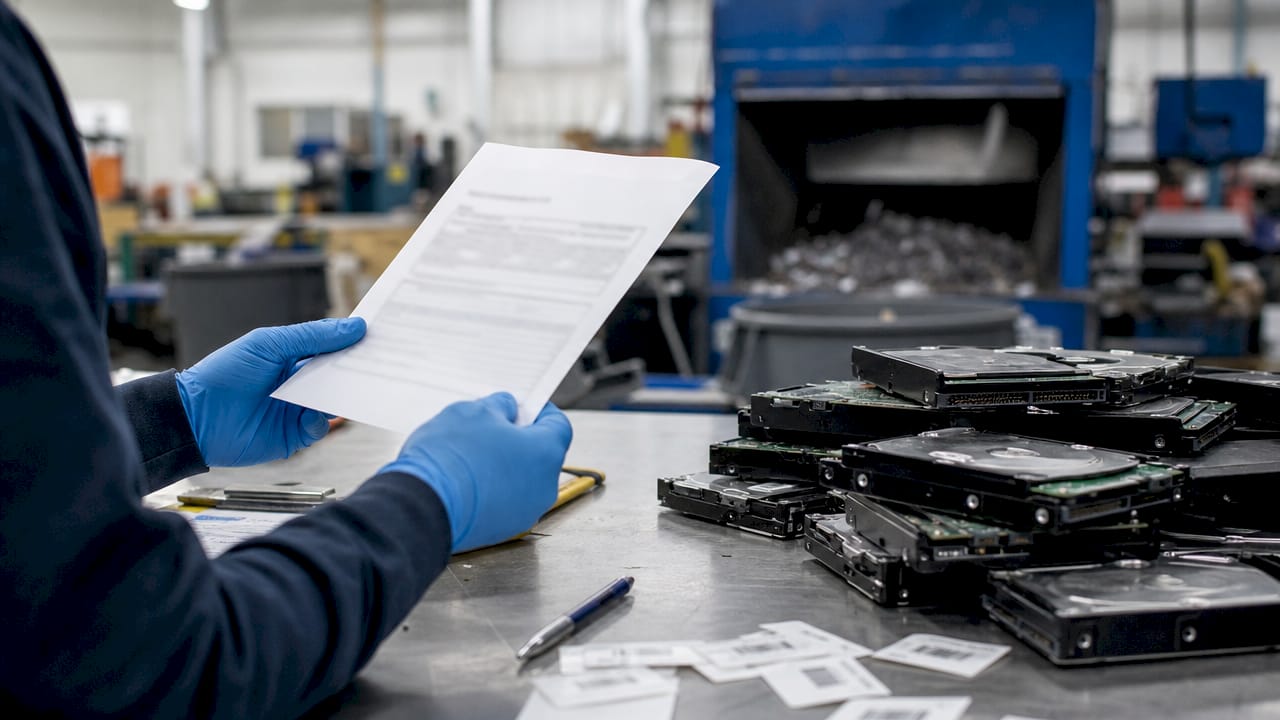
The compliance documentation piece is where most organizations underestimate the stakes. Without that paper trail, you cannot prove a device was sanitized, and an auditor will treat that gap as a violation.
Key steps in a structured ITAD program include:
- Device inventory and tagging: Every asset is logged with serial number, model, and data classification before leaving your facility.
- Reuse assessment: Devices that pass functional testing move to redeployment, resale, or donation before any recycling occurs.
- Confirm the recycler is EPA-registered and regulated by the state (in California, the DTSC), with annual reporting on how waste is handled.
Generic compliance language without device-level verification reports is a documented audit risk.
2. Partnership models with compliant e-waste recyclers
Compliant recycler partnerships represent a second major category of managed IT recycling, and the registrations your vendor holds determine whether your organization is actually protected. The three things to check are an EPA ID number, state regulatory standing (the DTSC in California), and a Certificate of Destruction for data-bearing devices. Each standard mandates specific controls over hazardous material handling, downstream vendor vetting, and environmental reporting. Compliant e-waste recyclers follow strict environmental and data security standards that unvetted handlers simply do not.
The registration gap in the market is wider than most IT teams realize. That statistic should change how you evaluate vendor proposals.
A well-structured compliant recycler partnership includes:
- Verified status: Confirm the vendor's EPA ID and state regulatory status directly with the agencies, not just from a vendor's marketing materials.
- Downstream transparency: Your vendor should disclose who handles materials after initial processing, including smelters and commodity brokers.
- Hazardous material controls: Lead, mercury, cadmium, and beryllium found in older IT equipment require specific handling protocols that only compliant recyclers are audited against.
Pro Tip: Re-verify your recycler’s registration status annually. Registrations lapse, and a vendor that was compliant when you signed the contract may not be compliant when your next device refresh happens.
3. Integrated lifecycle management for IT reuse and recycling
Lifecycle management platforms represent a more sophisticated approach to responsible IT disposal, one that treats recycling as the last resort rather than the default. The reuse-first model follows a defined sequence: redeploy internally, donate or resell, then recycle or destroy only when no reuse path remains. This sequence reduces e-waste volume, recovers asset value, and extends the productive life of hardware that still has functional capacity.
Reconext’s ITAD solutions and similar platforms track each device through every stage of this lifecycle using asset management software that logs status changes, custodian transfers, and final disposition outcomes. Manufacturer take-back programs from companies like Dell, HP, and Apple operate on the same principle, accepting retired equipment for refurbishment or compliant recycling through their own vendor networks. For IT decision-makers, integrating these programs into your procurement cycle means retirement planning starts at purchase, not at end of life.
The practical steps in an integrated lifecycle management program follow this order:
- Asset registration at deployment: Every device enters the tracking system when it is issued, with expected refresh date and data classification recorded.
- Mid-life redeployment review: Devices approaching refresh are evaluated for internal reassignment to lower-demand roles before any disposal decision is made.
- Resale or donation assessment: Functional devices that cannot be redeployed are offered to compliant remarketing partners or nonprofit donation programs, with data wiped to Clear or Purge standard first.
- Compliant recycling for non-reusable assets: Devices that fail functional testing move directly to a compliant recycler with full documentation.
- Reporting and compliance closure: The platform generates a disposition report covering every asset in the refresh cycle, closing the audit trail.
This model consistently delivers better outcomes than single-step recycling because it captures residual asset value while keeping compliant recycling records intact. Organizations that implement eco-friendly IT asset recovery through lifecycle management also report measurable reductions in total disposal costs.
4. Comparison of managed IT recycling methods
Choosing the right disposal method depends on the data sensitivity of the device, the regulatory environment your organization operates in, and the downstream environmental outcome you need to document. The table below compares the four primary methods used in managed IT recycling programs.
| Method | Data security level | Environmental outcome | Best use case |
|---|---|---|---|
| Software wiping (Clear) | Moderate: effective for standard drives | Device remains intact for reuse or resale | Low-sensitivity devices going to resale or donation |
| Physical destruction (Destroy) | Highest: destruction, crushing, or melting | Material recovered via compliant recycler | SSDs, classified data environments, government mandates |
| Compliant recycling only | None: no data sanitization included | Compliant material recovery | Non-data-bearing hardware like monitors and peripherals |
Physical destruction methods including crushing, destruction, and melting eliminate data risk entirely, but they also render the device unrecoverable for reuse. Pairing physical destruction with compliant downstream recycling satisfies both the security requirement and the environmental obligation simultaneously.
Pro Tip: Never treat destruction and recycling as alternatives. Destruction and recycling are complementary steps in a complete managed IT recycling program. Destruction eliminates data risk; compliant recycling handles the resulting material responsibly.
5. Examples of managed IT recycling across different sectors
The structure of a managed IT recycling program changes significantly depending on the regulatory environment and risk profile of the organization running it. These sector-specific examples illustrate how the same core ITAD principles apply differently in practice.
-
Healthcare organizations: Hospitals and health networks operating under HIPAA must treat every storage device as containing protected health information until proven otherwise. Healthcare ITAD programs typically mandate Purge or Destroy sanitization for all drives, with device-level certificates of destruction issued for every asset. Audit documentation must be retained for a minimum of six years under HIPAA’s record retention rules.
-
Managed service provider clients: Organizations that outsource IT management to an MSP often receive IT recycling as part of their service contract. The MSP coordinates device collection, sanitization, and compliant recycling on a scheduled basis, providing compliance reports to the client. This model works well for distributed organizations with multiple office locations because the MSP manages logistics across sites.
- Enterprise refresh cycles: Large enterprises running annual or biennial device refresh programs typically operate formal ITAD contracts covering thousands of assets per cycle. These programs include secure IT hardware recycling with asset-level tracking, resale revenue sharing, and quarterly compliance reporting.
Key takeaways
Effective managed IT recycling requires combining documented data destruction with documented, compliant recycling through vetted vendors, regardless of organization size or sector.
| Point | Details |
|---|---|
| ITAD is the standard framework | Structured IT Asset Disposition programs cover inventory, sanitization, reuse, and compliant recycling with full documentation. |
| Method selection depends on risk | SSDs, classified data, and regulated environments require Purge or Destroy methods, not software wiping alone. |
| Reuse-first reduces cost and waste | Internal redeployment, resale, and donation before recycling recovers asset value and lowers e-waste volume. |
| Sector context shapes program design | Healthcare, government, SMB, and enterprise environments each require different sanitization levels and documentation standards. |
Why most IT recycling programs fail before they start
After working through dozens of ITAD implementations, the pattern we keep seeing is the same: organizations treat IT recycling as a logistics problem when it is actually a compliance architecture problem. The moment you frame it as “how do we get rid of these devices” instead of “how do we close the data liability on these assets,” you make decisions that create audit exposure.
The vendor verification step is where we see the most dangerous shortcuts.
The other mistake we see consistently is treating the recycler as a commodity vendor. Compliant recyclers are security partners. Vet them with the same rigor you apply to any vendor handling sensitive data, check their registration status annually, and build contractual requirements for reporting into every agreement.
The organizations that get this right build ITAD into their procurement cycle from day one. Retirement planning at the point of purchase means you know the data classification, expected refresh date, and disposal requirements for every asset before it ever becomes a problem.
How Recycle for Life supports your IT recycling program
Recycle for Life provides compliant electronic waste recycling, secure data destruction, and IT asset recovery services designed for organizations that need documented, compliant disposal at every step. Whether you are managing a single office refresh or an enterprise-scale device retirement, Recycle for Life delivers e-waste recycling with free business pickup, a Certificate of Recycling, and drive destruction with a Certificate of Destruction. For organizations that need on-site destruction with a Certificate of Destruction, Recycle for Life offers that as a standard service option. You can also request a quote for IT asset recovery and disposition to get a clear picture of costs and timelines before committing. The process is straightforward, the documentation is audit-ready, and the environmental handling meets current regulatory standards.
FAQ
What is managed IT recycling?
Managed IT recycling, formally called IT Asset Disposition or ITAD, is the structured process of securely sanitizing and environmentally disposing of retired IT equipment through compliant vendors with full compliance documentation.
Which registrations should an IT recycler hold?
An EPA ID number, state regulatory standing, and a Certificate of Destruction are the three things to require.
What sanitization level does my organization need?
Sanitization level depends on data sensitivity and regulatory requirements. Healthcare and government environments typically require Purge or Destroy methods. Standard business devices going to resale may qualify for Clear-level software wiping with documented verification.
Can IT equipment be reused instead of recycled?
Yes, and reuse should come before recycling in every program. The reuse-first sequence covers internal redeployment, donation, and resale before compliant recycling or destruction, which reduces e-waste volume and recovers residual asset value.
How does documentation protect my organization?
This record is the primary evidence in a compliance audit that data was properly sanitized and that environmental regulations were followed.