
For Costa Mesa businesses that need auditable, NIST-aligned e-waste disposal and secure data destruction, Usedcartridge is the recommended provider. Request a free pickup quote now and have your device inventory, serial numbers, and data classification ready before the call.
- Free quote and scheduled pickup for any volume of IT equipment
- On-site destruction with witness option so your team can observe the process
- Certificate of Destruction issued for every job, audit-ready and chain-of-custody documented
Pro Tip: Classify your data before contacting any recycler. NIST SP 800-88 uses three tiers: clear, purge, and destroy. Knowing which tier applies to each device type tells the vendor exactly what method to order and prevents under-sanitizing high-sensitivity drives.
Key Takeaways
NIST SP 800-88’s three-tier framework (clear, purge, destroy) combined with California’s CEW recordkeeping rules defines the minimum standard every Costa Mesa business should hold its e-waste vendor to.
| Point | Details |
|---|---|
| NIST sanitization tiers | Clear, purge, and destroy must be matched to media type and data sensitivity before any disposal. |
| California recordkeeping | Approved recyclers must retain complete records for at least three years; build the same window into your internal audit trail. |
| Certificate of Destruction | Require it in writing before the job starts; it is the primary evidence for compliance audits. |
| Vendor vetting | Confirm CalRecycle approval ID, DTSC authorized handler status, and no prohibited destruction methods. |
| Usedcartridge | Offers free quotes, on-site witness option, and audit-ready Certificates of Destruction for Costa Mesa businesses. |
Table of Contents
- Your compliance checklist for secure e-waste disposal
- Regulations and standards to cite in your contracts and RFPs
- Why auditable destruction is the only standard worth accepting
- Usedcartridge: secure e-waste pickup and data destruction for Costa Mesa
- Sources
Your compliance checklist for secure e-waste disposal
Before scheduling a pickup, run through these steps:
- Confirm the required sanitization level. NIST SP 800-88 r2 defines clear (overwrite), purge (cryptographic erase, degaussing), and destroy (shredding, incineration). Match the method to your data sensitivity and media type.
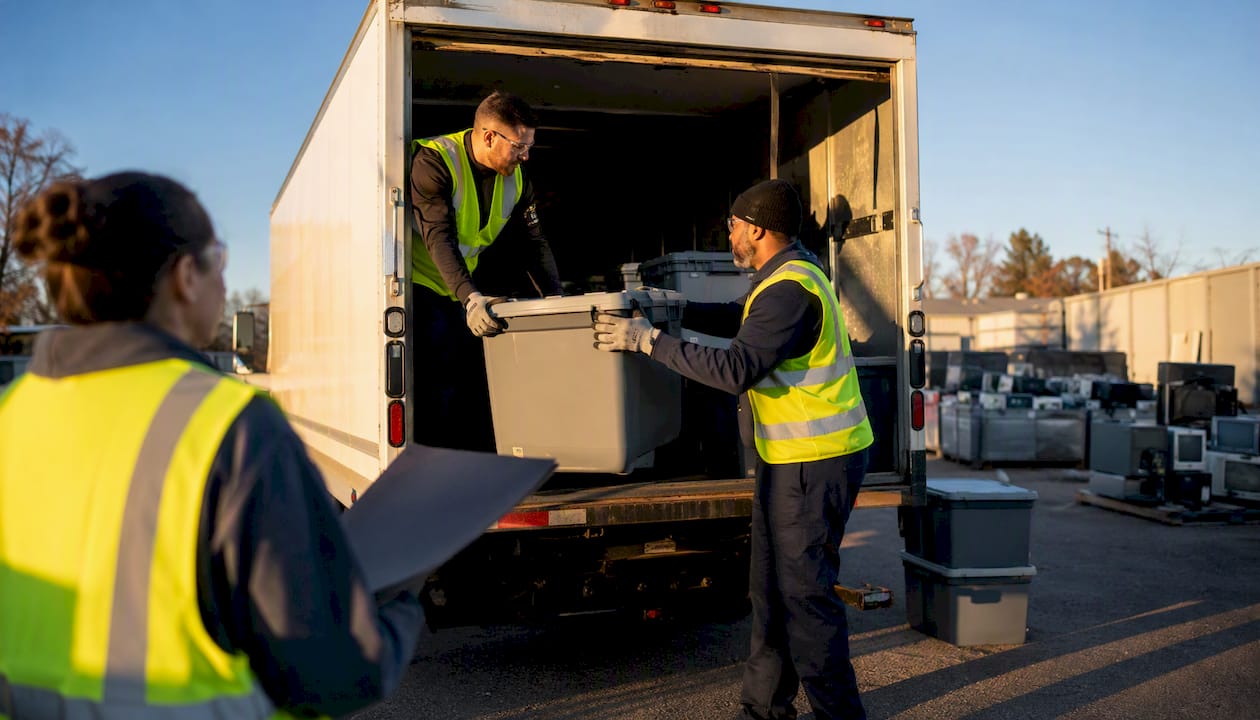
- Choose on-site or off-site destruction. On-site keeps the chain of custody entirely on your premises. Off-site is faster for large volumes when the vendor provides sealed, tracked transport.
- Require a Certificate of Destruction and chain-of-custody documentation before signing any service agreement. Per CSRC’s SP 800-88 r2 guidance, organizations must track and verify sanitization before media leave their control.
- Ask for the witness option if your compliance program or a client contract requires observed destruction.
- Prepare your paperwork: complete device inventory with serial numbers, asset tags, data classification level, and any lease-return documentation.
Visit Usedcartridge’s electronics disposal planning steps to download a preparation checklist your ops team can use the day of pickup.
| Point | Details |
|---|---|
| Sanitization level | Match clear, purge, or destroy to data sensitivity per NIST SP 800-88 before contacting any vendor. |
| On-site vs. off-site | On-site destruction preserves chain of custody; off-site suits high-volume, lower-sensitivity batches. |
| Certificate of Destruction | Require it in writing before the job starts; it is your primary audit evidence. |
| Paperwork ready | Inventory with serial numbers, data classification, and lease-return docs speeds the pickup. |
| Usedcartridge | Provides free quotes, on-site witness option, and audit-ready Certificates of Destruction for Costa Mesa businesses. |
Regulations and standards to cite in your contracts and RFPs
California’s e-waste rules layer on top of federal guidance. Procurement and legal teams should reference all four sources below when drafting vendor agreements.
| Standard / Regulation | What to require from the vendor |
|---|---|
| NIST SP 800-88 r2 | Written sanitization method, verification step, and retained records for each media type |
| CalRecycle CEW Program | Proof of approved collector/recycler status and unique approval ID for all CEW transfers |
| DTSC E-Waste Guidance | Authorized handler documentation; confirmation that no uncontrolled destruction methods are used |
| California PRC Chapter 8.5 | Recycler/collector registration, recordkeeping duties, and payment eligibility for CEW transfers |
California distinguishes Covered Electronic Devices (CEDs) under the CEW program from other universal hazardous waste like batteries. That distinction changes transport rules, manifests, and payment eligibility, so confirm which category each device falls into before transfer. CalRecycle regulations require approved collectors to maintain complete records for at least three years. Build that retention window into your own internal audit trail, not just the vendor’s.
The DTSC also notes that uncontrolled destruction methods, such as open smashing of devices, are prohibited in California and create health and environmental liability. Any vendor that cannot demonstrate authorized handling should be disqualified immediately.
For practical destruction technique examples, including degaussing, cryptographic erase, and shredding, NIST SP 800-88 r1 remains a useful technical reference alongside the current revision.
Why auditable destruction is the only standard worth accepting
Simple file deletion or a quick reformat leaves data recoverable. Physical destruction gives the clearest audit trail for high-sensitivity media, while cryptographic erase is often the right call for reusable, high-value hardware when properly verified and documented. The choice is not philosophical; it is a risk-based decision that should be made per device type, documented in writing, and retained for at least three years.
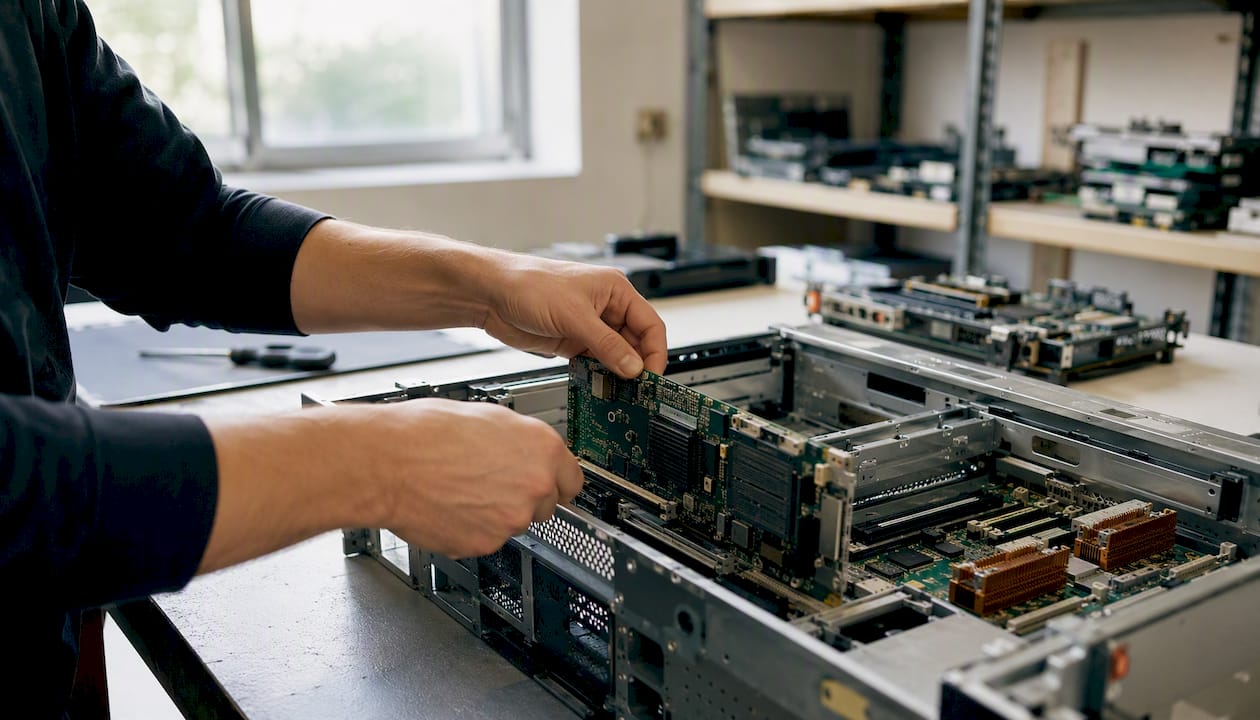
Usedcartridge handles on-site and off-site destruction, issues Certificates of Destruction, and offers IT asset recovery with value assessment and direct payout. Accepted equipment includes hard drives, servers, laptops, batteries, solar panels, and flash media. Every job includes chain-of-custody documentation and, on request, a witnessed destruction session.
Usedcartridge: secure e-waste pickup and data destruction for Costa Mesa
Costa Mesa IT teams and facility managers get one point of contact for the full scope: e-waste pickup and certified destruction, IT asset recovery with a buyback assessment, and audit-ready documentation that satisfies CalRecycle, DTSC, and NIST requirements. No sorting through multiple vendors for different device categories.

Request a free quote through Usedcartridge’s IT asset recovery and disposition page. Have your device count and data classification ready, and the team will confirm pickup logistics, destruction method, and Certificate of Destruction delivery timeline.
Sources
- Guidelines for Media Sanitization (NIST SP 800-88r2)
- SP 800-88 Rev. 2, Guidelines for Media Sanitization | CSRC
- Covered Electronic Waste Recycling Program – CalRecycle Home Page
- CHAPTER 8.5. Electronic Waste Recycling 42460 – 42486
- Electronic Hazardous Waste (E-Waste) | Department of Toxic Substances Control
- E-Waste Recycling Regulations, Effective July 1, 2022 (Unofficial Version, Revised June 2022)
- Guidelines for Media Sanitization (NIST SP 800-88r1)