
End-of-life solar panels present a compliance challenge that catches many organizations off guard. These panels contain heavy metals like lead, cadmium, and selenium, which means improper disposal can trigger hazardous waste violations under federal and state law. As solar installations age and reach their 25 to 30 year service life, IT asset managers and sustainability officers need a clear, actionable plan that satisfies both environmental regulations and internal sustainability goals. This guide walks you through every stage of that process.
Table of Contents
- Understanding regulations and requirements
- Preparing solar panels for safe disposal
- Step-by-step recycling and disposal process
- Verifying and documenting outcomes
- Expert insights: the future of solar panel recycling
- Secure solar panel disposal solutions for your organization
- Frequently asked questions
Key Takeaways
| Point | Details |
|---|---|
| Regulatory compliance | Solar panel disposal must follow federal and state hazardous waste regulations to avoid penalties. |
| Testing and documentation | Proper preparation includes TCLP testing and documentation to establish waste status and ensure traceability. |
| Certified recycling | Using R2 or e-Stewards certified recyclers maximizes recovery and aligns with environmental mandates. |
| Material recovery | Up to 95% glass and 100% aluminum recovery is possible with advanced recycling techniques. |
| Business sustainability | Secure disposal supports sustainability goals and offers potential financial and environmental returns. |
Understanding regulations and requirements
Before a single panel leaves your facility, you need to know exactly which laws apply. The regulatory landscape for solar panel disposal is more layered than most organizations expect, and assuming your panels are simply “solid waste” can be a costly mistake.
Federal framework: RCRA Subtitle D and Subtitle C
At the federal level, solar panels are regulated as solid waste under the Resource Conservation and Recovery Act (RCRA) Subtitle D. This covers general solid waste management standards. However, if your panels fail the Toxicity Characteristic Leaching Procedure (TCLP) test, which measures how much lead, cadmium, or other heavy metals leach out under simulated landfill conditions, they get reclassified as hazardous waste under RCRA Subtitle C. That reclassification brings much stricter storage, transport, and disposal requirements.
The TCLP test is the regulatory pivot point. Crystalline silicon panels often pass it. Thin-film panels, especially cadmium telluride (CdTe) types, frequently fail it. Knowing your panel type before you start disposal planning saves time and avoids regulatory surprises.
The proposed universal waste rule
The EPA is working to simplify this. The agency is proposing to add solar panels to the universal waste regulations under 40 CFR Part 273. This would streamline management requirements and encourage recycling for both hazardous and non-hazardous panels. Universal waste rules reduce the paperwork and storage burden that full hazardous waste regulations impose, making compliance more accessible for businesses of all sizes.
State-level variations
Federal rules set the floor, but states can go further. For example, Washington State operates a Photovoltaic Stewardship Program with producer responsibility requirements. Minnesota takes a precautionary approach: commercial panels are assumed hazardous unless tested to prove otherwise. California has its own Universal Waste program that already covers panels. If you operate across multiple states, each site may face different obligations. Staying current with your state’s environmental agency guidance is not optional.
| Regulatory approach | Federal RCRA | WA stewardship program | MN commercial panels | CA universal waste |
|---|---|---|---|---|
| Default classification | Solid waste | Producer responsibility | Assumed hazardous | Universal waste |
| TCLP test required | Yes (to determine hazardous status) | Program-specific | Yes | Program-specific |
| Recycling incentive | Moderate | High | Moderate | High |
| Strictest compliance burden | Subtitle C if hazardous | Moderate | High | Low to moderate |
Understanding where your state falls in this comparison lets you build the right disposal plan from the start. For broader context on electronic waste regulations that apply to your other assets, the same federal and state frameworks often come into play. Organizations that have already adopted green e-waste practices will find that solar panel compliance integrates naturally into their existing programs.
“Compliance is not just about avoiding fines. It is about protecting your organization’s reputation and ensuring that the materials in those panels do not harm communities or ecosystems downstream.”
Preparing solar panels for safe disposal
Regulatory knowledge without a solid preparation process leads to logistical headaches and compliance gaps. Proper preparation covers documentation, testing, and handling edge cases before a certified recycler ever gets involved.
Know your panel type
Different panel technologies require different handling approaches. Here is a quick reference:
| Panel type | Key materials | TCLP risk | Special handling |
|---|---|---|---|
| Monocrystalline silicon | Silicon, silver, aluminum | Low | Standard recycling |
| Polycrystalline silicon | Silicon, silver, aluminum | Low | Standard recycling |
| Cadmium telluride (CdTe) thin-film | Cadmium, tellurium | High | Specialized recovery |
| Copper indium gallium selenide (CIGS) | Selenium, indium, gallium | Moderate to high | Specialized recovery |
Thin-film panels like CdTe require specialized recycling processes capable of 95% semiconductor recovery. You cannot treat them like standard crystalline panels without risking both regulatory violations and wasted material value.
Step-by-step preparation process
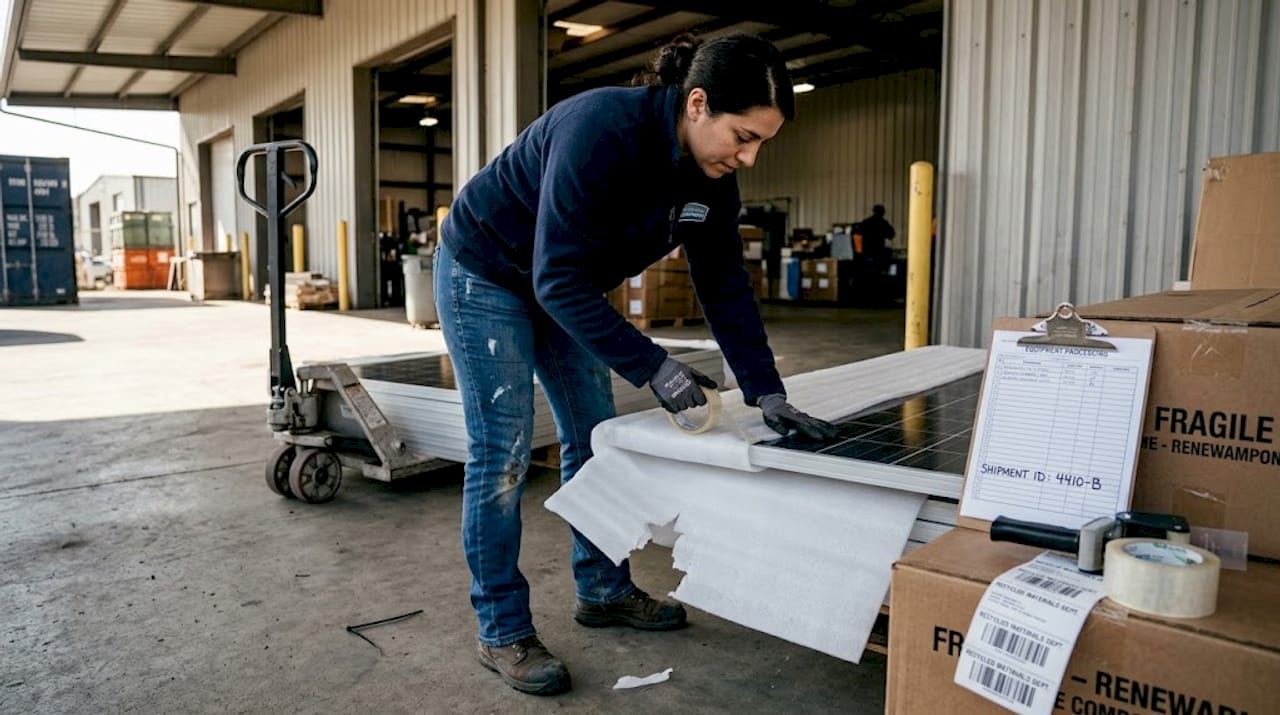
- Inventory and document all panels. Record serial numbers, manufacturer, installation date, panel type, and physical condition. This documentation forms your chain-of-custody record.
- Identify panels that are damaged or broken. Storm damage, repowering projects, and decommissioning all create panels that may already be cracked or contaminated. Broken panels have a higher leaching risk and may require TCLP testing even if your standard panel type typically passes.
- Determine lease or ownership status. If panels were installed under a lease or power purchase agreement (PPA), the provider is responsible for end-of-life management. Verify contractual obligations before assuming disposal falls to your organization.
- Conduct or commission TCLP testing for any thin-film panels or damaged panels where hazardous status is uncertain. Testing costs a fraction of non-compliance penalties.
- Separate hazardous from non-hazardous panels based on test results. Maintain separate storage areas and labeling consistent with RCRA requirements.
- Assess eligibility for the transfer-based exclusion. Hazardous waste solar panels recycled under 40 CFR 261.4(a)(24) can avoid full hazardous waste regulations if specific criteria are met. This exclusion is designed to encourage third-party recycling and reduces the regulatory burden significantly.
For organizations already familiar with preparing devices for recycling, this process will feel structured and familiar. The same chain-of-custody discipline that applies to hard drives and servers applies here.
Pro Tip: Build your documentation package before the recycler arrives, not after. A complete chain-of-custody file, including TCLP results, panel inventory, and condition assessments, accelerates the recycler’s intake process and gives you an audit-ready record from day one.
Step-by-step recycling and disposal process
With panels properly identified and documented, the physical recycling and logistics phase begins. This is where certified partners and a clear process protect both your compliance standing and your ability to recover material value.
Selecting a certified recycler
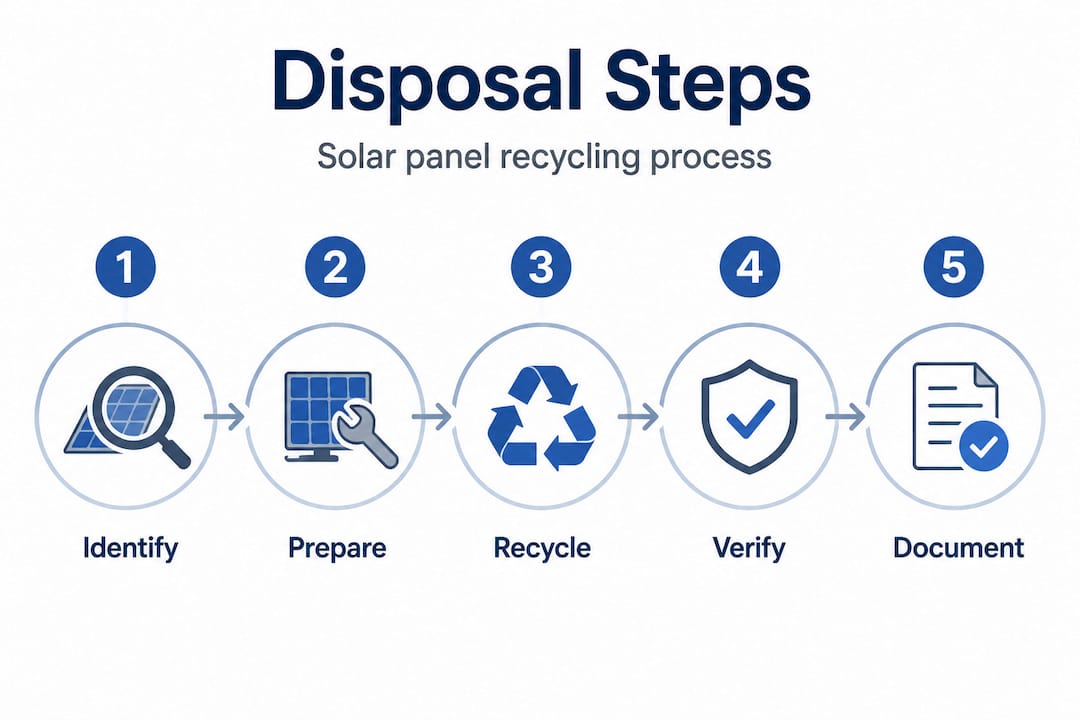
Not all recyclers are equal. Prioritize facilities certified under R2 (Responsible Recycling) or e-Stewards standards, which verify responsible downstream management and data security practices. The Solar Energy Industries Association provides a vetted PV Recycling Partners map that lists collection and processing sites across the country. Choosing from this network gives you confidence that your panels are going to a facility with verified capabilities, not a broker who will ship them overseas.
The recycling process, step by step
- Remove frames, junction boxes, and cables. Aluminum frames are separated for direct remelting. Junction boxes contain copper wiring that feeds into separate metal recovery streams. This step uses mechanical processes including crushing, shredding, milling, screening, and magnetic separation.
- Sort by panel type and condition. Crystalline and thin-film panels go to different processing lines. Damaged panels may require additional containment during transport to prevent further breakage and leaching.
- Thermal processing. At approximately 500°C, polymers and the ethylene vinyl acetate (EVA) encapsulant that holds the panel layers together are burned off. This step separates the glass substrate from the silicon cells and prepares materials for further purification.
- Chemical processing. Acids and solvents are used to purify the silicon and recover metals like silver and tin from the cell layers. For thin-film panels, this step recovers cadmium and tellurium through specialized precipitation and filtration.
- Quality check and material verification. Reputable recyclers provide a material recovery report documenting what was recovered and in what quantities. This report is your compliance record.
Materials recovered from solar panels
Working with certified electronic recyclers that handle solar panels means you can expect recovery of:
- Tempered glass (up to 95% recovery rate)
- Aluminum frames (near 100% recovery)
- Silicon wafers and cells (up to 85% recovery)
- Copper from wiring and connectors
- Silver from cell contacts
- Cadmium and tellurium from thin-film panels (for reuse in new panels)
- Tin and lead from soldering
Pro Tip: Partner with SEIA-networked recyclers who can show pilot-scale or full-scale processing data. Recyclers using next-generation separation technology consistently achieve higher recovery rates, which translates to better documentation for your sustainability reports and less landfill impact. Secure equipment recycling partners with panel processing capabilities can often bundle your solar disposal with other e-waste streams, reducing logistics costs.
Verifying and documenting outcomes
Disposal does not end when the truck pulls away. Verification and documentation of outcomes protect your organization during audits, support sustainability reporting, and demonstrate due diligence to regulators.
What to track after disposal
Maintain records that include:
- Weight of panels disposed by panel type and hazardous status
- Material recovery report from the certified recycler, including glass, aluminum, silicon, and metal yields
- Certificates of recycling issued by the recycler confirming compliant processing
- Chain-of-custody documents from pickup through final processing
- TCLP test results for any panels tested during preparation
- Recycler certifications (R2, e-Stewards) valid at the time of disposal
Recovery statistics worth knowing
Glass recovery reaches 95%, aluminum hits near 100%, and silicon recovery can reach 85% under optimized processes. These are not just environmental wins. They represent real material value that feeds back into manufacturing supply chains.
The scale of this opportunity is significant. By 2030, global recoverable raw materials from end-of-life panels are worth an estimated $450 million, equivalent to the materials needed for 60 million new panels. The United States alone could face 10 million metric tons of panel waste by 2050. Organizations that document their recycling outcomes today are contributing to, and benefiting from, a supply chain that is only going to grow in value.
Compliance reporting best practices
Keep records for a minimum of three years, or longer if your state requires it. For hazardous waste panels, RCRA record-keeping requirements may mandate longer retention periods. Build your reporting into existing sustainability frameworks like GRI (Global Reporting Initiative) or CDP disclosures, where business sustainability through recycling metrics are increasingly scrutinized by investors and regulators alike.
Expert insights: the future of solar panel recycling
Here is a perspective that most disposal guides skip entirely: the organizations that will win on solar panel compliance over the next decade are not the ones that just avoid violations. They are the ones building upstream design considerations and advanced recycling partnerships into their procurement and sustainability strategies right now.
Current recycling technology is good but not perfect. Thermal and chemical processes recover high percentages of glass and aluminum, but they are energy-intensive and can degrade silicon quality. That is why laser ablation and automated disassembly driven by artificial intelligence are generating serious attention in the recycling industry. Laser ablation removes the encapsulant and anti-reflective coatings without the heat damage that reduces silicon purity. AI-guided robotic disassembly can sort panel types, identify damage, and route materials faster and more accurately than manual processes. These technologies are moving from pilot scale to commercial scale, and the recyclers adopting them now will offer significantly better material recovery and cleaner documentation within the next five years.
Eco-design is the other side of this equation. Manufacturers that design panels with recyclability in mind, using fewer adhesive layers, avoiding unnecessary alloys, and standardizing frame attachment, make the recycler’s job dramatically easier. As a sustainability officer or IT asset manager, you have more procurement leverage than you might think. Specifying eco-designed panels, or at least asking manufacturers for their end-of-life plan, pushes the market toward more recyclable products.
The uncomfortable truth is that most organizations treat solar panel disposal as a one-time logistics problem. It is actually a recurring strategic decision that compounds over time. Every installation decision today creates a disposal obligation 25 to 30 years from now. Building recycling partnerships, documentation systems, and material recovery tracking into your current programs is far cheaper than scrambling to meet obligations when a large installation reaches end-of-life simultaneously.
For sustainability officers tracking recycling innovation in sustainability, the direction is clear: partner early with recyclers investing in advanced processing, and factor recyclability into your panel procurement criteria.
Secure solar panel disposal solutions for your organization
Navigating federal and state regulations, managing documentation, coordinating certified recyclers, and verifying outcomes is a significant operational undertaking. For most organizations, the most efficient path is working with a proven partner who handles the logistics, compliance documentation, and material recovery reporting in one integrated process.

UsedCartridge.com provides secure e-waste logistics built for organizations that cannot afford compliance gaps. Our disposal services cover solar panels alongside computers, servers, and other regulated electronic assets, giving sustainability officers and IT asset managers a single, certified partner for their entire e-waste program. We provide chain-of-custody documentation, certified recycler partnerships, and audit-ready records at every step. Explore our business sustainability solutions or request a free IT asset recovery quote to get started with a disposal plan built around your organization’s specific regulatory and operational needs.
Frequently asked questions
What regulations apply to solar panel disposal in the US?
Solar panels are regulated as solid waste under RCRA Subtitle D at the federal level, but may be reclassified as hazardous waste under Subtitle C if they fail the TCLP toxicity test for heavy metals. State rules add additional layers that vary significantly by location.
How do I know if my solar panels are hazardous waste?
Hazardous waste status is determined through TCLP testing, which checks how much lead, cadmium, and other regulated metals leach from the panel under landfill-simulated conditions. Panels may be hazardous under RCRA Subtitle C if they fail this test, and thin-film panel types carry the highest risk.
Where can businesses find certified solar panel recyclers?
The SEIA maintains a vetted PV Recycling Partners map with collection and processing sites across the country. When selecting a recycler, prioritize R2 or e-Stewards certification to ensure downstream accountability and proper processing standards.
What types of materials can be recovered from solar panels?
Glass, aluminum, and silicon are the primary recovered materials, with glass recovery reaching 95% and aluminum approaching 100% under optimized processes. Thin-film panels also yield valuable cadmium and tellurium for reuse in new panel manufacturing.
How does solar panel disposal impact business sustainability goals?
Proper recycling supports regulatory compliance while recovering materials that feed back into manufacturing supply chains. By 2030, recoverable materials from end-of-life panels globally are valued at $450 million, making responsible disposal a strategic sustainability and financial opportunity rather than just a compliance cost.
Recommended
- How to Prepare Devices for Recycling: 5 Secure Steps – E-waste Logistics
- Secure E-Waste Pickup: Protect Data & the Environment – E-waste Logistics
- Onsite device destruction workflow: 5 steps to security – E-waste Logistics
- Secure Equipment Recycling: Protect Data and the Environment – E-waste Logistics